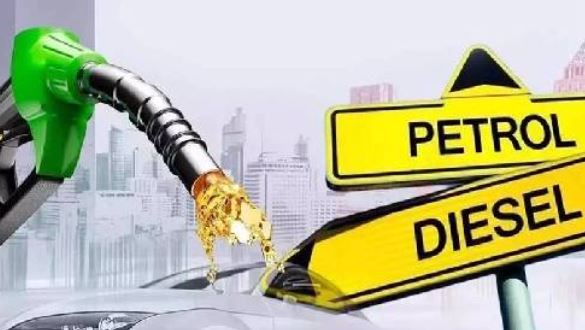
The government’s recent decision to revise petrol prices daily has ignited a storm of criticism across Pakistan. Instead of stabilizing the economy or ensuring transparency, this policy has placed an unbearable burden on ordinary citizens, transporters, and businesses. The move is widely seen as impractical, unfair,
Under the new mechanism, petroleum prices are adjusted every 24 hours. This means that consumers wake up each day uncertain about how much they will pay at the pump. For families already battling inflation, this unpredictability makes budgeting nearly impossible. Transporters, delivery services, and small businesses are particularly vulnerable, as fuel costs directly affect their daily operations.
Ordinary people feel that austerity measures are imposed only on them, while ministers, bureaucrats, and government officials continue to enjoy fuel quotas and perks without restrictions. If the government insists on daily adjustments for the public, critics argue that the same principle should apply to officials’ fuel allowances. Why should the common man suffer daily fluctuations while the ruling elite remains insulated?
Pakistan presents a unique paradox: a nation run on IMF loans and foreign grants, yet its ruling elite lives in luxury. Politicians’ lavish lifestyles convoys of expensive cars, extravagant residences, and unchecked privileges—paint a picture far removed from the hardships faced by the average citizen.
This glaring gap between the haves and have-nots underscores the deep-rooted inequality. While the majority struggles to afford basic necessities, corruption continues to thrive across institutions. Not a single department is free from allegations of misuse of funds or abuse of power. The perception is clear: austerity is for the poor, while luxury remains the privilege of the powerful.
The policy has also provoked strong reactions from stakeholders. Petrol pump owners have threatened a nationwide strike, arguing that daily adjustments create logistical chaos and erode consumer trust. Transporters are preparing similar protests, warning that rising fuel costs will force them to increase fares, further burdening commuters.
In a country with a fragile economy, strikes of this scale could paralyze daily life. Supply chains, public transport, and essential services would all be disrupted. Pakistan simply cannot afford such instability at a time when its economy is already under severe strain.
Experts and citizens alike are urging the government to reconsider this policy. A more practical approach would be to revise fuel prices on a weekly or fortnightly basis. This would provide some predictability for households and businesses, while still allowing the government to respond to fluctuations in international oil markets.
Daily adjustments, on the other hand, only amplify uncertainty and frustration. They risk alienating the public further and could ignite widespread unrest.
At its core, this controversy highlights Pakistan’s chronic governance issues. Policies are often designed without considering their impact on ordinary citizens. Meanwhile, the ruling elite remains shielded from the consequences of their decisions.
The government must recognize that economic reforms cannot succeed if they disproportionately target the poor while sparing the privileged. Transparency, accountability, and fairness are essential if Pakistan is to move beyond its cycle of debt, corruption, and inequality.
Citizens across the country have expressed anger and despair. For daily wage earners, even a small increase in petrol prices translates into higher transport costs, reduced income, and greater hardship. Students commuting to universities, workers traveling to factories, and families relying on public transport all feel the pinch.
The frustration is compounded by the perception that government officials remain untouched by these hardships. Their fuel quotas, luxury vehicles, and taxpayer-funded perks stand in stark contrast to the struggles of ordinary people.
The looming strikes by petrol pump owners and transporters could push the country into chaos. If fuel supplies are disrupted, the ripple effects will be felt across every sector—from agriculture to industry, from education to healthcare. A weak and struggling economy cannot withstand such shocks.
The government must act swiftly to prevent this crisis from escalating. Dialogue with stakeholders, revision of the pricing mechanism, and a fairer distribution of austerity measures are essential steps.
The daily petrol price adjustment policy has become a symbol of misplaced priorities. Instead of easing the burden on citizens, it has deepened their struggles. With strikes looming and public anger mounting, the government must act swiftly to revise this mechanism before the situation spirals out of control.