By acting aggressively in Venezuela, Washington may have opened the door for Moscow and Beijing to justify similar moves elsewhere.
Editorial
Ansar Mahmood Bhatti
The desire of President Donald Trump to expand America’s territorial reach has once again stirred controversy on the global stage. His reported interest in acquiring Greenland, coupled with the United States’ aggressive stance in Venezuela, has raised alarms not only among adversaries but also among allies. While such moves may be framed as serving U.S. national interests, the broader international reaction suggests that coercive expansionist policies are unlikely to yield long-term benefits and may instead isolate Washington further.
Trump’s desire to take over Greenland, a vast Arctic territory managed by Denmark, reflects a continuation of his expansionist vision. Greenland’s strategic location, rich natural resources, and potential military significance make it attractive to Washington. However, the idea of purchasing or annexing Greenland has been met with sharp resistance from Denmark and the European Union. European leaders have already issued warnings, signaling that any attempt to undermine Denmark’s sovereignty would provoke a strong and unified response.
Unlike Venezuela, where even close allies of Caracas turned a blind eye to U.S. actions, Europe is unlikely to remain passive. Greenland is not just a remote territory; it is part of the European sphere of influence. Any coercive attempt to acquire it would be seen as a direct challenge to European sovereignty and international law. Thus, while Trump may view Greenland as a prize for U.S. national security, the backlash from Europe could be far more severe than anything witnessed in Latin America.
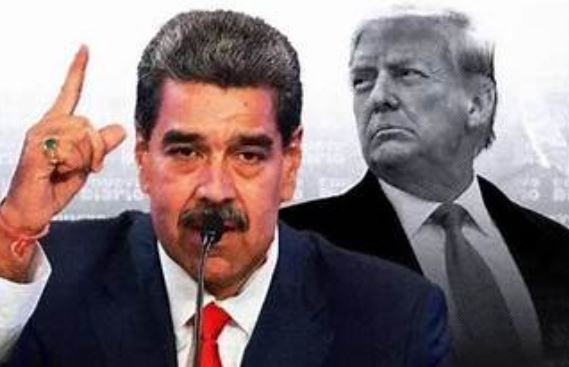
The U.S. approach to Venezuela has already been slammed by much of the international community. Washington’s charges against President Nicolás Maduro may have been justified in terms of corruption and human rights abuses, but the method of attempting to delegitimize and replace a sitting president was widely criticized. The principle of sovereignty remains central in global politics, and America’s intervention was seen as undermining that principle.
Even U.S. allies expressed discomfort with the strategy. Critics argued that while Maduro’s governance was deeply flawed, the way to bring change was through democratic processes, not external coercion. The Venezuelan case highlighted the dangers of using forceful means to achieve political ends. It reinforced the perception that Washington was willing to bypass international norms to pursue its interests, a perception that has damaged America’s credibility.
Perhaps the most surprising aspect of the Venezuelan crisis was the muted response of China and Russia, both traditionally close friends of Caracas. Their silence puzzled many observers, but it may be explained by broader geopolitical calculations. Analysts suggest that part of the tacit deal could involve Russia being allowed to consolidate its hold over parts of Ukraine, while China may be given leeway to pursue its ambitions in Taiwan. If true, this would represent a dangerous precedent: great powers trading silence on one issue for concessions on another.
Such geopolitical bargaining underscores the fragility of international norms. It also reveals the risks of unilateral U.S. actions, which may inadvertently encourage other powers to pursue their own expansionist agendas. By acting aggressively in Venezuela, Washington may have opened the door for Moscow and Beijing to justify similar moves elsewhere.
Trump’s expansionist designs, whether in Greenland or Venezuela, reflect a broader pattern of coercive policy. During his previous tenure, the United States often found itself isolated on the global stage. Critics famously remarked that with Trump at the helm, America did not need enemies—his policies alienated allies and emboldened rivals. The pursuit of short-term gains through coercion undermined long-term strategic interests, leaving Washington with fewer friends and more adversaries.
The Greenland issue threatens to repeat this pattern. While Venezuela exposed America’s willingness to intervene in Latin America, Greenland risks alienating Europe, a region critical to U.S. alliances. The difference is stark: in Venezuela, allies largely turned a blind eye; in Europe, resistance will be stiff and unified. Trump’s steps may be justified domestically as serving national interest, but globally they are unwelcome and potentially destabilizing.
The policy of coercion may provide immediate benefits—control over resources, strategic territories, or political influence. Yet history shows that such gains are often temporary and come at the cost of long-term stability. Coercive expansion breeds resentment, resistance, and isolation. It undermines trust in international institutions and erodes America’s moral authority.
If Washington continues down this path, it risks not only alienating allies but also encouraging adversaries to pursue their own aggressive ambitions. The silence of China and Russia over Venezuela should serve as a warning: coercive policies do not exist in a vacuum. They create openings for other powers to exploit, often in ways detrimental to U.S. interests.
Trump’s ambitions in Greenland and his actions in Venezuela highlight the dangers of expansionist thinking in the modern world. While such moves may be framed as serving U.S. national interests, they are unlikely to be welcomed internationally. The backlash from Europe over Greenland and the criticism of U.S. intervention in Venezuela demonstrate that coercive policies isolate America rather than strengthen it.
The United States must abandon the policy of coercive means. Sustainable influence comes not from force but from cooperation, diplomacy, and respect for sovereignty. Short-term gains achieved through expansion may backfire, leaving Washington weaker in the long run. In a world where alliances and credibility matter more than ever, America cannot afford to pursue policies that alienate friends and embolden rivals.