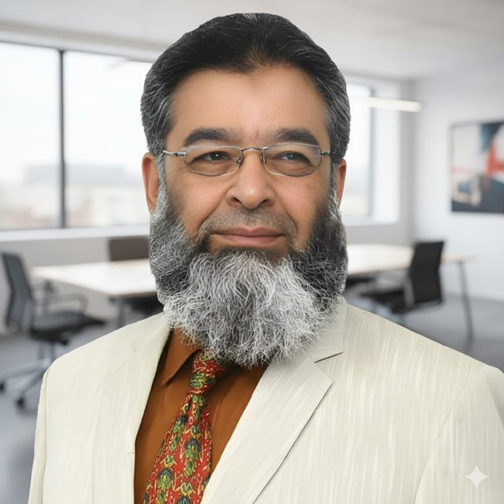
BY MUHAMMAD MOHSIN IQBAL
In every society, the fabric of relationships is woven with threads of affection, loyalty, and unspoken obligations. In Pakistan, where family bonds, kinship networks, and the traditions of collective living define much of social life, these threads hold even greater meaning. Yet, it is equally true that misunderstandings, errors in judgment, and personal shortcomings emerge most often within these very circles. As a wise saying reminds us, “The mistakes of our own people are, in fact, our own mistakes as well; they should be corrected together with understanding and unity. One should not wear the crown of ego and wait for others to bow first.” This is not merely a moral lesson; it is a philosophy that speaks to the heart of communal life, reconciliation, and the higher ethics of human dignity.
The Holy Qur’an repeatedly guides believers to adopt humility and forgiveness as essential qualities. Allah Almighty says, “Show forgiveness, enjoin what is good, and turn away from the ignorant” (Qur’an 7:199). In this verse lies the blueprint for managing the inevitable imperfections of those around us. If we treat the errors of our own people as foreign or distant, we erode the unity that elevates societies. But when we embrace the truth that their missteps are intertwined with our own collective identity, we create room for correction and growth without bitterness.
This principle is profoundly relevant to Pakistani culture. In our homeland, elders mediate disputes, families come together to ease tensions, and tribal traditions uphold the practice of Jirga or Panchayat.—systems built on dialogue rather than arrogance. The Prophet Muhammad (Peace be upon him) instructed, “A Muslim is the brother of a Muslim. He does not oppress him, nor does he abandon him, nor does he look down upon him.” In these words, one finds the moral compass for dealing with the shortcomings of those closest to us. To abandon a relative, a friend, or a colleague because of their mistake is to abandon a part of ourselves.
Ego, however, has become one of the most destructive forces in modern social behavior. The notion of “wearing the crown of ego,” refusing to initiate reconciliation, or expecting others to bow first creates an environment where forgiveness becomes a rarity. In Pakistani households, workplaces, and even public institutions, countless conflicts linger not because the issues are grave, but because individuals refuse to let go of pride. The Qur’an teaches us, “Indeed, Allah does not like the arrogant and boastful” (Qur’an 31:18). When ego overshadows wisdom, correction becomes impossible, and relationships turn cold.
In family life, especially, this philosophy carries immense value. Parents, siblings, and spouses are bound not only by affection but by moral duty. A father’s sternness, a mother’s moment of anger, a sibling’s careless word—these are not reasons to divide hearts. Instead, they are reminders of human frailty. The Prophet (peace be upon him) said, “The best among you are those who are best to their families.” To be “best” in this context means to forgive readily, advise gently, and understand deeply. Where ego prevails, affection fades; where humility prevails, affection flourishes.
The same truth applies at the societal level. Communities fracture when individuals or factions refuse to acknowledge that shared destiny is more important than personal pride. Our neighborhoods, mosques, educational institutions, and workplaces all experience moments where misunderstandings arise. Pakistan’s social fabric is strong precisely because, historically, people have preferred collective harmony over individual stubbornness. Sufi thought, which has shaped much of our cultural and spiritual heritage, repeatedly discourages the dominance of ego. Maulana Rumi writes, “Raise your words, not your voice. It is rain that grows flowers, not thunder.” The essence of correction lies in gentleness, not confrontation.
In national life as well, this wisdom holds weight. Pakistan’s political discourse and social media conversations often reflect a harshness that stands in contrast to our traditions of tolerance. If political actors, social leaders, and citizens embraced the idea that errors within the nation are a collective concern—rather than weapons for mutual humiliation—the journey toward national cohesion would accelerate. Prosperity lies in unity, and unity demands humility.
Even in economic dealings and professional relationships, the act of correcting mistakes with dignity rather than ego strengthens institutions. Leaders who listen rather than command, colleagues who cooperate rather than compete, and citizens who forgive rather than hold grudges create an atmosphere in which shared progress becomes natural. Our society has long admired those who possess a “big heart,” a phrase deeply rooted in our cultural appreciation for generosity of spirit.
Ultimately, the philosophy embodied in the opening statement is a reminder that human beings are not perfect, but they are redeemable. Pakistani culture, enriched by Islam, tradition, and the wisdom of centuries, teaches that mending relationships is nobler than winning arguments. When one sets aside ego and takes the first step toward correction, it does not diminish status; it elevates character. And when we work together to improve, we do not merely correct mistakes—we strengthen the foundations of our society.
The path to harmony begins not with expecting others to bow, but with lowering one’s own gaze in humility. This is the way of faith, the way of culture, and the way of wisdom.