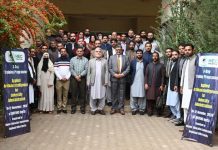
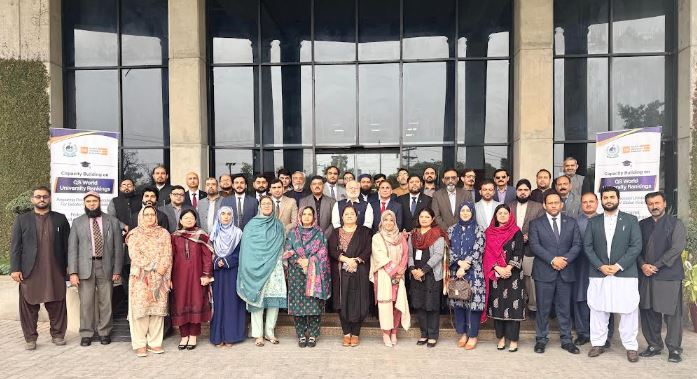
ISLAMABAD, NOV 14 /DNA/ – The Higher Education Commission (HEC) Pakistan organised a one-day capacity-building programme on QS World University Rankings at the National Institute of Banking and Finance (NIBAF), Islamabad. The programme brought together representatives of 40 universities from Islamabad, Rawalpindi, Azad Jammu & Kashmir, and surrounding cities, grouped into two cohorts.
The initiative aimed to strengthen the capacity of Pakistani universities to understand international rankings methodologies, meet data reporting requirements, and improve institutional preparedness for effective participation in global university rankings. It forms part of HEC’s nationwide capacity-building initiative to encourage greater participation and improve the international visibility and competitiveness of Pakistani higher education institutions.
In his opening remarks, Syed Naveed Hussain Shah, Director General, HEDR Division, HEC, emphasised the importance of international university rankings in enhancing Pakistan’s global academic standing. He noted that while several Pakistani universities have demonstrated encouraging performance, broader participation and sustained institutional efforts are essential to improving the country’s representation in global rankings. He reaffirmed HEC’s commitment to supporting universities through coordinated initiatives, capacity building, and engagement with international ranking agencies.
Mr. Muhammad Ali Baig, National Coordinator for National University Rankings, outlined the objectives and structure of the programme. He highlighted the importance of institutional understanding of rankings indicators, accurate and verifiable data reporting, and timely submissions, particularly in view of the ongoing data collection process for the QS World University Rankings 2028. He explained that the programme was designed to combine methodological understanding with practical learning, enabling university officials to identify institutional gaps, strengthen data management practices, and translate the knowledge gained into actionable improvements within their respective institutions.
The training programme included knowledge-sharing sessions on the QS World University Rankings framework, methodology, indicators, and submission requirements, followed by an interactive, hands-on workshop involving practical exercises and discussions on institutional data preparation and rankings performance.
A significant feature of the programme was the signing of a Pledge of Professional Commitment by all participating university representatives. Through the pledge, participants committed to sharing the knowledge gained with relevant departments within their universities and translating their learning into institutional action by contributing to improved preparedness, effective data management, and informed participation in international university rankings.
HEC will continue organising similar capacity-building programmes across the country to facilitate universities in strengthening their participation, institutional performance, and international standing in global university rankings.