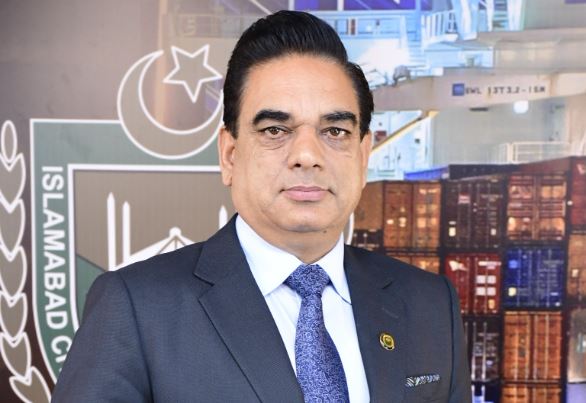
ISLAMABAD, JAN 31 /DNA/ – The President of the Islamabad Chamber of Commerce and Industry (ICCI), Sardar Tahir Mehmood, along with Senior Vice President Tahir Ayub and Vice President Irfan Chaudhry, has welcomed Prime Minister Muhammad Shehbaz Sharif’s announcement of major relief measures for the industrial and export sectors, including a reduction in electricity tariffs by Rs. 4.04 per unit, lowering of wheeling charges to below Rs. 9, and the introduction of targeted incentives to promote exports.
The ICCI leadership described these initiatives as timely, pragmatic, and growth-oriented, noting that persistently high energy costs had significantly constrained industrial productivity, eroded competitiveness, and discouraged capacity expansion. They stated that the reduction in power tariffs, coupled with the lowering of the export refinance rate, would substantially ease cost pressures on industries, improve cash flows, enhance export capacity, and stimulate both domestic and foreign investment.
The ICCI office-bearers also appreciated the government’s clear emphasis on export-led growth, facilitation of leading exporters, and measures aimed at strengthening foreign exchange earnings. They observed that such confidence-building steps would help stabilize industrial operations, generate employment opportunities, and reinforce Pakistan’s standing in regional and global markets.
However, the ICCI leadership emphasized that to create a comprehensive and broad-based enabling business environment, further critical reforms are required. They urged the Prime Minister to move towards a single-digit KIBOR, rationalize the tax regime, and further reduce the cost of doing business to sustain industrial momentum. They stressed that these measures are essential to unlock the economy’s full potential and place Pakistan firmly on the path toward realizing the trillion-dollar economy vision.
The ICCI office-bearers expressed confidence that continued consultation and engagement between the government and the business community would result in balanced, forward-looking policies, ensuring long-term economic stability, industrial revival and sustainable growth.