
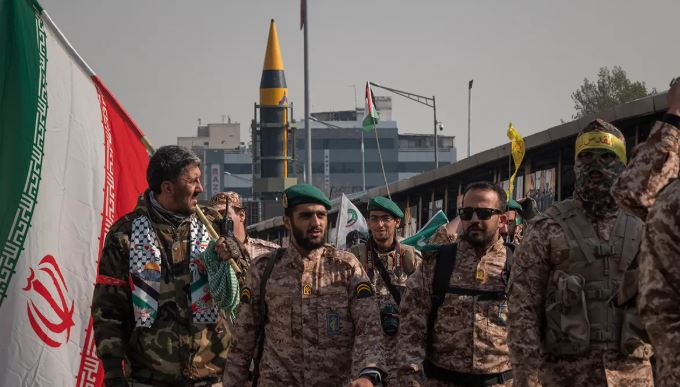
TEHRAN/BEIRUT, 31 MAY (DNA) — A senior commander of the Islamic Revolutionary Guard Corps (IRGC) has said the United States must choose between accepting what he described as the “rights of the Iranian people” or continuing the ongoing conflict, as tensions in the region remain high. The remarks come amid continued military and political confrontation involving Iran, the United States and Israel.
The IRGC said Washington’s room for maneuver had narrowed significantly and warned that further military pressure on Iran would not achieve its objectives. Iranian officials have repeatedly argued that any resolution requires recognition of Tehran’s rights and security interests.
Meanwhile, the IRGC Navy announced that 28 commercial vessels, including oil tankers and container ships, safely transited the strategic Strait of Hormuz during the past 24 hours under coordination with Iranian naval authorities. Tehran said the passage of vessels demonstrated its continued oversight of one of the world’s most important energy shipping routes.
The Strait of Hormuz has remained a focal point of regional tensions amid concerns over maritime security and the impact of conflict on global energy supplies. Iranian authorities have repeatedly warned against unauthorized navigation through routes not coordinated with the IRGC Navy. In Lebanon, violence also continued as Israeli strikes targeted areas in the south of the country.
Lebanese media and health officials reported that several people were killed and others wounded in attacks on towns in southern Lebanon, adding to growing concerns over a widening regional conflict despite ongoing diplomatic efforts. The latest developments underscore the fragile security situation across the Middle East, with diplomatic efforts struggling to contain escalating tensions involving Iran, Israel and regional armed groups.
Meanwhile, Iran’s chief negotiator said Sunday that Tehran would not agree to any deal with the United States unless it fully secures Iranian rights, as reports emerged that Washington had sent a tougher peace proposal back to Iran.Any tweaks to the proposal could further delay an agreement to formally end the Middle East war and reopen the Strait of Hormuz after weeks of fraught negotiations marked by sharp rhetoric and occasional flare-ups of violence.
The New York Times and Axios reported on Saturday that Trump had sent back a new framework to be considered by Iran with “tougher” terms, though details remain unclear. “We will not approve any agreement until we are certain that the rights of the Iranian people have been upheld,” Mohammad Bagher Qalibaf said, in a video broadcast on state television. Trump has said his priorities include stopping Iran from any nuclear weapon development and re-opening the blockaded Hormuz shipping lane. — DNA