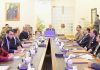
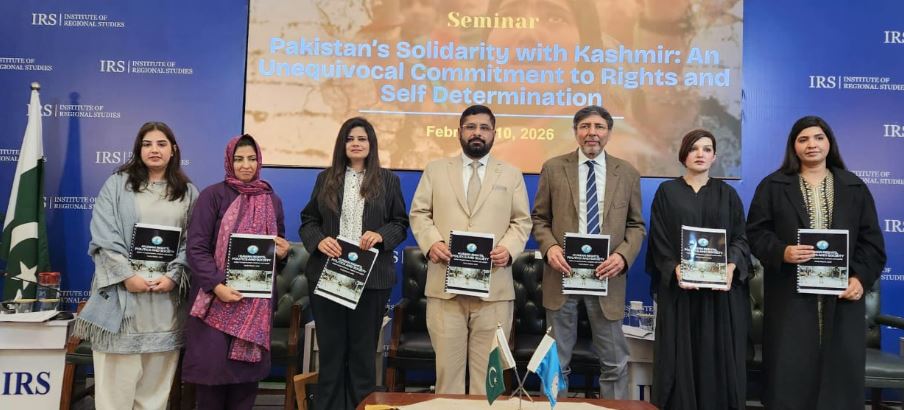
ISLAMABAD, FEB 10: /DNA/ – The Institute of Regional Studies (IRS), Islamabad, launched its Annual Report 2025 on “Indian Occupied Jammu, Kashmir and Ladakh” at a seminar held at its premises. Ms. Mushaal Hussein Mullick, Chairperson, Peace and Culture Organization, and former Advisor to the Prime Minister on Human Rights and Women Empowerment; Senator Asad Qasim, Chairman Senate Standing Committee on Kashmir Affairs, Gilgit-Baltistan & SAFRON; Professor Dr. Muhammad Khan; Dr. Sundas Mustaqeem; and Dr. Gul-i-Ayesha from NUST addressed the seminar.
In his welcome remarks, Ambassador Jauhar highlighted the historical and diplomatic dimensions of the Kashmir issue, stating that it has remained on the United Nations agenda for decades and continues to demand a just and lawful resolution. He emphasized the need to re-energize diplomatic outreach and global awareness efforts.
Senator Asad Qasim focused on the humanitarian costs of the prolonged conflict, drawing attention to detainees, divided families, and community-level trauma. He stated that regional peace and stability are closely linked to addressing the Kashmir dispute through credible international mechanisms.
While speaking at the seminar, Mushaal Hussein Mullick described the situation as a continuing human tragedy affecting everyday life. She warned that the dispute remains a serious nuclear flashpoint and urged the international community to seize the moment to arrange an impartial and free plebiscite.
All the panellists acknowledged that the report provides a comprehensive, evidence-based statistical and analytical overview of political developments, security practices, and human rights conditions in IIOJK during the year 2025.
The report notes that 2025 witnessed sustained large-scale security operations and extensive restrictions on civilian life across IIOJK. Preventive and mass detentions occurred in successive phases throughout the year. In February, more than 500 individuals were detained in Kulgam, Budgam, and Ganderbal following a security incident. After the Pahalgam incident in April, an estimated 1,500–2,000 detentions were reported across multiple districts. In November, a major crackdown led to approximately 1,500 detentions within two days, with over 100 additional detentions in Anantnag, Kathua, Ramban, Doda, and Rajouri. December operations added around 200 more detentions. In Ladakh, at least 75 protest-related detentions were recorded between late September and early October.
The report also documents widespread search and raid operations. Over 500 locations were raided across the Valley in November alone, including more than 200 in Kulgam, over 150 residences in Srinagar, and more than 50 in Sopore. Following the Pahalgam incident, raids were conducted at over 60 locations in Srinagar. The report further records at least nine residential demolitions across several districts in April, a two-month suspension of VPN services in Rajouri, enforcement actions against media offices, and during protest-related events in Ladakh, at least four civilian deaths and between 65 and nearly 100 injuries.
The seminar concluded with a joint call for a free and impartial plebiscite in IIOJK, as it is the only way to bring peace to South Asia.