Qamar Bashir
Israel is perhaps the only country on the planet that speaks a different language when it comes to words like independence, sovereignty, human rights, security, and good-neighbourly relations. It has stretched these terms so far that the mass killing of civilians in Gaza, the destruction of entire neighbourhoods, and the cutting-off of food, water and medicine are reframed as “self-defence.”
The International Court of Justice has already found it plausible that Israel’s actions in Gaza amount to genocide and ordered it to allow humanitarian relief and prevent further atrocities. The International Criminal Court has gone further still, issuing arrest warrants for Prime Minister Benjamin Netanyahu and others for alleged war crimes, including the use of starvation as a weapon. Yet Israel continues with near-complete impunity, striking Syria and Lebanon at will, clashing with Iran and ignoring UN resolutions and global outrage.
Into this already combustible environment, Israel has taken another extraordinary step. On 26 December 2025, it became the first country in the world to formally recognise Somaliland as an independent and sovereign state. For over three decades the world refused to cross this line. Israel not only crossed it, it celebrated the moment.
To appreciate the shockwaves this created, one must understand Somaliland’s story. The territory in north-western Somalia declared independence in 1991 after the collapse of the Somali state. Since then, it has built working institutions, its own army and currency, and a relatively stable political system. On the surface, this stability strengthens its moral case for independent statehood. But no country recognised it — because African and international diplomacy rests on the principle of maintaining inherited borders to prevent separatist domino effects. Somalia, the African Union and regional organisations have always insisted that Somaliland remains a part of Somalia’s sovereign territory.
Israel’s move directly challenges this consensus. Somalia immediately condemned it as a “deliberate attack” on its sovereignty and vowed resistance through legal and diplomatic channels. The African Union and the Intergovernmental Authority on Development backed Mogadishu, warning of severe destabilisation risks. The Arab League declared the recognition “illegal” and urged the UN Security Council to act. A broad coalition of Arab, Muslim and African states followed with their own condemnations. This is not simply solidarity with Somalia; it is a defence of the fragile rule-set that prevents Africa’s borders from unravelling.
So why would Israel knowingly walk into this storm?. The answer is written on the map. Somaliland sits on the Gulf of Aden, near the Bab el-Mandeb strait — one of the world’s most strategic maritime chokepoints. A substantial share of global trade and energy flows through this narrow corridor. The port of Berbera is effectively an observation post on the gateway to the Red Sea and the Suez Canal at a moment when Houthi attacks, piracy and great-power rivalry have turned the area into a contested arena.
Seen from this perspective, Israel’s recognition looks less like humanitarian sympathy and more like hard-nosed realpolitik. A friendly government in Somaliland offers intelligence, security and possibly — in time — military access opposite Yemen and on the maritime route that connects Asia, the Gulf and Europe. It gives Israel the opportunity to extend its rivalry with Iran and its allies into another theatre and deepen its maritime influence at a critical global artery. It also signals that international borders can be “re-interpreted” when they obstruct strategic goals — an irony not lost on those watching events in the occupied Palestinian territories.
African states understand this clearly — which is why their reaction has been so firm. Many already face separatist pressures of their own. If territorial integrity becomes negotiable here, it becomes negotiable everywhere. And once unilateral recognition is normalised, powerful states will be tempted to redraw other borders for their own advantage.
The Arab and Islamic world views the move with even deeper suspicion. For them, Israel’s record — from Gaza to Lebanon and Syria — suggests that Somaliland could become an outpost for surveillance, naval projection and long-term security schemes. Some even fear it may one day be linked to displacement or demographic engineering related to the Palestinian question. Whether those fears are justified or not, the political distrust they reflect is real — and volatile.
The United States, meanwhile, has chosen public caution. President Trump has said Washington is “not ready” to recognise Somaliland and reaffirmed support for Somalia’s unity. Yet, given the intimacy of U.S.–Israeli relations, few observers believe such a dramatic step was taken without at least a reading of American sentiment. It is entirely plausible that Israel is acting as a spearhead — testing reactions from African and Arab partners, many of whom hold trillions of dollars in U.S. assets — before Washington considers any shift toward de facto support.
If that interpretation holds, this is not merely an Israeli initiative but part of a broader divide-and-rule strategy in the Horn of Africa — a region already strained by Ethiopian-Egyptian tensions, Red Sea militarisation, Somali instability and Gulf rivalries. Rather than integration and development, the region gains another sovereignty dispute and another justification for military build-ups and strategic manoeuvring.
All of this comes at a time when Israel is already more diplomatically isolated than at any point in decades. It faces genocide proceedings in The Hague, ICC warrants against its leaders, and growing distance even from traditional partners. Opening an additional front of confrontation with Somalia, the African Union, the Arab League and the wider Islamic world only deepens the perception of Israel as a state willing to discard international norms whenever they obstruct strategic ambition. Even if Israel secures tactical advantages in Somaliland, the long-term political costs may significantly widen its circle of hostility and mistrust.
This development must therefore not be dismissed as a narrow legal gesture. It is a political shockwave at the heart of the Horn of Africa — detonated while Gaza still bleeds, Lebanon remains tense, Syria continues under intermittent bombardment, and Iran stands in permanent confrontation. If the world accepts the fragmentation of Somalia by unilateral recognition today, it should not be surprised when similar moves appear elsewhere tomorrow, cloaked in the language of “freedom” but dictated by power rather than law.
For Somalia and its partners, the response must be firm yet constructive. They should resist this precedent at the UN, AU, Arab League and OIC, while recognising that Somaliland’s grievances cannot simply be wished away. A credible federal settlement, fair resource-sharing and meaningful political inclusion remain the only sustainable alternatives to secession driven by external sponsorship.
Israel’s recognition of Somaliland is therefore not merely a diplomatic handshake. It is a calculated strategic gamble — one that deepens mistrust in an already fractured region and risks turning the Horn of Africa into yet another arena of proxy competition. Whether that gamble ultimately benefits Israel, or becomes another catalyst for instability and backlash, will depend on how the international community — and above all Somalia itself — responds in the months ahead.
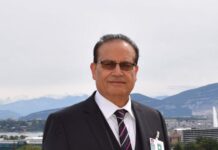
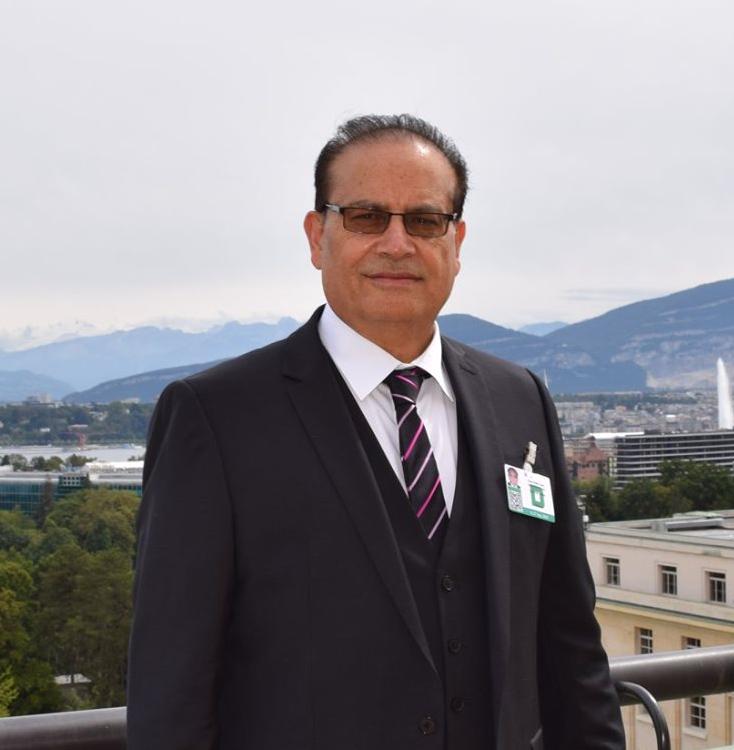
Qamar Bashir
Press Secretary to the President (Rtd)
Former Press Minister, Embassy of Pakistan to France
Former Press Attaché to Malaysia
Former MD, SRBC | Macomb, Michigan, USA