
DNA
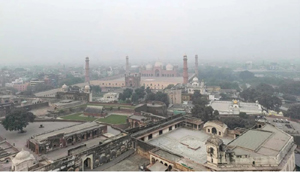
LAHORE: Lahore topped the ranking of the world’s most polluted major cities on Friday, with an air quality index (AQI) of 344, as doctors advised residents to wear masks to protect themselves from hazardous air pollution. According to data recorded at around 8am, the Swiss air quality monitoring website IQAir placed Lahore at the top of its live ranking, with the city’s AQI falling in the hazardous category. IQAir reported Lahore’s main pollutant as cancer-causing particulate matter PM2.5, recorded at 57 times higher than the World Health Organisation’s annual guidelineThese microscopic particles are small enough to enter the bloodstream, increasing the risk of stroke, heart disease, lung cancer and severe chronic respiratory illnesses. Just across the border, India’s Delhi ranked second among the world’s most polluted major cities, with an AQI of 244, classified as very unhealthy. Among other cities in the ranking, Dakar in Senegal recorded an AQI of 184, while India’s Mumbai and Kolkata registered readings of 179 and 172, respectively. The air quality in all three cities was classified as unhealthy. Air pollution levels varied across Lahore, with Iqbal Town recording the highest AQI of 535, according to the data. Airwash on Bedian Road recorded an AQI of 497, while Kahna registered 446 and Defence Phase 5 recorded 360. The AQI was recorded at 350 in Model Town and 253 on Barki Road, highlighting varying levels of pollution across different parts of the city. Cooler seasonal air traps pollutants close to the ground, forming a deadly winter mix of crop-residue smoke, traffic emissions, industrial fumes and construction dust. Delhi is frequently ranked among the world’s most polluted capitals, with authorities often attributing the annual smog crisis to farmers burning crop stubble in neighbouring Punjab and Haryana. Unicef cautions that polluted air puts children at heightened risk of acute respiratory infections, while a 2023 study found air pollution can cut life expectancy by more than five years in parts of South Asia. Livelihoods across the region are routinely disrupted as smog forces school closures, slows transport and strains public health systems.