MINGORA, Jan 04 (APP/DNA): As the first rays of winter sunlight touched the snow-covered slopes of Malam Jabba on Sunday, 25-year-old Faraz Ali stood quietly for a moment, breathing in the crisp mountain fresh air.
Moments later, laughter replaced his nervous excitement as he slid down the slope for the very first time, which is a memory he says he will carry forever.
“I came here with my friends from Nowshera just to try skiing,” Faraz told APP, his cheeks flushed from both cold and excitement.
“I had seen skiing only in videos. Experiencing it myself in Malam Jabba feels amazing. Such beauty needs digital projection to attract skiers from national and international world.”
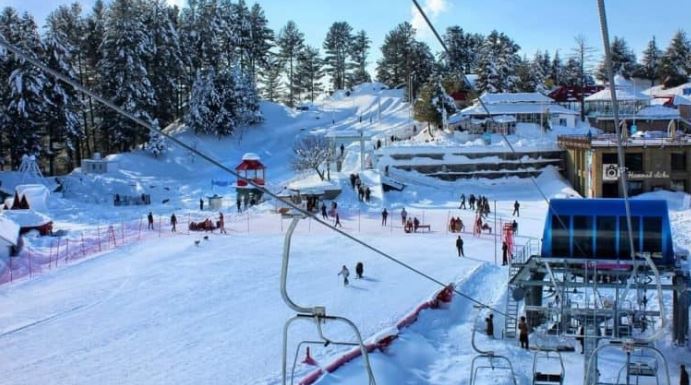
Faraz is one of hundreds of first-time skiers who flocked to the picturesque hill resort after heavy snowfall blanketed the area on start of new year.
From beginners cautiously finding their balance to seasoned skiers gliding effortlessly, Malam Jabba has transformed into a lively winter playground where joy echoes across white slopes.
Throughout the day, the sun played hide-and-seek with drifting clouds, casting shifting shadows on the snow and enhancing the valley’s magical charm.
Friends and families gathered near the slopes, children built snowmen, and visitors paused frequently to capture photos of pine trees standing tall under thick layers of snow.
Nestled in the Koh-e-Hindukush range at an altitude of 2,804 meters, Malam Jabba is Pakistan’s largest ski resort, boasting two ski tracks stretching over 800 meters.
Known for skiing, snowboarding, ice hockey, and curling, the resort has steadily grown into a symbol of winter adventure tourism in the country.
But Malam Jabba is more than just sports. The gentle chirping of birds, snow-laden forests, and distant mountain peaks create a setting that feels almost untouched.
Tourists arrive not only for adventure, but also for peace while couples on honeymoon walks, families enjoying warm meals, and travelers savoring the region’s famous brown trout fish beside crackling fires.
“This place has something very special,” said Salahuddin Sheikh, a visitor from Kohat district. “I have visited Murree and Chitral, but the snowfall and skiing experience here feels more intense and natural.”
He smiled as he spoke about sharing freshly cooked trout with his family after a long day in the snow amid cold breeze arriving from Malam Jabba hills.
The trout fish, snowfall, paragliding, skiing, chappli kabab and river rafting make Swat ideal winter tourists destination of Pakistan, he said.
The snowfall has also revived tourism across Swat’s other scenic destinations, including Miandam, Matiltan, Utror, Gabral, and Loye Sar, drawing visitors from Peshawar, Mardan, Lahore, Rawalpindi, Islamabad, and beyond.
Improved road connectivity through the Swat Motorway has made access easier, encouraging weekend travelers and families to explore the region.
Property dealer Riaz Khan, a frequent visitor to Swat, described Malam Jabba’s winter beauty as unmatched. “I have traveled to many countries, but I have not seen such a blend of accessibility, natural beauty, snowfall, and peaceful environment in one place,” he said.
He emphasized that Pakistan must now tell these stories digitally, allowing the world to see what Malam Jabba truly offers.
Beyond its natural beauty, Swat carries deep historical significance and ancient heritage.
Bakhtzada Khan, Assistant Director at the Archaeology and Museums Department highlighted the valley’s importance in Buddhist history, with sites such as the Saidu Sharif Museum and Butkara Buddhist Monastery continuing to attract scholars and monks from around the world.
Experts believed that tourism is not just about leisure but livelihoods for people of Swat.
Dr. Zilakat Malik, former Chairman of Economics Depatment at the University of Peshawar, said that Pakistan’s tourism revenue has grown significantly in recent years due to supportive government policies, stressing that destinations like Malam Jabba can play a vital role in economic uplift, especially for rural communities.
To sustain this growth, the spokesman of KP Tourism and Culture Authority has launched several initiatives, including new ecotourism trails, camping pods, infrastructure development, and an Integrated Tourism Zone at Mankyal under the World Bank-supported KP Integrated Tourism Project. Tourism Police have also been deployed at key locations to ensure visitor safety and comfort.
As evening descends, Malam Jabba’s slopes slowly empty, but the warmth of shared experiences lingers. For Faraz Ali and countless others, the snow is more than frozen water but it is freedom, discovery, and a reminder that sometimes, the most unforgettable journeys begin with a single, shaky slide down a white mountain.