

by Muhammad Mohsin Iqbal
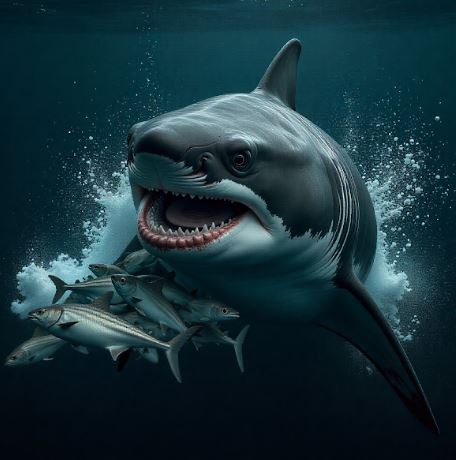
From the very dawn of creation, the universe has moved according to a divine equilibrium. Allah Almighty brought into existence innumerable creatures, assigning each its sphere and sustenance. On land, human beings were endowed with intellect, conscience, and moral responsibility; in the oceans, an astonishing diversity of life was created, numbering in the hundreds of thousands of known species, with many more still undiscovered. Among these aquatic beings, the Whale Shark (Rhincodon Typus) stands as the largest fish, gliding through the seas and sustaining itself by filtering vast volumes of water to consume plankton and tiny fish. In the underwater world, the larger feeding upon the smaller is part of a natural order, governed by instinct rather than arrogance or domination.

Human society, however, was never meant to mirror this crude biological struggle. Nations were not created to swallow one another merely because they possess greater strength. Whether large or small, wealthy or poor, every country has its own historical identity, territorial integrity, and moral right to exist with dignity within its geographical boundaries. Yet history tells a sobering story. For centuries, powerful empires invaded weaker lands, plundered resources, redrew borders, and justified their aggression as destiny or necessity. The consequences were ruinous wars, shattered civilizations, and unending human suffering.

The unprecedented devastation of the First World War forced humanity to confront the cost of unchecked power. Millions perished, economies collapsed, and entire regions were destabilized. In response, the League of Nations was established in 1920 as the first serious attempt to replace force with collective security and dialogue. Its declared aims were lofty; preventing war, resolving disputes peacefully, promoting disarmament, and fostering cooperation among nations. Yet beneath its noble language lay structural weaknesses. Major powers remained absent or indifferent, enforcement mechanisms were feeble, and decision-making required unanimity. When confronted with aggression in Manchuria, Ethiopia and Europe, the League stood helpless, ultimately collapsing under the weight of its own contradictions.
After the Second World War, even more catastrophic than the first, the United Nations (UN) emerged in 1945 with renewed promises. This new organization sought to correct earlier failures by including major powers and granting binding authority to the Security Council. Its Charter pledged to save succeeding generations from the scourge of war, to uphold International Law, and to protect the sovereignty of states. For many newly decolonized nations, the UN symbolized hope that the age of imperial domination had ended and that justice would no longer be subordinate to power.
Yet recent events have once again exposed the fragility of these ideals. The arrest of the Venezuelan President and his wife by the United States, coupled with claims of control over Venezuela’s internal affairs and oil reserves, has raised profound questions about the relevance of international law. The open declaration by the US President that he does not recognize international law in this context has shocked even seasoned observers. Political analysts widely believe that Venezuela’s decision to sell oil to Russia and China—bypassing the dollar and opting for national currencies—triggered deep anxiety in Washington, as it threatened the economic dominance upon which American power largely rests.
Although Russia and China formally condemned these actions, the global response remained restrained, reinforcing the perception that international law is applied selectively. Some commentators argue that an unspoken arrangement among major powers is taking shape; China asserting itself over Taiwan, Russia consolidating its hold over Ukraine, and the United States extending its reach over Venezuela. If this logic prevails, the world will no longer be governed by law, morality, or collective responsibility, but by raw power—the rule of the strongest baton.
The repercussions of such conduct extend far beyond Venezuela. Even America’s traditional allies now observe these developments with unease, questioning whether sovereignty is respected only when it aligns with dominant interests. Elsewhere, similar patterns are discernible. In Iran, repeated waves of unrest are widely viewed by independent critics as externally encouraged, reflecting a belief that regime change becomes inevitable wherever powerful actors feel discomforted. Such interventions deepen global mistrust and further erode confidence in international institutions.
Nearly a century ago, Allama Muhammad Iqbal captured this reality with piercing insight.
من ازیں بیش ندانم کہ کفن دزدے چند۔
بہر تقسیم قبور انجمنے ساختہ اند۔
Reflecting on the League of Nations, he wrote that an “association” had been formed by shroud thieves to divide the graves among themselves. In his moral imagination, these institutions were not guardians of peace but refined instruments for legitimizing the division of defeated nations and fallen empires. His harsh imagery likened the powerful to those who steal burial shrouds from the dead—the lowest form of thief—exposing the moral bankruptcy hidden beneath polite diplomacy.
Nature, even in its apparent cruelty, maintains balance. The whale shark consumes immense quantities of microscopic life, yet the oceans survive because harmony is preserved. Human civilization, blessed with reason, ethics, and law, has far less excuse for predatory behavior. If international institutions continue to serve only the interests of the powerful, their legitimacy will collapse entirely. Without justice, peace becomes a hollow slogan; without law, the world risks descending into a chaos more destructive than any natural struggle for survival.