

DNA
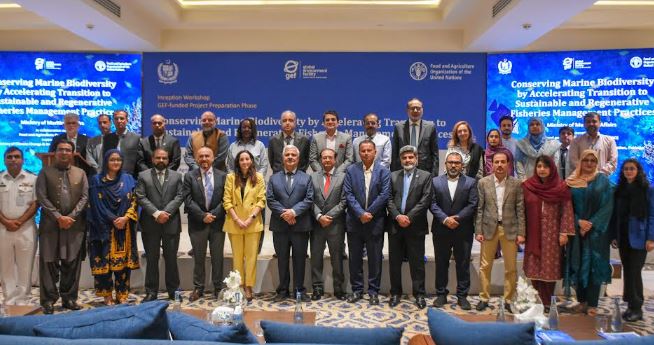
Islamabad, 21 Oct – The Ministry of Maritime Affairs and FAO are launching a collaborative effort to transform Pakistan’s marine fisheries through stronger biodiversity protection, sustainable fishing practices and regenerative fisheries management.
The proposed project, supported by FAO through a Global Environment Facility (GEF) Project Preparation Grant, aims to strengthen fisheries governance, promote sustainable fishing practices, mobilize private-sector engagement and improve fisheries monitoring and data systems.
Pakistan’s marine fisheries support millions of livelihoods, providing direct employment to an estimated 390,000 people and indirect employment to over 1.25 million. However, unsustainable fishing, illegal practices, habitat degradation and climate change threaten marine biodiversity and the sector’s long-term sustainability.
“Pakistan’s marine resources are vital to our ecological heritage, food security and coastal livelihoods. Through this initiative, we aim to strengthen coordination, promote responsible fishing practices and support evidence-based fisheries management to protect marine biodiversity while sustaining the livelihoods of coastal communities,” said Capt. (Retd.) Muhammad Khurram Agha, Federal Secretary, Ministry of Maritime Affairs.
“FAO is supporting the Government of Pakistan in conserving globally significant marine biodiversity by strengthening fisheries governance, accelerating the transition to sustainable and regenerative fishing practices, and improving fisheries and biodiversity monitoring systems. Through close collaboration with federal and provincial institutions, the private sector and coastal communities, this initiative aims to advance biodiversity conservation while sustaining fisheries and livelihoods,” said Emmah Kamau, Officer In-Charge, FAO Pakistan.
The proposed project has three main areas of focus: strengthening policy, regulation and financing; supporting the transition to sustainable fisheries practices through private-sector engagement and value-chain support; and improving data, monitoring, knowledge management and decision-making.
In closing, stakeholders from government institutions and the private sector shared their views and suggestions, contributing to the ongoing consultations. Inputs from federal and provincial institutions, research organizations, the private sector, fisherfolk and coastal communities will inform the development of the full project document. The initiative aims to contribute to Pakistan’s biodiversity conservation commitments while promoting more sustainable, resilient and inclusive marine fisheries.