DNA
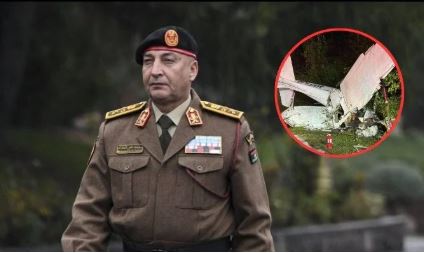
TRIPOLI: The sudden death of Libya’s army chief of staff, General Mohammed Ali Ahmed Al-Haddad, in a plane crash near Turkey’s capital has sparked shock, grief and growing speculation across the war-torn North African country, with questions multiplying over whether the incident was a tragic accident or something far more sinister.
General Haddad, a senior military figure aligned with Libya’s UN-recognised Government of National Unity (GNU) based in Tripoli, died on Tuesday when the jet he was travelling in crashed shortly after departing Ankara. According to Libyan Prime Minister Abdulhamid Dbeibah, the aircraft went down while returning from an official visit to Turkey, killing all five people on board.
“This followed a tragic and painful incident,” Dbeibah said in a statement, describing the loss as a major blow to Libya’s military institution and the nation as a whole. Alongside Haddad, the victims included the commander of Libya’s ground forces, the director of the military manufacturing authority, an adviser to the chief of staff, and a photographer from Haddad’s office.
Turkish authorities confirmed that the Dassault Falcon 50-type jet took off from Ankara’s Esenboga Airport at around 1710 GMT, en route to Tripoli. Radio contact was lost roughly 40 minutes later while the aircraft was flying over the Haymana district of Ankara province. Turkish Interior Minister Ali Yerlikaya said the plane had requested an emergency landing, but communication could not be re-established. The wreckage was later found near the village of Kesikkavak.
Despite official caution, speculation has intensified within Libya and among regional observers. Several Libyan sources, speaking privately, have suggested that the possibility of foul play cannot be ruled out. Some have even hinted that forces loyal to eastern Libya’s strongman, General Khalifa Belqasim Haftar, may have had an interest in eliminating a key military figure of the Tripoli government. No evidence has been presented publicly to support these claims, but the long-running rivalry between Libya’s eastern and western factions has kept such theories alive.
Libya has remained deeply divided since the 2011 overthrow of Muammar Qaddafi, with rival administrations and armed groups competing for power, territory and international recognition. General Haddad was a prominent figure within the GNU’s military structure and played a key role in coordination with foreign allies, particularly Turkey.
Pakistan, for its part, is seen as backing General Haftar’s eastern-based forces, reflecting Islamabad’s broader regional alignments and strategic considerations. This contrasts sharply with Turkey’s long-standing support for the Tripoli government, underlining how Libya’s internal conflict has become a theatre for competing regional and international interests.
The GNU has declared three days of official mourning across Libya, but the atmosphere is far from calm. Social media platforms and local outlets are rife with rumours, theories and accusations. Many Libyans recall a history of assassinations, sabotage and mysterious deaths that have marked the country’s post-Qaddafi era, fuelling scepticism toward official explanations.