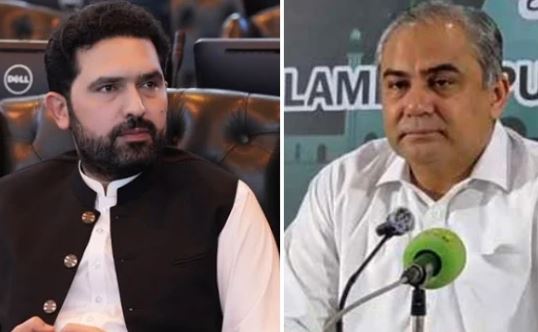
ISLAMABAD/PESHAWAR: Interior Minister Mohsin Naqvi on Saturday criticised the Khyber Pakhtunkhwa government over a provision requiring police to seek the provincial assembly speaker’s permission before arresting a lawmaker accused of a criminal offence.
In a post on X, Naqvi questioned whether police would also have to wait for the Speaker’s approval if a lawmaker were accused of killing someone.
“What next? If an MPA kills someone, will the police first wait for the Speaker’s permission to arrest him?” Naqvi asked, calling it an “extraordinary version of ‘equality before law’.”
Naqvi’s criticism came after the KP Assembly Secretariat sent a letter to the inspector general of police (IGP) outlining the procedure for arresting or detaining lawmakers.
The letter stated that the KP speaker’s permission is required before an MPA can be arrested in a criminal case or detained under an executive order.
It read that the magistrate or relevant authority must provide reasons for the proposed action and submit a request to the speaker. The speaker could also seek a police report or challan in the public interest and order an inquiry before a challan is submitted to court, it added.
The KP Assembly Secretariat directed the IGP to ensure that police follow the prescribed procedure.
The interior minister’s criticism follows the KP cabinet’s approval of the revised police law on Wednesday, after changes were made to address members’ concerns.
Earlier on Thursday, Minister of State for Interior Talal Chaudhry said the legislation could affect the police command structure, discipline, morale and its role in combating terrorism. He said the proposed law would be challenged in the Supreme Court.
Chaudhry has also objected to changes in the powers of the IGP and the proposed transfer of authority over appointments and postings of senior police officers to the provincial government.
The federal government has argued that provincial legislation must remain within the constitutional and legal framework governing the Police Service of Pakistan.
The KP government, meanwhile, has moved forward with the revised legislation, which proposes changes to the police command, administrative arrangements and accountability mechanisms.