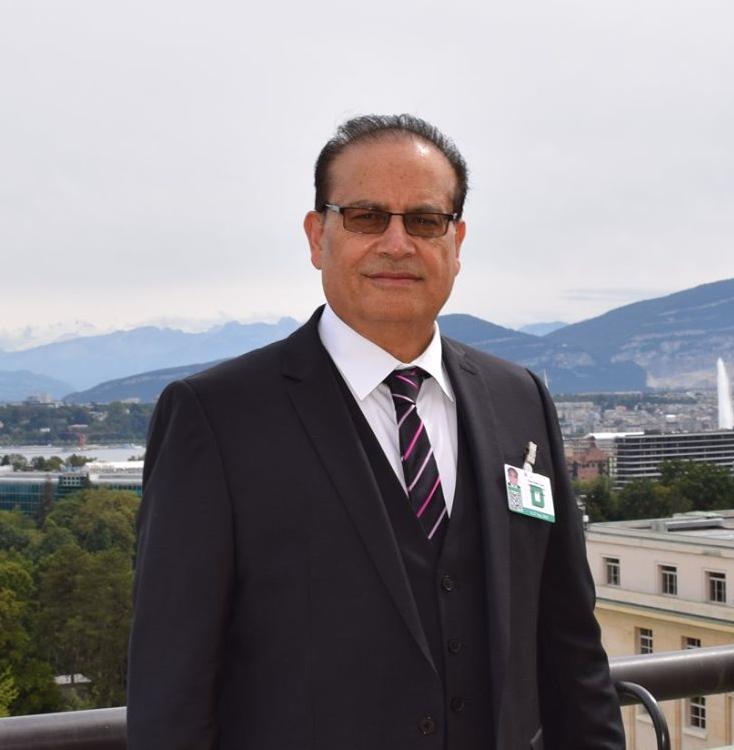
Qamar Bashir
For nations blessed with oil, the central question is never geological. It is political. Oil can finance schools, hospitals, roads, dignity, and independence—or it can finance coups, client rulers, sanctions, wars, and broken states. The difference is not the size of the reserves under the sand. The difference is whether the owners of that oil are allowed to own it in practice.
Before 1953, Iran’s petroleum was not simply an export commodity. It was an imperial system. Britain’s Anglo-Iranian Oil Company dominated production and refining, and Iran’s share of value was widely viewed inside Iran as humiliating—wealth extracted from Iranian soil, feeding foreign prosperity while ordinary Iranians remained poor. In 1951, Prime Minister Mohammad Mosaddegh took the step that shook the entire post-war order: he pushed legislation to nationalize Iran’s oil industry.
That single principle—“Iranian oil is for Iranian people”—was treated in London and Washington not as a commercial dispute but as a strategic revolt. In August 1953, Mosaddegh was removed in a coup funded by the United States and the United Kingdom, and the Shah’s rule was restored. From the Iranian public’s perspective, this was not merely regime change; it was a message to every oil-producing nation: ownership is tolerated only until it threatens the architecture of Western control.
This is how the “oil curse” is manufactured. The curse is not oil itself. The curse is what happens when a nation tries to convert oil into sovereignty.
Look at the sheer scale of what is at stake. Venezuela sits on roughly 303 billion barrels of proven reserves; Saudi Arabia about 267 billion; Iran about 208.6 billion; Iraq about 145 billion; Kuwait about 101.5 billion; Libya about 48.4 billion; and even gas-rich Qatar holds about 25.2 billion barrels of proven crude reserves. In today’s prices, this is not “resource wealth.” It is civilizational leverage—trillions upon trillions of dollars in potential value across generations.
So the key fight is not only over barrels in the ground, but over the entire chain that converts those barrels into money: drilling technology, service contracts, shipping insurance, tankers, refining capacity, trading houses, dollar clearing, and finally the security umbrella that protects friendly producers and suffocates defiant ones.
That chain is where American and British power has historically lived.
In the Gulf monarchies, the relationship evolved into a bargain: security and survival in exchange for strategic alignment. The U.S. became the guarantor of maritime routes and regime stability, and in return the Gulf became the world’s most important energy reservoir within an American-led order. The United States itself is also a giant producer—about 21.91 million barrels per day in 2023, the largest share of world production—so “control” is not only about imports; it’s also about shaping global pricing, shipping lanes, sanctions enforcement, and who can sell to whom.
But when a producer refuses alignment, the logic flips: oil stops being “their national asset” and becomes “the world’s problem”—a justification for pressure.
Iran is the classic case. After the Shah was imposed back into power with Western backing, Iran became a central pillar of Western strategy—until popular resistance exploded into the 1979 revolution. The hostage crisis was a symptom, not the root: the deeper driver was the belief among millions of Iranians that their wealth had been managed for outsiders and for a domestic elite seen as subordinate to foreign interests. The revolution survived because it was not merely a government; it became a public identity—built on defiance and sacrifice. That is why decades of pressure did not dissolve it.
Then came the region’s great furnace: the Iran-Iraq war. Saddam Hussein was treated as a counterweight to revolutionary Iran; the result was catastrophic human loss and the militarization of the entire Middle East. Even when that era ended, the template remained: defy the Western order and you face isolation, sanctions, and, if the moment suits, destruction.
Iraq’s later destruction was sold to the public with dramatic claims. But the deeper strategic obsession was always the same: who commands the oil state, and whose system the oil state finances.
And now, in December 2025, the pattern is unfolding—loudly—in Venezuela.
Reuters reports that on December 20, 2025, the United States intercepted an oil tanker near Venezuela. The vessel was reportedly carrying 1.8 million barrels of Venezuelan crude bound for China. Reuters also reports that U.S. authorities are pursuing additional vessels, describing an expanding crackdown and blockade concept aimed at sanctioned flows.
This is not symbolic enforcement. It attacks the bloodstream of the Venezuelan economy, which relies heavily on oil revenue. Reuters notes exports falling sharply (from over 1 million bpd in September to an estimated ~702,000 bpd in December), implying severe fiscal strangulation.
And notice the exception that exposes the logic: even as “dark fleet” shipping is disrupted, Chevron continues operating under a U.S. license structure. The Wall Street Journal describes Venezuelan shipping largely stalling “except Chevron,” underscoring how sanctions enforcement can separate “illegal oil” from “licensed oil”—meaning the barrel is acceptable when it flows through approved channels. Reuters similarly describes Chevron’s continued role under restricted authorization.
This is the modern oil empire: not necessarily ownership of the wells, but command over the rules of extraction, trade, and cashflow.
Across the region, Western majors remain embedded where states permit them—often through partnerships, service contracts, or joint ventures. Iraq, for instance, is again signing major deals with U.S. and European firms; Reuters reports ExxonMobil’s return via an agreement tied to the giant Majnoon field. Libya’s National Oil Corporation is engaging BP and Shell to study major fields, a sign of how foreign expertise re-enters when political conditions allow. Qatar’s North Field expansion, the backbone of future global gas supply, includes partnerships with ExxonMobil and other Western companies. Even in the Saudi-Kuwait “Neutral Zone,” Chevron’s legacy role appears in joint operations alongside state entities.
So when the West “benefits,” it is not always by directly stealing national revenue in one crude transaction. It benefits by sitting at multiple toll booths: technology and services, project equity stakes, shipping and trading, refining margins, finance and insurance, and—most importantly—strategic power: the ability to punish a seller, freeze a buyer, choke a port, or seize a ship.
That is why oil becomes a curse precisely at the moment a nation tries to treat it as democratic wealth. The moment leaders say, “this belongs to our people,” the system asks: will you still obey? If yes, you are protected. If not, your “resource blessing” is recast as a reason you must be disciplined.
This is the real warning to oil nations—whether in the Gulf, in Africa, or in Latin America. Oil is wealth only if you are allowed to keep it wealth. If you attempt to convert it into independence against the priorities of great powers, oil becomes the trigger for destabilization, sanctions, and war.
And that is why the same barrel can build prosperity in one country and produce ruin in another. The difference is not the oil. The difference is who is permitted to command the oil.
Qamar Bashir
Press Secretary to the President (Rtd)
Former Press Minister, Embassy of Pakistan to France
Former Press Attaché to Malaysia
Former MD, SRBC | Macomb, Michigan, USA