The roundtable was convened in the backdrop of Uzbek President Shavkat Mirziyoyev’s landmark visit to Pakistan, which was widely hailed as a great success. Ambassador Alisher Tukhtaev of Uzbekistan moderated the session, warmly welcoming participants
Asnar M Bhatti
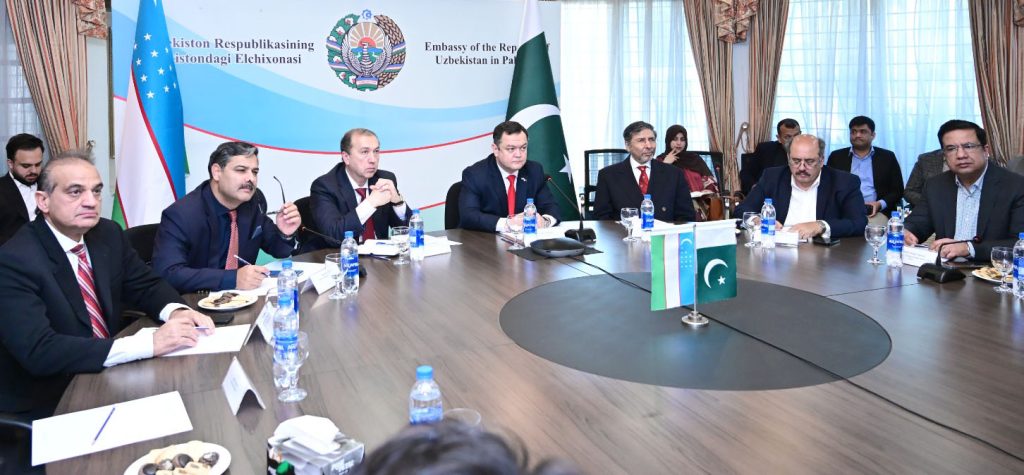
ISLAMABAD: Experts and policymakers have long emphasized that peace and stability in Afghanistan are indispensable for unlocking the full potential of regional connectivity, trade, and prosperity. Afghanistan’s geographic position makes it a natural bridge between Central Asia and South Asia, and without stability there, the vision of seamless integration across the region remains incomplete. This consensus was strongly echoed during a recent roundtable discussion organized by the Embassy of Uzbekistan in Islamabad, titled “Uzbekistan and Pakistan on the Path to Strategic Partnership.”
The roundtable was convened in the backdrop of Uzbek President Shavkat Mirziyoyev’s landmark visit to Pakistan, which was widely hailed as a great success. Ambassador Alisher Tukhtaev of Uzbekistan moderated the session, warmly welcoming participants and expressing hope that the presidential visit would open new dimensions in bilateral relations. He underscored that the momentum generated by the visit should be harnessed to elevate ties to unprecedented heights.
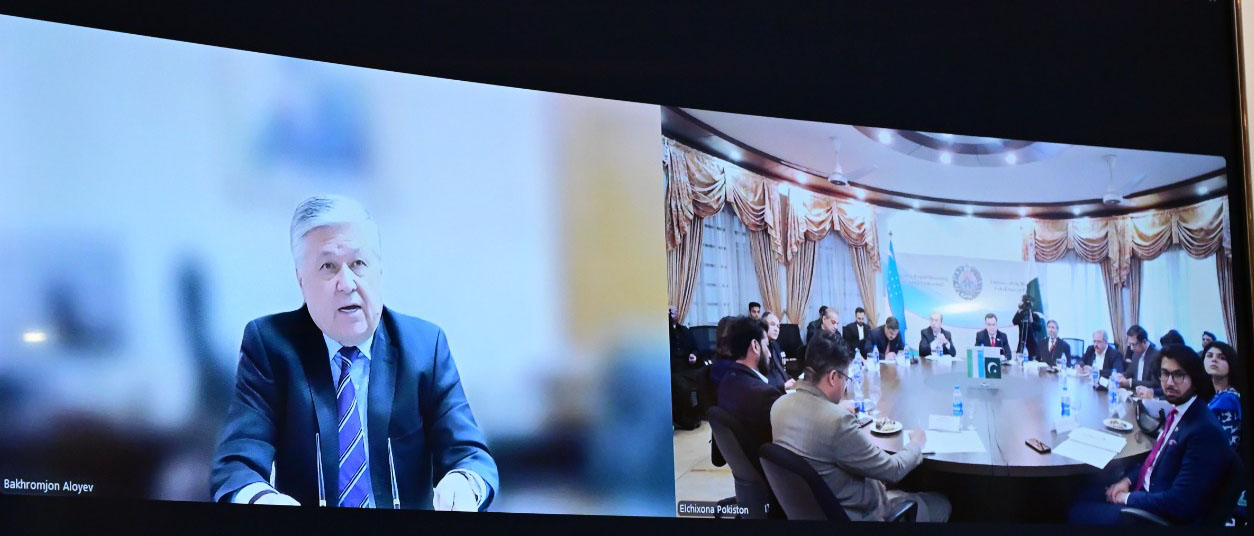
Joining the session online, B. Aloev, First Deputy Minister of Foreign Affairs of Uzbekistan, described the visit as highly fruitful. Having accompanied President Mirziyoyev to Pakistan, he highlighted the Uzbek leader’s constructive meetings with Pakistan’s President, Prime Minister, and Chief of Defence Forces. Aloev noted that both sides had agreed to ambitiously raise bilateral trade to $2 billion within five years—a target he described as challenging yet achievable, given the strong political will on both sides.
Ambassador Jauhar Saleem also addressed the gathering, emphasizing the cultural and historical similarities between Uzbekistan and Pakistan. He expressed optimism that people-to-people exchanges would deepen, strengthening the social fabric of bilateral ties. Intellectual and academic voices added further weight to the discussion.
Professor Zafar Nawaz Jaspal stressed that regional peace and stability were prerequisites for progress, warning that terrorism remained a shared threat. He argued that terrorist groups operate in syndicates, and therefore a syndicate-style collective response was essential. Pakistan, he noted, has long borne the brunt of fighting terrorism, but regional cooperation is vital for lasting peace.
Khalid Taimur Akram, Executive Director of the Pakistan Research Center for a Community with Shared Future, highlighted the economic aspects of the visit. He pointed out the strong determination on both sides to expand relations across trade, investment, and infrastructure.
Similarly, Asif Tanvir from the Muslim Institute spoke about the deep cultural and religious connections binding the two nations, suggesting that these ties could serve as a solid foundation for broader cooperation.
The roundtable made clear that the Uzbek president’s visit was not just a diplomatic milestone but a strategic step toward reshaping regional dynamics. By reaffirming their commitment to peace in Afghanistan, both Uzbekistan and Pakistan signaled their recognition that stability there is the linchpin for regional connectivity. Enhanced trade, cultural exchanges, and security cooperation are all contingent upon this peace.
In essence, the dialogue underscored a shared vision: a stable Afghanistan enabling Central and South Asia to connect, trade, and prosper together. With strong political will, ambitious economic targets, and a commitment to collective security, Uzbekistan and Pakistan appear poised to take their partnership to new heights ushering in a future of greater regional integration and stability.