UITED NATIONS, APR 10: While last year’s successful legislative elections in Kosovo featured broad participation, Pakistan has warned of the
“complex and intricate web of challenges” ahead and called for Kosovo-Serbia dialogue for establishing peace and stability in the Southeast European region.
“Trust building between the two sides remains essential for moving forward,” Ambassador Usman Jadoon, deputy permanent representative of Pakistan to the United Nations, told the UN Security Council on Wednesday.
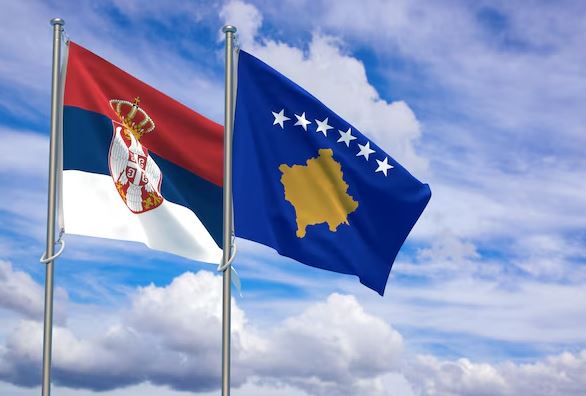
Kosovo declared independence from Serbia in February 2008 following years of ethnic tensions, but Serbia has not recognized the declaration. The European Union has since been facilitating dialogue between the parties on a range of practical matters.
Speaking in the course of a debate on the United Nations Mission in Kosovo (UNMIK), the Pakistani envoy said divisive rhetoric, hate speech, and inter-communal tensions should not be allowed to take root and disturb peace and tranquillity.
Pakistani, he said, believes that only a sustained and meaningful dialogue process, a toning down of political rhetoric, and the full implementation of commitments made under mutual accords can help overcome all challenges and lead to lasting peace and stability in the region.
“We appreciate European Union’s steadfast commitment and efforts to facilitate dialogue between Belgrade and Pristina,” the Pakistani envoy said, hoping that both sides will continue to build on the positive momentum, refrain from unilateral actions that stoke tensions, and continue constructive cooperation to resolve all outstanding issues.
Underscoring that “the Balkans have suffered enough from the failures of the past”, Ambassador Jadoon urged: “The future, surely, must be different.”
Both parties must choose the path of “principle over prejudice and patience over provocation”, he said.
“What the region urgently needs is meaningful engagement, a firm commitment to the principles of mutual respect, recognition of mutual sensitivities, safeguarding social and economic rights of all peoples, and promotion of the spirit of peaceful co-existence, and inter-communal harmony, Ambassador Jadoon added.
At the outset, Peter Due, Special Representative and Head of UNMIK, told the Security Council during his first briefing that while the December 2025 polls featured broad participation, the momentum is being tested.
He noted that the process of electing a new President remains incomplete, following a year of political stalemate.
Due, who took the key role three months ago, emphasized that the return of Kosovo Serb mayors in the north was a positive step yet warned of “challenges” including administrative gaps and language barriers.
“These are not merely technical issues,” he said, urging continued engagement. Guided by Resolution 1244 (1999), UNMIK is focusing its efforts on community-level dialogue.
“Trust among communities, and between communities and institutions, allows progress, dialogue and cooperation to take root,” he stressed.
The mission itself is navigating a UN-wide liquidity crisis, having reduced encumbered positions by nearly 30 per cent. Despite these financial constraints, Due insisted the mission remains vital in fostering an inclusive culture “where every community sees itself reflected in the path forward”.