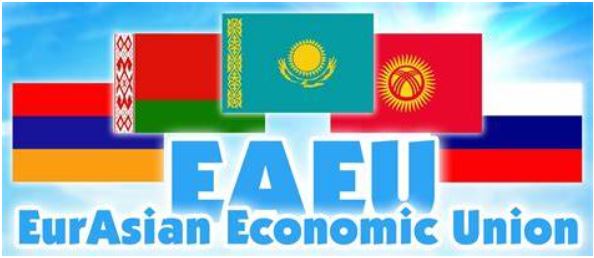
ISLAMABAD, 07 AUG (DNA) — Pakistan is moving forward with efforts to establish a free trade agreement (FTA) with the Eurasian Economic Union (EAEU) while simultaneously broadening its strategic partnership with Russia in trade, connectivity, education, artificial intelligence, culture and tourism, Pakistan’s Ambassador to Russia, Faisal Niaz Tirmizi, said in an interview with Russia’s TASS News Agency.
Ambassador Tirmizi said Pakistan had already launched the process of establishing a free trade area with the EAEU, describing Pakistan as a “natural partner” in the North-South Transport Corridor. He expressed confidence that in the near future people from cities such as Murmansk, Minsk and Moscow would be able to travel overland to Islamabad, Karachi and Gwadar through countries connected by the corridor.
He said Pakistan believes it belongs to the broader Eurasian economic region and should have stronger trade, business and people-to-people links with all EAEU member states. He said discussions have already taken place between Pakistan’s Minister of Commerce and the leadership of the Eurasian Economic Union, and while negotiations could take several months or up to two years.
Highlighting the economic potential of the arrangement, Tirmizi said Pakistan could source a range of products from Russia, Kazakhstan, Belarus and Kyrgyzstan while offering its own goods to the bloc. Such cooperation, he said, would strengthen economic and food security for all participating countries while promoting regional peace and connectivity through closer commercial and cultural relations.
As regards bilateral diplomacy, the ambassador said Prime Minister Shehbaz Sharif’s planned visit to Russia, originally scheduled for March, had been postponed because of developments in the Middle East. He said both sides are now working to finalize new dates, with the visit expected to take place during the last quarter of the year, most likely in autumn.
Faisal Tirmizi said the visit would be significant as Prime Minister Shehbaz Sharif and Russian President Vladimir Putin have already met several times in recent years and are also expected to interact on the sidelines of the Shanghai Cooperation Organisation (SCO) Leaders’ Summit in Bishkek. During the Moscow visit, he said, the two countries are expected to sign between eight and ten agreements, including an Economic Roadmap through 2030.
Additional cooperation initiatives covering economic, social and media sectors are also planned, while accompanying events will further strengthen bilateral engagement. On regional security, Ambassador Tirmizi reiterated Pakistan’s longstanding commitment to diplomacy and the peaceful resolution of disputes. He said Pakistan has consistently supported dialogue since its independence and continues to play a constructive role in reducing tensions in the region.
Referring to recent developments involving Iran and the United States, he said Pakistan remains engaged with both sides and believes any escalation would have serious consequences not only for regional stability but also for global energy and fertilizer markets. Pakistan, he said, continues to maintain communication with both countries while also coordinating with regional partners, including Qatar, in pursuit of lasting peace.
The ambassador also identified artificial intelligence as one of the most promising areas for bilateral cooperation. He said both Pakistan and Russia possess highly skilled information technology professionals and are placing increasing emphasis on AI development. Pakistan is already cooperating with Russia’s RUSSOFT Association in the information technology sector, he said, expressing confidence that experts from both countries could jointly contribute to global technological innovation while benefiting from Pakistan’s young workforce and Russia’s scientific expertise.
As regards tourism and connectivity, Ambassador Tirmizi said, these remain among his top priorities. Stressing that affordable logistics and direct air links are essential for expanding business and travel, he described Pakistan as a country rich in natural beauty, history and cultural diversity. The ambassador also emphasized the importance of cultural diplomacy. Pakistan will celebrate its Independence Day in Russia with performances by renowned violinist Ustad Rais Khan and the folk fusion group Khumariyaan, showcasing Pakistani music and culture.
At the same time, he said Pakistan is working to increase awareness of Russian culture among Pakistanis through educational and cultural exchanges. Reflecting on his own appreciation of Russian literature, music and art, Tirmizi said both countries possess rich cultural traditions that can bring their peoples closer together. Ambassadors, he concluded, serve as bridges connecting societies through culture, education, tourism and business, laying the foundations for stronger and more enduring bilateral relations. — DNA