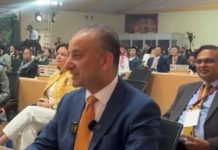
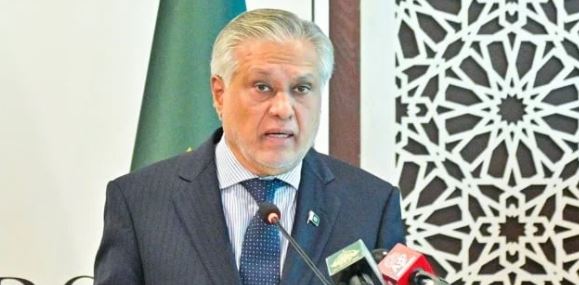
ISLAMABAD: Deputy Prime Minister Ishaq Dar has expressed hope for an early agreement between the United States and Iran, warning that the world cannot afford a prolonged conflict in the Middle East.
“I’m a born optimist. I think I would certainly expect that sooner or later, I hope it’s sooner, that we will achieve that objective. Because, you see, the world cannot afford [it]. See the energy supply chain disruptions. See the price hikes. See the people suffering. And even in our country, people are suffering,” the DPM said in an interview with Euronews broadcast by PTV News on Saturday.
Despite subsequent violations of the June 18 accord, DPM Dar said Islamabad had not abandoned the peace process and continued to urge both Washington and Tehran to honour their commitments.
In response to a question, he reiterated Pakistan’s commitment to an independent, multilateral foreign policy and outlined Islamabad’s role in mediating direct talks between the United States and Iran.
Pakistan’s role in US-Iran mediation
The deputy premier said dialogue and diplomacy remained the only viable means of resolving major international conflicts, rejecting unilateralism and bloc politics. He added that Pakistan had championed peaceful dispute resolution and respect for state sovereignty during its 2025-26 tenure on the UN Security Council.
Recalling the outbreak of hostilities on February 28, he said Pakistan was the first country to condemn the Israeli strike.
He said he had contacted Iranian Foreign Minister Abbas Araghchi immediately afterwards, urging restraint and advising Tehran against targeting Gulf and other Middle Eastern states. Iran later launched strikes on US bases in the region, he added.
He said Pakistan’s diplomatic efforts culminated in Islamabad hosting the first direct, face-to-face negotiations between Washington and Tehran in 47 years on April 10 and 11.
The 21-hour session brought the two sides close to an agreement before one delegation paused the talks for consultations with its leadership. Continued Pakistani mediation eventually led to the June 18 ‘Islamabad Memorandum of Understanding’, he said, adding that the framework was signed remotely by US President Donald Trump, who was attending the G7 summit in Europe, and the Iranian president.
DPM Dar also highlighted a five-point Middle East peace initiative formulated during his March 31 visit to China, where he met Foreign Minister Wang Yi.
R4, E4 push for regional de-escalation
In response to another question, DPM Dar called for a new regional security architecture to protect the global economy and ensure lasting peace, stressing that dialogue — not military action — was the only way to resolve Middle Eastern hostilities.
He said that, following a consensus statement issued by 12 Islamic countries in Riyadh in March, the Regional 4 (R4), comprising Pakistan, Saudi Arabia, Turkiye and Egypt, had actively worked to promote restraint.
The efforts expanded on October 23 in Istanbul through talks with the E4 — the United Kingdom, France, Germany and Italy. Germany has since invited both groups for follow-up discussions in December, he added.
“This is a combined responsibility to keep both parties cool and make them understand that there is no solution through kinetic actions — it has to be through dialogue and diplomacy,” the DPM said.
Pakistan maintains ties with US, China
Addressing relations with Washington and Beijing, DPM Dar said Pakistan currently enjoyed proactive engagement with the United States, despite the historically cyclical nature of bilateral ties. He cited Islamabad’s role as the sole mutually agreed venue for direct US-Iran talks as evidence of the trust placed in Pakistan.
He said Pakistan maintained independent, parallel strategic and economic partnerships with the US and China, its 75-year “all-weather” ally, as well as with Europe and the Middle East.
Highlighting the importance of economic diplomacy, the DPM said it now ran alongside conventional diplomacy. He added that global peace and prosperity also required urgent reforms in international institutions, including the UN, World Bank and International Monetary Fund.
Afghanistan must act against terrorist groups
On Afghanistan, DPM Dar said Pakistan wanted to see a stable and prosperous neighbour, recalling his three visits to Kabul in 2025 aimed at breaking a four-year stalemate.
He said Islamabad had swiftly acted on Afghan requests relating to trade, the economy and refugees within eight weeks, and had also lobbied the World Bank to revive the CASA-1000 power project.
However, Pakistan’s sole demand — that Afghan soil should not be used for terrorism — remained unmet, he said.
Dar cited what he described as credible evidence shared with international institutions linking major terrorist attacks in October to groups operating from Afghanistan, including the Tehreek-e-Taliban Pakistan (TTP), Balochistan Liberation Army (BLA), Majeed Brigade, Islamic State Khorasan Province (ISKP) and East Turkestan Islamic Movement (ETIM).
Pakistan had lost 100,000 lives and suffered $150 billion in economic losses in the fight against terrorism, he said, adding that rebuilding trust required verifiable and coercive action against terrorist groups rather than verbal assurances.
Dialogue with India depends on New Delhi
On relations with India, DPM Dar said the resumption of bilateral dialogue depended on New Delhi.
He referred to the Modi-led government’s August 5, 2019 changes in Indian Illegally Occupied Jammu and Kashmir (IIOJK), which he said were unconstitutional and contravened UN Security Council resolutions, as well as the May 2025 conflict between the two nuclear-armed neighbours following the Pahalgam incident.
Prime Minister Shehbaz Sharif had immediately offered an international investigation into the incident, but India declined the proposal, Dar said.
DPM rejects India’s move on Indus Waters Treaty
The DPM also strongly objected to India’s decision to place the 1960 Indus Waters Treaty in abeyance, arguing that international agreements could not be unilaterally suspended. He cited a Court of Arbitration ruling that affirmed the treaty’s validity.
Stressing that water supplies underpinned agriculture, livelihoods and food security for Pakistan’s 260 million people, Dar said: “No treaty can be held in abeyance… Pakistan simply cannot afford to just accept any variation in the treaty.”
He said “weaponising water is not desirable” and called for respect for international agreements.
“I think international treaties need to be respected, no matter how big or small a country. So, I think we should learn these basic principles which will bring back the international order to prove that justice is there for everybody,” he added.
Pakistan’s mineral potential estimated at up to $10tr
On the economy, DPM Dar said Pakistan’s external debt stood at $130 billion, while its untapped mineral and rare-earth potential was estimated at between $6 trillion and $10 trillion.
He said the potential had been showcased at the third Pakistan Minerals Investment Forum, which was attended by representatives from 60 countries.
Reflecting on his four tenures as finance minister, Dar said Pakistan’s economy had become the world’s 24th-largest between 2013 and 2017, before policy reversals saw it fall to 47th place by 2022. He attributed previous economic crises to a lack of policy continuity.
The DPM reiterated his call for a ‘Charter of Economy’, modelled on the 2006 Charter of Democracy, to protect key economic policies from political changes.
Looking ahead, he said Pakistan was back on the path to stability and had entered CPEC 2.0 with China, expanding cooperation beyond infrastructure to technology, artificial intelligence, agriculture and livelihood sectors.
DPM Dar seeks extension of Pakistan’s GSP+ status
On relations with Europe, DPM Dar highlighted Pakistan’s improving engagement with the European Union and the United Kingdom, citing two strategic dialogues held over the past year and bilateral trade approaching $9 billion.
He urged European institutions to extend Pakistan’s GSP+ trade status, which is due to expire at the end of this year. Islamabad was fully prepared to meet all 32 conventions required under the new regime scheduled to take effect on January 1, 2029, he said.
Responding to a question about security concerns among European investors, Dar dismissed the description of Pakistan as a “high-risk market” as a matter of perception. He pointed to dedicated security forces tasked with protecting foreign investors and recent federal emergency interventions to restore governance and counterterrorism control in Khyber Pakhtunkhwa.
He said the interventions followed 13 years of provincial neglect, despite more than Rs800 billion being disbursed under the National Finance Commission (NFC) Award.
Dar said Pakistan offered considerable potential for Europe’s supply-chain diversification, particularly in food and rare-earth minerals, supported by its diaspora across Europe and the UK.
He also said Pakistan was seeking commitments from all candidates for the next UN secretary-general to pursue essential reforms in multilateral institutions.