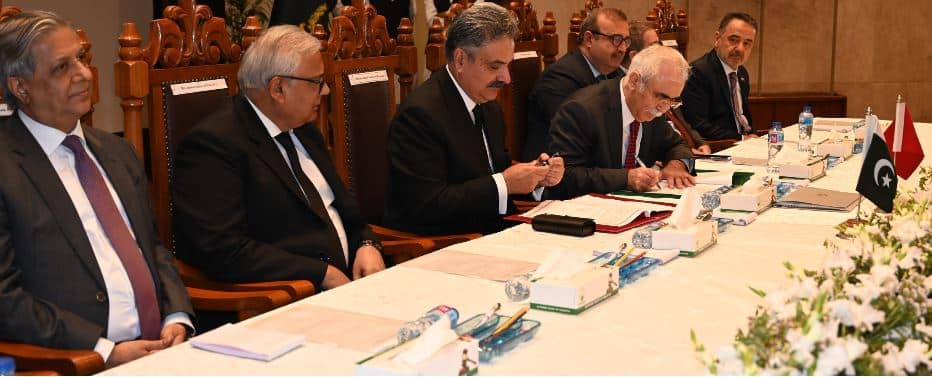
ISLAMABAD, Apr 6 (DNA): “Strengthening institutional linkages between the judiciaries of Pakistan and Türkiye is vital for enhancing efficiency, accessibility, and transparency in the administration of justice,” said Chief Justice of Pakistan Justice Yahya Afridi on Monday.
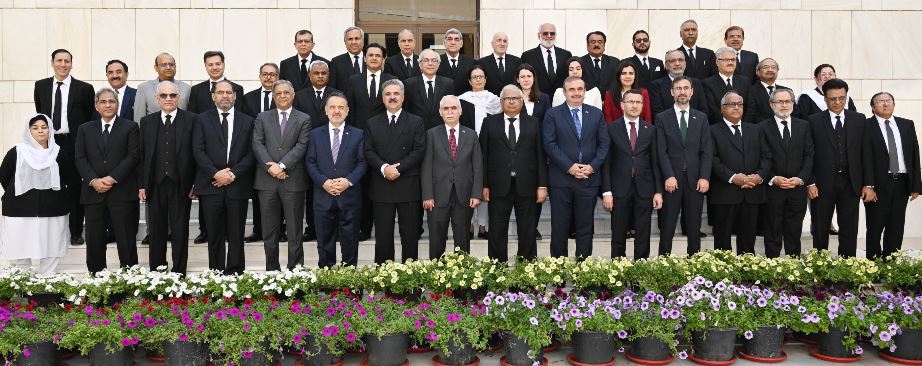
The remarks came as the Supreme Court of Pakistan hosted a high-level delegation from the Constitutional Court of Türkiye, led by its President Kadir Özkaya, who is visiting Pakistan as a state guest.
A key highlight of the visit was the signing of a Memorandum of Understanding (MoU) on judicial cooperation between the two institutions. The agreement was signed by Chief Justice Yahya Afridi and President Kadir Özkaya during a ceremony held at the Supreme Court Monday.
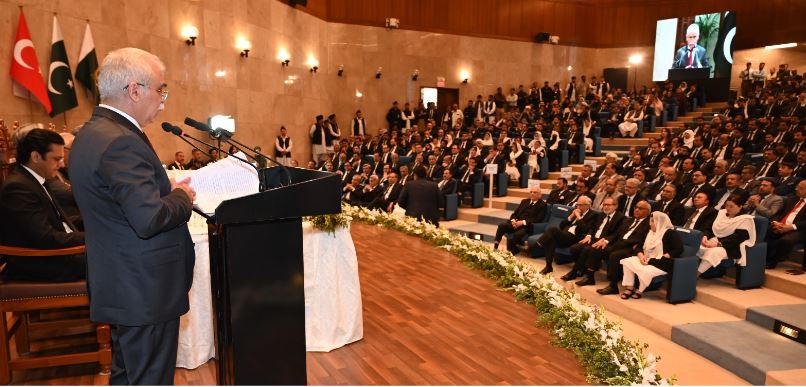
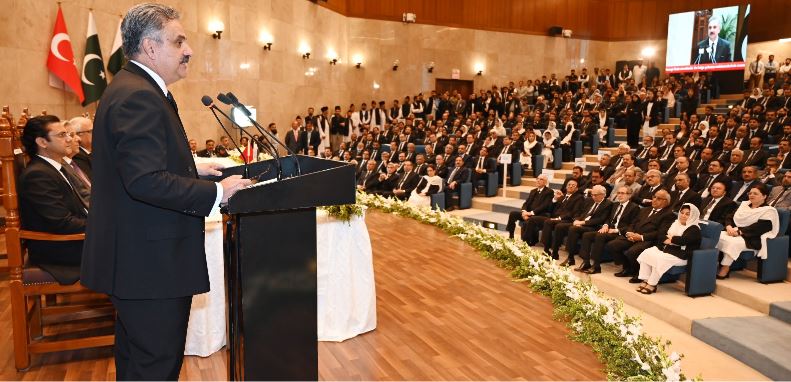
The event was attended by judges of the Federal Constitutional Court, chief justices of all high courts including Azad Jammu and Kashmir and Gilgit-Baltistan, the federal minister for law and justice, the attorney general for Pakistan, senior government officials, members of the district judiciary, and representatives of the legal fraternity.
Welcoming the delegation, the Chief Justice emphasized that such engagements play a crucial role in improving judicial performance and strengthening institutional cooperation.
In his remarks, President Özkaya appreciated the warm hospitality extended to the delegation and underscored the importance of sustained judicial dialogue and knowledge sharing between the two countries.
The MoU provides a comprehensive framework for cooperation, including judicial exchanges, capacity building, professional training, and sharing of best practices in adjudication and court administration. It places particular emphasis on the professional development of the district judiciary through joint training programmes, academic exchanges, and exposure to comparative legal systems.
The agreement also envisages collaboration in adopting modern technologies in judicial processes, including digitalisation and e-courts, to enhance efficiency, transparency, and access to justice. It further includes provisions for joint research initiatives, exchange of legal knowledge and jurisprudence, and the establishment of a joint working group to ensure effective implementation.
As a symbolic gesture of friendship and partnership, the visiting delegation planted a sapling within the premises of the Supreme Court, reflecting the strong fraternal ties between Pakistan and Türkiye and their shared commitment to sustainability.
The development marks a significant step towards deepening judicial cooperation between the two countries, reaffirming their commitment to the rule of law and institutional reform through sustained collaboration.