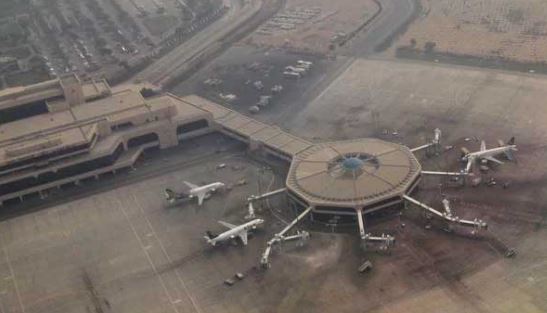
KARACHI: The Pakistan Airports Authority (PAA) on Tuesday categorically denied reports that commercial flights had been restricted, clarifying that the country’s airspace remains fully open and safe for all civil aviation traffic.
The clarification followed media reports suggesting that Pakistan had partially closed its airspace to commercial flights over security concerns linked to the US-Iran conflict, which has disrupted flight operations across parts of the region and beyond.
In a statement, the authority stressed: “Pakistan’s airspace as a whole remains fully open, safe, and completely available for all civil aviation traffic, including commercial flights.
“Air traffic services continue without hindrance, and alternative routing options are available and routinely used for all affected flows.
“No restrictions have been imposed on commercial operations, arrivals, departures, or overflights across Pakistan. Our air traffic controllers and airport teams are fully operational and managing traffic normally.”
— Reporter
— Reporter
Rejecting the media reports, the authority described the interpretation of the Notam as “incorrect and misleading”, stating that it was a routine operational advisory.
It added that the specified routes were closed “from ground level (GND) to unlimited altitude (UNL) due to standard operational reasons”.
The PAA urged media organisations and social media users to rely on official statements and avoid speculative or inaccurate headlines that could cause unnecessary concern among passengers and the wider public.
Global air travel remained in severe disarray since Sunday as sustained air strikes forced the closure of major Middle Eastern airports, including Dubai — the world’s busiest international transit hub — in one of the most significant aviation disruptions in recent years.
Transit gateways such as Dubai and Abu Dhabi in the United Arab Emirates, as well as Doha in Qatar, were either shut down or operating under heavy restrictions, with large sections of regional airspace closed.
The disruption followed US and Israeli strikes that reportedly killed Iranian Supreme Leader Ayatollah Ali Khamenei on Saturday, plunging the Gulf into heightened uncertainty.