DNA
LAHORE: The Pakistan Industrial and Traders Associations Front (PIAF) has welcomed the government’s decision to establish a Trade Facilitation Board (TFB), but stressed that the creation of another institutional forum alone would not resolve the longstanding problems faced by importers and exporters unless its decisions were implemented in letter and spirit.
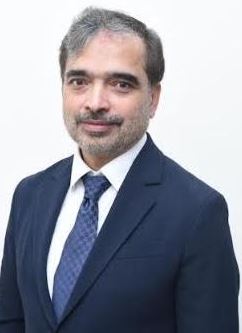
PIAF Chairman and Lahore Chamber of Commerce and Industry (LCCI) President Faheemur Rehman Saigol, along with PIAF Senior Vice Chairman Nasrullah Mughal and Vice Chairman Tahir Manzoor Chaudhry, said the real test of the new board would be its ability to deliver practical improvements in the country’s trade facilitation system.
Faheemur Rehman Saigol said Pakistan already had a number of boards, committees and institutions dealing with trade, investment, customs, ports and business facilitation. Therefore, the primary requirement was not merely the creation of another forum but ensuring effective coordination, clear responsibility, timely implementation and accountability.
He said the Trade Facilitation Board should be given clearly defined targets and timelines, with regular monitoring of progress so that decisions taken at the highest level were translated into relief for the business community.
The PIAF chairman appreciated the prime minister’s decision to focus on non-tariff barriers, port capacity, pre-arrival clearance and simplification of procedures, saying these were longstanding demands of the business community. However, he stressed that traders and exporters needed to see these reforms implemented at ports and government departments rather than remaining confined to policy documents and meetings.
He said delays in clearance, overlapping procedures, unnecessary regulatory requirements and weak coordination among departments increased the cost of doing business and reduced the competitiveness of Pakistani exports.
Saigol proposed that the Trade Facilitation Board should establish a single, time-bound implementation mechanism for its decisions, with every concerned department assigned specific responsibilities and deadlines. Progress should be reviewed regularly and bottlenecks immediately brought before the board for resolution.
He also called for greater use of digital systems and expansion of pre-arrival clearance to reduce physical interaction, paperwork and clearance time at ports. The Pakistan Single Window and other existing digital mechanisms should be fully utilised and integrated wherever possible instead of creating parallel procedures.
He said port efficiency was equally critical and urged the government to undertake a comprehensive review of cargo handling, customs clearance, port charges, scanning, examination and related procedures to bring Pakistan’s logistics costs closer to those of competing regional economies.
The PIAF chairman further stressed that the private sector must be made an integral part of the implementation process. Chambers of commerce and trade associations should be regularly consulted so that practical difficulties faced by importers, exporters and SMEs could be identified and resolved promptly.
Nasrullah Mughal and Tahir Manzoor Chaudhry said the inclusion of small and medium-sized enterprises in international trade was a welcome objective, but this would require simpler procedures, affordable logistics, easier access to information and predictable regulatory requirements.
They said the government should avoid duplication of functions among different institutions and ensure that the new board strengthens coordination rather than adding another layer to the existing system.