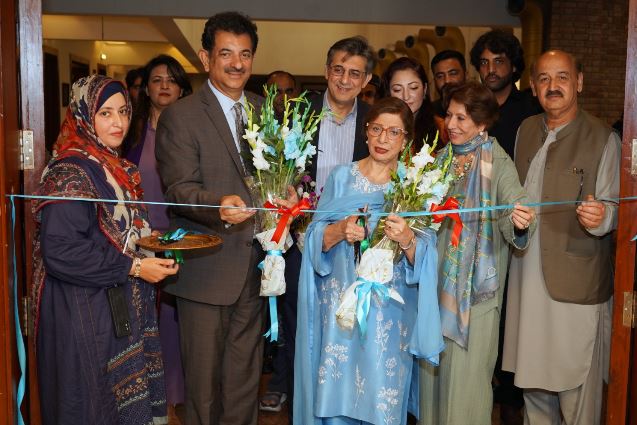
ISLAMABAD, OCT 13 /DNA/ – The Pakistan National Council of the Arts (PNCA) inaugurated a landmark solo exhibition titled “WHAT REMAINS TO BE SEEN” by distinguished impressionist painter NusratJi at the National Art Gallery, Islamabad.
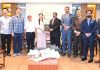
The ceremony was graced by Chief Guest Mr. Aurangzeb Khan Khichi, Federal Minister for National Heritage & Culture Division (NH&CD), along with prominent dignitaries including Ms. Sultana Siddiqui, CEO and Founder of HUM Network Limited, Mr. Asad ur Rehman Gilani, Secretary NH&CD, Mr. Durraid Qureshi, Co-Founder Hum TV, and M. Ayoub Jamali, Director General, PNCA.
The exhibition is presented across two galleries. Gallery 1 offers an Immersive Experience featuring projected imagery, light, and sound, while Gallery 2 showcases Drawing & Painting, including original paintings and 50 drawing studies. Described as an immersive visual journey, the exhibition explores memory, perception, and the shifting space between what is seen and what remains unseen.
Speakers at the occasion included Dr. Arjumand Faisel, Dr. Mamoona Khan, and Mr. Sajjad Haider, who spoke about Ms. Nusrat’s paintings, drawings, and the concept of the immersive exhibition. They highlighted her expressive palette knife technique, iconic horse paintings, and her deep connection with Pakistan’s cultural heritage, landscapes, architecture, and folk traditions.
Addressing the audience, Ms. NusratJi spoke about her artistic journey spanning over four decades and thanked all those who helped make the exhibition possible, especially M. Ayoub Jamali, DG PNCA, Ms. Mariam Ahmed, Director-VAD, and her team, as well as Mr. Waheed Latif, curator of the immersive exhibition, and his team.
In her statement, she shared, “If colour has its charm, line has its own ecstasy.” The exhibition features 100 studies alongside original paintings, drawn from life around her – including the Thar Series, Folk Lores, Horses, architecture, calligraphy, and nature – all carrying energy, action, and an inner rhythm of her own.
Ms. Sultana Siddiqui appreciated the powerful social commentary in NusratJi’s drawings of rural women in interiors, depicting their hard work and resilience with a ‘faceless’ appearance, a poignant subject to ponder upon.