
by Muhammad Mohsin Iqbal
From the very first day of Pakistan’s emergence on the world map, Quaid-e-Azam Muhammad Ali Jinnah displayed a clear and sober understanding of the strategic realities confronting the newborn state. Independence did not come in a benign environment. It was achieved amid bloodshed, mass migration, and the open hostility of a much larger neighbour that had never reconciled itself to the idea of Pakistan. Quaid-e-Azam was under no illusion about India’s intentions, nor did he underestimate the vulnerabilities of a country that was born with limited resources, divided territories, and an uncertain future. His approach to national defence was therefore not emotional or impulsive; it was rooted in realism, foresight, and an acute sense of responsibility.
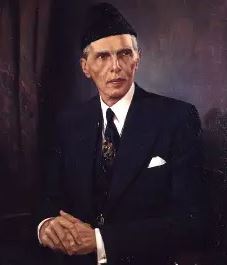
Long before independence, Quaid-e-Azam had warned that the demand for Pakistan was not merely a constitutional exercise but a struggle for survival and dignity. After 14 August 1947, when the responsibility of governance fell upon his shoulders, his concerns about India’s aggressive posture became even more pronounced. The unresolved disputes at the time of Partition, particularly over Jammu and Kashmir, the division of military assets, and the economic strangulation attempted through the withholding of Pakistan’s financial share, reinforced his belief that Pakistan could not afford complacency in matters of defence.
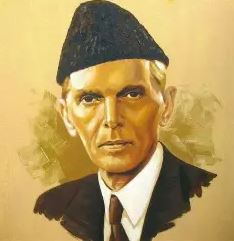
As Governor-General, Quaid-e-Azam gave unambiguous directions that the defence of the homeland must be treated as a sacred trust. Despite severe shortages of equipment, trained manpower, and infrastructure, he insisted that no effort should be spared in building strong and disciplined armed forces. He made it clear to the civil administration and military leadership alike that national security was inseparable from national survival. His correspondence and instructions during the early months of independence reflect a constant emphasis on preparedness, vigilance, and unity of command.
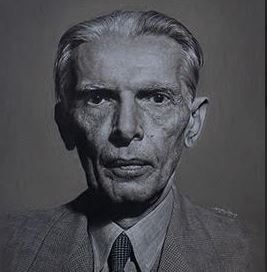
One of the most telling illustrations of his strategic thinking was his address to the officers of the Pakistan Armed Forces at the Staff College, Quetta, in June 14, 1948. In that historic speech, Quaid-e-Azam reminded the officers that Pakistan’s defence did not rest solely on weapons, numbers, or technology, but on faith, discipline, and selfless devotion to duty. At the same time, he candidly spoke of the dangers facing Pakistan, cautioning that the country’s enemies would exploit any weakness, internal division, or lapse in preparedness. He urged the armed forces to remain above politics, to serve the state with loyalty, and to be ever ready to defend the country’s frontiers.
Quaid-e-Azam was equally conscious that defence policy could not be divorced from moral and constitutional principles. While he stressed strength and readiness, he also emphasized that Pakistan would not be an aggressor state. Its armed forces were to be guardians of peace, protectors of sovereignty, and defenders of the rights of its people. This balance between strength and restraint became a defining feature of Pakistan’s early defence outlook.
His personal involvement in defence matters was remarkable, especially given his failing health. He took keen interest in the establishment and organization of Pakistan’s Army, Navy, and Air Force, ensuring that they were structured on professional lines despite inheriting only a fraction of the resources of undivided India. He encouraged the development of indigenous capacity and self-reliance, fully aware that dependence on external powers could compromise national autonomy.
After Quaid-e-Azam’s passing, successive rulers and governments, irrespective of political differences, broadly adhered to the defence principles he laid down. The emphasis on safeguarding sovereignty, maintaining a credible defence posture, and remaining alert to external threats became enduring elements of state policy. While Pakistan’s internal and external challenges evolved over time, the foundational vision of its founder continued to guide strategic thinking.
Quaid-e-Azam’s legacy in matters of defence is therefore not limited to specific orders or historical incidents; it lies in the mindset he sought to cultivate. He taught a vulnerable nation to face harsh realities with courage rather than denial, to prepare for adversity without losing moral clarity, and to recognize that freedom, once achieved, must be constantly defended. In an era when Pakistan was struggling simply to stand on its feet, he ensured that the defence of the homeland was never treated as a secondary concern.
The way forward for Pakistan’s defence lies in a comprehensive and balanced approach. Military strength must continue to be modernized through technology, indigenous defence production, and professional training, while ensuring that preparedness keeps pace with emerging domains such as cyber and space. Equally important is economic stability, for no nation can sustain strong defence without a resilient economy. Internal unity, constitutional governance, and harmony among state institutions are indispensable, as internal divisions weaken national resolve more than external threats. Diplomacy must complement defence, enabling Pakistan to reduce tensions, build regional stability, and project itself as a responsible and peace-seeking state without compromising its core interests.
Quaid-e-Azam’s enduring lesson is that security is not achieved through wishful thinking, nor is peace preserved through weakness. It is secured through strength guided by principle, preparedness anchored in realism, and unity rooted in justice. As Pakistan looks to the future, reaffirming this balanced vision of defence remains essential to safeguarding the sovereignty and dignity for which the nation was created.
Today, as Pakistan navigates a complex regional and global environment, the words and wisdom of Quaid-e-Azam remain deeply relevant. His clear-eyed assessment of India’s posture, his insistence on preparedness, and his unwavering commitment to sovereignty continue to remind the nation that peace is best preserved not through wishful thinking, but through strength guided by principle.