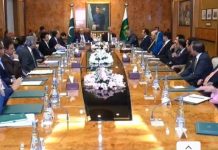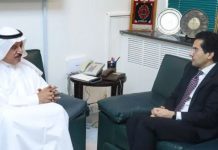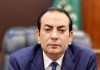

Ambassador Khorev praised Pakistan for its consistent neutrality at the United Nations and continued advocacy for a diplomatic resolution ;Pakistan’s position fully aligns with Russia’s stance
Ansar M Bhatti
ISLAMABAD, December 11: Ambassador of the Russian Federation to Pakistan Albert P. Khorev delivered a detailed briefing on Wednesday, presenting Moscow’s perspective on the evolving situation in and around Ukraine. Addressing diplomats, journalists and analysts, he thanked the attendees for seeking information “from various sources” to ensure objective reporting.
In a wide-ranging statement, Ambassador Khorev focused heavily on recent diplomatic efforts aimed at resolving the conflict. He highlighted the December 3 meeting in Moscow between President Vladimir Putin and US negotiators Steve Witkoff and Jared Kushner, held in connection with US President Donald Trump’s revised peace plan. According to the Ambassador, the five-hour talks were “constructive and substantive,” even though certain aspects of the plan remain points of disagreement.
He noted that Washington’s current approach is “based on ground realities,” but said Europe continues to pursue what he called unrealistic expectations of inflicting a “strategic defeat” on Russia. This, he claimed, remains a major obstacle to progress.
Ambassador Khorev strongly rejected Western allegations of Russia kidnapping thousands of Ukrainian children. He said that during direct Russian-Ukrainian negotiations earlier this year, Kyiv failed to substantiate these claims. Only 339 names were presented by the Ukrainian side, he added, insisting that work on the return of minors evacuated from conflict zones is underway through the office of Russia’s Commissioner for Children’s Rights, Maria Lvova-Belova.
The Russian envoy condemned Europe’s efforts to establish bodies such as a “Register of Damage to Ukraine” and a “Special Tribunal for Crimes of Aggression,” describing them as “quasi-legal structures” intended to justify seizing Russian assets frozen in the West. He warned that any such attempt would be considered “hostile” and would invite an “adequate response” from Russia.
“These plans amount to theft,” he said, adding that confiscating Russian sovereign assets would neither alter the course of the conflict nor deter Moscow from achieving its goals.
Ambassador Khorev cited recent corruption scandals in Ukraine, calling the current leadership a “rotten, corrupt regime.” He referred to allegations of $100 million embezzlement in the energy sector and the dismissals of several Ukrainian ministers. He claimed that evidence points to President Volodymyr Zelensky’s inner circle, while accusing European governments of ignoring Kyiv’s internal corruption.
The envoy asserted that Western sanctions have backfired, damaging global supply chains and slowing economic growth. He said Europe’s decision to cut energy ties with Russia has undermined its industrial competitiveness, putting the EU at risk of “deindustrialization.”
Ambassador Khorev stressed the need for a new Eurasian security system, referring to President Putin’s proposals for a Greater Eurasian Partnership that would connect regional groups including the CIS, SCO, EAEU, ASEAN, and GCC. He also highlighted Russia’s anti-neocolonial initiatives and the recent meeting of the Forum Against Modern Practices of Neocolonialism, attended by countries from Asia, Africa and Latin America, including Pakistan.
The Ambassador reiterated Russia’s stance that it has no intention of attacking Europe, but warned that Moscow would respond firmly to any aggression. He referenced Russia’s advanced weapons systems, including the Burevestnik missile and Poseidon underwater drone.
In conclusion, Ambassador Khorev praised Pakistan for its consistent neutrality at the United Nations and continued advocacy for a diplomatic resolution. “Pakistan’s position fully aligns with Russia’s stance,” he said.