
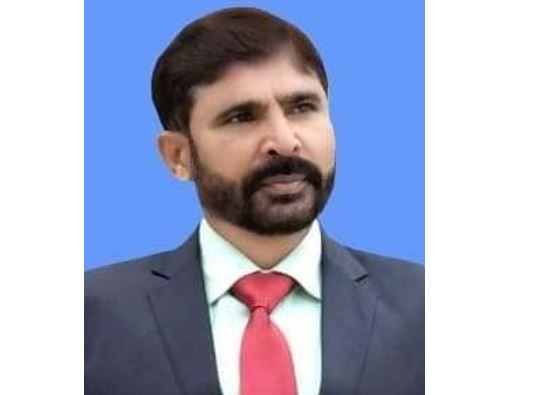
Dr, Muahammad Akram Zaheer
For more than a decade, Russia has expanded its influence across regions far from its immediate borders. Much of this activity has unfolded quietly, through political patronage, private military networks, cyber operations and support for friendly regimes or factions in conflict zones. Although these undertakings rarely make headline news in the countries not directly affected, their consequences have rippled across continents, shaping security calculations from Africa to Europe and the Middle East. The phrase “offshore menace,” when applied to Moscow, captures an important reality: Russia today projects leverage not by formal territorial expansion but by cultivating pockets of influence abroad where state authority is weak, institutions are fragile, or political elites are seeking external support to secure their own rule. These settings offer openings for Russian operatives, intelligence networks and commercial enterprises that serve larger geopolitical interests. The result is a form of intervention that remains deniable yet effective, visible yet difficult to counter.
Unlike major Western powers that often frame their international involvement in terms of development or institution-building, Russia’s overseas engagements tend to follow a different logic. Moscow is not primarily concerned with improving governance or strengthening economies; instead, its focus often lies in ensuring that governments dependent on its favor remain loyal, or that rival powers find themselves constrained, distracted, or pushed out of strategic regions. This pattern is highly visible in parts of Africa. Countries such as Mali, the Central African Republic and Sudan have experienced deep political turbulence in recent years. In each case, local leaders military or civilian turned to Russia for military assistance, arms and political backing. Russia, in return, received mining concessions, intelligence access and a foothold in regions where Western influence had been waning.
The private military structure once known as Wagner and now reorganized under new leadership plays a central role in this expansion. While often described as a mercenary outfit, its tasks go well beyond battlefield engagement. Its operatives have been involved in guarding mines, training security forces and advising political leaders functions that blur the line between economic contract and geopolitical mission. The collapse of Wagner’s leadership after the mutiny in 2023 did not diminish these networks; they were swiftly absorbed under tighter Kremlin control, preserving Russia’s reach across the African continent.
Russia’s offshore presence is not confined to soldiers, mining specialists, or political advisors. A significant dimension lies at sea, where Moscow has adapted to international sanctions by assembling a vast network of aging tankers nicknamed the “shadow fleet.” These vessels, many operating under obscure flags and ownership structures, transport sanctioned oil across global waters while obscuring their movements. This maritime web allows Russia to sell oil at prices that fund its war effort in Ukraine while undermining Western sanctions meant to limit such revenue. Several countries some out of economic necessity, others out of political calculation have welcomed discounted Russian crude. The opaque routing, tactics such as ship-to-ship transfers and the use of non-transparent insurance schemes have raised concerns about environmental hazards as well as the erosion of international maritime norms. Beyond hydrocarbons, Russia has explored new maritime corridors to bypass naval chokepoints and Western monitoring. The opening of Arctic sea routes due to melting ice offers Moscow long-term ambitions. Although these corridors remain risky and seasonal, Russia’s investment in icebreakers and Arctic ports demonstrates a strategic intention to shape future global trade routes and secure military access across the northern flank.
Where Russian troops or contractors are not present, Moscow often deploys a different kind of force: information manipulation. State-run media networks, social media campaigns and covert online operations have been used to influence elections, deepen social fractures and amplify anti-Western sentiment in various regions. In Africa, for example, pro-Russian narratives frequently portray Moscow as a champion of sovereignty and stability, contrasting its image with that of Europe and the United States. These narratives resonate in countries where colonial histories remain central to political discourse. Russian operatives have refined their messaging to fit local grievances, turning online platforms into battlegrounds for hearts and minds. However, the reach is not limited to developing countries. In Europe and North America, Russian troll farms and affiliated groups have at times attempted to influence debates on immigration, public health and national security. The aim is not necessarily to persuade but to disrupt to weaken trust in institutions, encourage political fragmentation and sow confusion. The effectiveness of such tactics varies, but their persistence reveals a broader pattern: Moscow views information disorder as a cost-effective tool to challenge adversaries far from its borders.
In some of the regions where Russia has made gains, its support has helped local rulers consolidate their authority. Mali’s military rulers, for instance, have relied heavily on Russian backing to strengthen their position after severing ties with French forces. In the Central African Republic, Russia has provided security services and political advising to an extent that has given it considerable sway over government decisions. Such relationships benefit Moscow in several ways. They allow Russia to present itself as an alternative partner to Western democracies, one that does not lecture about human rights or governance. They also secure access to natural resources particularly gold, diamonds and rare minerals that help finance Russia’s global ambitions. Moreover, they guarantee political loyalty in international forums such as the United Nations, where even a few supportive votes can serve Russia’s larger diplomatic goals. The downside is that these relationships often deepen authoritarian tendencies, fuel internal conflicts and weaken the prospects for long-term stability. Yet for Moscow, instability in distant regions is not necessarily a liability. Disorder provides openings for influence and Russia has learned to operate effectively in environments where conventional diplomacy struggles to take hold.
While much attention has focused on Africa, Russia has been quietly reasserting its presence in Central Asia as well. The region’s states have attempted to diversify their foreign relations, particularly after the invasion of Ukraine raised alarm about Moscow’s intentions. China’s rising economic influence and Turkey’s increased diplomatic engagement have also offered these states alternatives. Nevertheless, Russia remains a pivotal actor in the region, particularly in security matters. Its military bases, intelligence networks and labor-market connections continue to tie Central Asian countries to Moscow. Even where governments seek greater autonomy, they remain cautious not to antagonize Russia, whose political influence still permeates the region’s elite circles.
Europe has faced Moscow’s offshore activities in more ways that are direct. From cyberattacks targeting government institutions to covert financing of political parties, Russia has sought to create cracks within the European Union and NATO. The full-scale invasion of Ukraine in 2022 was the most blatant form of aggression, but it also served as a catalyst for European unity. Still, Moscow has not abandoned its efforts to weaken cohesion among European states. Energy dependence remains another lever. Although Europe has significantly reduced its reliance on Russian gas, Moscow continues to explore ways to exploit vulnerabilities. The sabotage of undersea pipelines in the Baltic Sea a case still under investigation—illustrates how critical infrastructure has become entangled in geopolitical confrontation.
What makes Moscow’s offshore maneuvers particularly challenging is their fluidity. Russia seldom commits to a single method. It blends military presence with commercial ventures, mixes diplomacy with covert action and combines political patronage with information warfare. This adaptability enables Russia to shift strategies when confronted and to exploit openings wherever they appear. Unlike traditional great power rivalry defined by territorial control or formal alliances, Russia’s modern approach is dispersed and opportunistic. It thrives in ambiguity, making it difficult for rivals to respond without escalating tensions or overextending themselves.