Anjum Nisar for decisive privatization, governance overhaul to end recurring bailouts
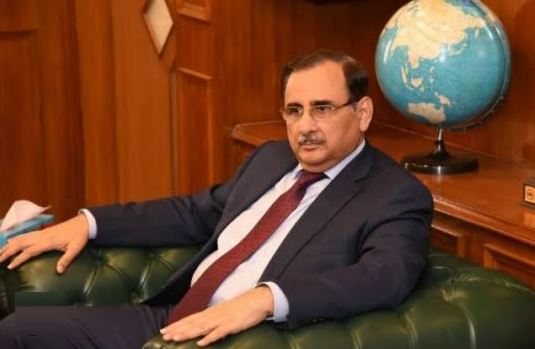
The Federation of Pakistan Chambers of Commerce and Industry’s Businessmen Panel (BMP) has expressed grave concern over the deteriorating financial position of State-Owned Entities (SOEs), stating that the absorption of Rs2.1 trillion during FY25 — nearly 16 percent of the Rs12.97 trillion tax revenue collected by the federal government — is a stark indicator of deep-rooted structural weaknesses in the public sector. FPCCI President and Chairman of the Businessmen Panel, Mian Anjum Nisar, said the latest financial data reveals an unsustainable fiscal pattern that is steadily squeezing productive sectors of the economy.
He observed that the reported net adjusted loss of Rs122.9 billion in FY25, compared with Rs30.6 billion in the preceding year, reflects a worrying decline in overall financial performance. Aggregate profits have shrunk while liabilities continue to mount, pushing the total debt portfolio of SOEs beyond Rs9.5 trillion. According to him, such figures clearly demonstrate that repeated equity injections and sovereign guarantees have failed to address the structural inefficiencies that plague these enterprises.
Mian Anjum Nisar particularly highlighted the power sector as the most pressing concern, noting that despite substantial capital injections aimed at containing circular debt, liabilities have continued to accumulate. He said the persistent buildup of debt, unfunded pension obligations and weak financial planning mechanisms indicate a governance failure rather than a temporary liquidity crisis. He added that business plans of various entities often lack rigorous financial modeling, cost-benefit analysis and measurable performance benchmarks, resulting in misallocation of scarce public resources.
He pointed out that the continued reliance on sovereign guarantees and government-backed loans distorts the competitive landscape and discourages operational efficiency. When entities operate with the assurance of state support regardless of performance, he said, there is little incentive for cost optimization, innovation or strategic restructuring. This approach not only undermines fiscal discipline but also sends a negative signal to private investors who operate under strict market constraints.
The BMP chairman stressed that at a time when the formal business sector is burdened with high taxation, elevated energy tariffs and limited credit availability, it is inequitable for a substantial portion of public revenue to be redirected toward sustaining loss-making institutions. He maintained that every rupee used to plug recurring SOE losses reduces the government’s capacity to invest in infrastructure, education, healthcare and industrial modernization.
Calling for immediate corrective action, Mian Anjum Nisar urged the government to announce a comprehensive, time-bound restructuring and privatization roadmap for chronically loss-making SOEs. He recommended that non-strategic enterprises be privatized in phases through transparent and competitive processes, while commercially viable entities be restructured with professional management and greater private sector participation. He emphasized that board appointments must be based strictly on merit, experience and professional competence, free from political considerations.
He further proposed linking all forms of fiscal support — including equity injections, grants and guarantees — to clearly defined performance indicators and turnaround milestones. Entities failing to meet agreed targets within stipulated timelines, he said, should face restructuring or divestment. Strengthening corporate governance standards, ensuring timely audits and improving disclosure practices would enhance transparency and accountability across the public sector.
Mian Anjum Nisar also underscored the importance of rationalizing unfunded pension liabilities through dedicated pension funds and actuarial planning to prevent further strain on the federal budget. Introducing modern financial management systems, improving debt service coverage ratios and prioritizing asset optimization over expansionary spending would contribute to long-term sustainability, he added.
He suggested that fiscal space created through meaningful SOE reforms should be redirected toward growth-enhancing initiatives. Reducing the tax burden on documented businesses, lowering industrial electricity tariffs, promoting export diversification and supporting small and medium enterprises would stimulate economic activity and job creation. He noted that empowering efficient private enterprises would generate higher returns for the economy than perpetuating a cycle of bailouts.
The BMP chief said that Pakistan’s economic stability hinges on restoring fiscal credibility and enforcing strict accountability within state institutions. Bold decisions, transparent reforms and unwavering commitment to efficiency are essential to protect taxpayers’ money and place the country on a path of sustainable, investment-led growth.
He asked that fiscal space created through meaningful SOE reforms should be redirected toward growth-enhancing initiatives. Reducing the tax burden on documented businesses, lowering industrial electricity tariffs, promoting export diversification and supporting small and medium enterprises would stimulate economic activity and job creation. He noted that empowering efficient private enterprises would generate higher returns for the economy than perpetuating a cycle of bailouts.