UNITED NATIONS, Feb 11: Amid political deadlock among signatories to the 2018 South Sudan peace agreement and a dangerous escalation in armed confrontations, Pakistan has called on all stakeholders to recommit to the agreement in good faith and to address differences through inclusive dialogue.
“It is time for renewal of national consensus,”Ambassador Asim Ahmad, permanent representative of Pakistan to the United Nations, told the UN Security Council which on Tuesday debated the deteriorating situation in South Sudan, an African country that gained independence from the Republic of Sudan in 2011.
At this critical juncture, he stressed the need to prevent another descent into violence, warning. “The cost of failure would be borne first and foremost by the South Sudanese people, and would also have profound regional consequences.
“It is time for more deeper engagement, not distancing or abandonment,” the Pakistani envoy added.
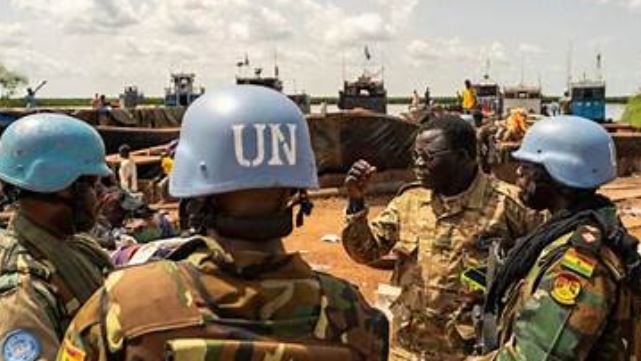
Against this backdrop, Ambassador Asim Ahmad underscored the crucial role of the United Nations Mission in South Sudan (UNMISS), saying there is a continued need for the Mission to remain operational and robust at a time of heightened political uncertainty, inter-communal violence, and regional spill-over risks.
“The upcoming renewal of UNMISS is critically important and should preserve the Mission’s core capacities, which are urgently needed to support the South Sudanese people and prevent further deterioration of situation,” he said, while calling for ensuring safety and security of UN personnel.
Noting with “concern” UN Secretary-General’s assessment of the operational impact of the ongoing liquidity crisis on UNMISS, the Pakistani envoy said, “In an already fragile environment, reductions in Mission’s capacity carry serious risks for the protection of civilians and the safety and security of UN personnel.”
“The reported decline in patrols, reduced reach, and other implications underscore the real consequences of resource shortfalls on mandate delivery,” he said, highlighting the fact that out of the 17,000 troops sanctioned by the Security Council to implement the mandate, only around 9,700 remain in UNMISS.
These challenges are further compounded by the regional spill-over of the conflict in the neighbouring Republic of Sudan, Ambassador Asim Ahmad said, pointing out that the arrival of approximately 1.3 million people fleeing their country since April 2023 has placed additional strain on South Sudan’s already strained systems. Further weakening UNMISS capacities would be particularly ill-timed and counterproductive, he added.
In this regard, Ambassador Asim Ahmad called for UNMISS’ mandate renewal and payments of assessed contributions to UN peacekeeping in full and on time.
The United Nations established the peacekeeping mission to help South Sudan stabilize. In 2013, fighting erupted in the capital and spread nationwide. Although leaders signed a peace agreement in 2015, it quickly collapsed.
A renewed peace deal — the Revitalized Agreement on the Resolution of the Conflict in South Sudan — was signed in 2018, leading to the formation of a transitional Government.
At the outset, briefing the Security Council on the Secretary-General’s latest report, Under-Secretary-General for Peace Operations Jean-Pierre Lacroix warned that “political deadlock among the main signatories to the Revitalized Peace Agreement continues to drive heightened tensions, manifesting in armed confrontations in many parts of the country”.
He said violence has escalated sharply in recent weeks, particularly in Jonglei, displacing more than 280,000 people amid reports of clashes between the government and opposition forces, aerial bombardments and severe restrictions on humanitarian access. “Communities that remember all too well the violence of 2013 and 2016 are again on the move,” Lacroix said.
He said UNMISS is nearing completion of its cost-reduction measures while continuing to implement its mandate, including political engagement at the national and subnational levels to de-escalate fighting, conduct patrols and maintain a deterrence posture to protect civilians.
In Unity State, UNMISS intervened swiftly when violence in Pakur spilled into the Bentiu camp for internally displaced persons and the South Sudan People’s Defence Forces deployed heavy artillery near opposition positions, helping to defuse a potentially dangerous situation, he reported.
With major troop and base reductions, he said, the Mission’s force component now relies on longer, hotspot-focused patrols under tighter planning cycles, requiring closer integration with civilian sections and field offices, while the civil affairs component increasingly works through partner non-governmental organizations (NGOs) to maintain situational awareness and continuity of engagement.
“The presence of UNMISS matters” to the people that it protects, to its humanitarian partners and to the peace process that it supports, Lacroix emphasized, calling for the Council’s continued support to UNMISS.