
The establishment of mosques in North America during the 1960s and 1970s was driven by the Muslim community’s desire to preserve and practice their faith as religious minorities in a secular society. In Western legal systems, rights are based on citizenship, not religion, which presented unique challenges to maintaining religious identity.
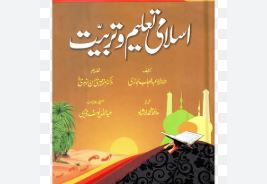
Over time, it became clear that mosques alone were insufficient. Without a structured system to nurture faith, identity, and morality in future generations, assimilation seemed inevitable. This led to the revival and emphasis on Taleem o Tarbiyah—a comprehensive Islamic framework of education and moral development aimed at cultivating conscious Muslims.
While familiar in countries like Pakistan, the need for Taleem o Tarbiyah has become critically urgent today. Modern education systems prioritize experiential learning and secular ethics, often seen as superior to traditional Islamic models. This has created a conceptual divide between Islamic and Western educational approaches.
A key question arises: If Western societies already had established ethics in the 1960s, why did Muslims feel compelled to formalize Taleem o Tarbiyah? The answer lies in the need to preserve Islamic identity through Shariah-based moral frameworks, especially in diaspora contexts.
At its core, Taleem o Tarbiyah is rooted in the concept of ʿAbdiyyah—servitude to Allah. The Quran describes humans as vicegerents on Earth, entrusted with moral responsibility. True submission to Allah defines a Muslim’s identity, and obedience is central to understanding Islamic education.
Worship (ʿIbādah) is often limited to rituals, but in Islam, it encompasses any sincere action performed for Allah’s pleasure within Shariah boundaries. Whether giving water to a thirsty dog or praying, sincerity and compliance make an act worshipful.
A dangerous misconception is that Allah’s mercy alone ensures salvation, regardless of obedience. This undermines worship’s essence, which combines rituals and righteous conduct. Social goodness without obedience cannot represent true submission.
Ultimately, Taleem o Tarbiyah aims to align life with Islamic principles, remove moral blindness, and help recognize Allah’s signs. It encourages the integration of modern knowledge with Quranic wisdom, producing individuals who inspire through character and conduct.
Investing in Taleem o Tarbiyah for children is essential today. In a materialistic world, neglecting this risks losing future generations not only culturally but spiritually.