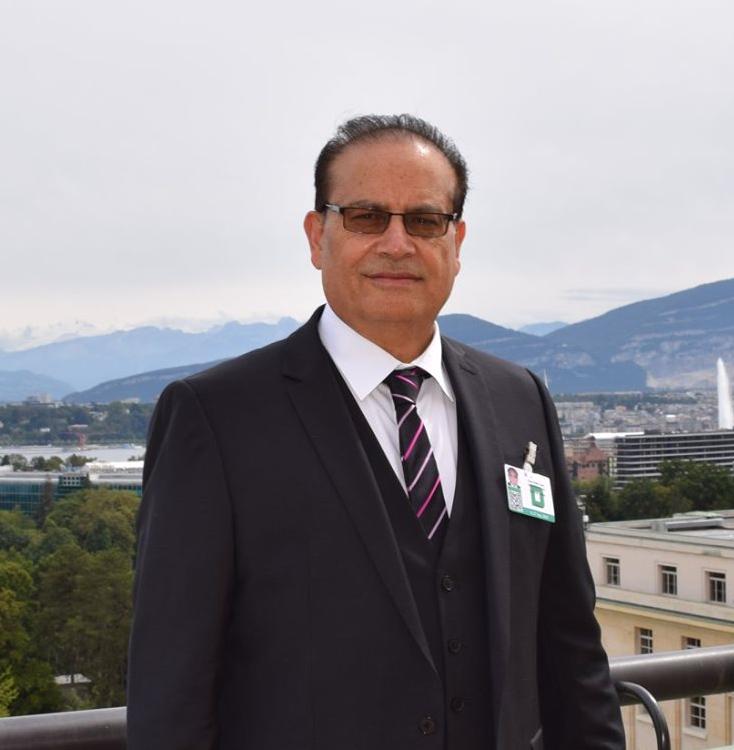
Qamar Bashir
When the latest waves of documents connected to the Jeffrey Epstein investigation began surfacing, most of the names that appeared followed a familiar and uncomfortable pattern. The references revolved around social proximity, elite networks, reputational damage, and questions of judgment. Against that backdrop, one name stood apart — not because of scandal, but because of how it was framed.
Imran Khan’s reported mention was different. According to summaries that emerged from the broader document releases, he was not linked to misconduct or impropriety. Instead, he was described in private correspondence as “really bad news” and a “greater threat.” The tone was political rather than personal, strategic rather than social. In a collection of files that cast shadows over many reputations, his distinction appeared to lie in geopolitical discomfort rather than scandal.
That difference matters because it shifts the conversation from morality to strategy. A leader described as a threat is not being accused of vice but of independence. The question then becomes: dangerous to whom, and for what reason? To understand why that framing resonates so strongly in Pakistan, one must revisit a moment that altered the country’s political trajectory. That moment arrived in early March 2022.
On August 9, 2023, The Intercept published a classified Pakistani diplomatic cable documenting a March 7, 2022 meeting between Pakistan’s ambassador to Washington and U.S. Assistant Secretary of State Donald Lu. The document, labeled “Secret,” recorded Washington’s displeasure with Khan’s visit to Moscow on February 24, 2022 — the very day Russia invaded Ukraine. According to the cable, Lu stated that if a no-confidence vote against Prime Minister Khan succeeded, “all will be forgiven in Washington.” Otherwise, he warned, it would be “tough going ahead,” and the prime minister could face “isolation” from Europe and the United States.
The language recorded in the cable is unmistakably conditional, tying bilateral warmth to a specific political outcome. Forgiveness if he is removed; difficulty if he remains.
The sequence that followed intensified scrutiny. The meeting took place on March 7, procedural steps toward a no-confidence vote began on March 8, and by April 10, Khan had been removed from office. Correlation does not prove orchestration, and political transitions are rarely explained by a single document. Nevertheless, the cable demonstrates that diplomatic pressure was applied at a sensitive moment. It also reveals that Washington viewed Khan’s neutrality on Ukraine as a personal policy choice rather than institutional consensus.
Khan’s foreign policy posture had consistently emphasized strategic independence. He refused to grant U.S. military basing rights after America’s withdrawal from Afghanistan, publicly declaring “Absolutely not” when asked about hosting foreign forces. He defended Pakistan’s abstention at the United Nations on Ukraine and rejected public pressure from European diplomats, asking pointedly at a rally whether Pakistan was expected to behave as a subordinate state. He argued that engagement with Russia was necessary to secure affordable energy and food for Pakistan’s struggling population.
Beyond Ukraine, Khan elevated the issue of Islamophobia on the global stage, pressing the United Nations to recognize anti-Muslim discrimination and urging respect for religious dignity. He framed Pakistan as a country that would engage with all powers without entering rigid alliances. Supporters viewed this as sovereignty in action, while critics considered it diplomatic miscalculation. What cannot be denied is that his posture disrupted established expectations about alignment in a polarized global environment.
Following his removal, Pakistan’s external positioning shifted noticeably. Military-to-military engagement with the United States regained momentum, and reports surfaced of Pakistani-manufactured ammunition appearing in Ukraine. Diplomatic warmth between Islamabad and Western capitals returned, and new defense cooperation frameworks were discussed. These developments do not conclusively prove that pressure determined political outcomes, but they align with the cable’s suggestion that a change in leadership would ease tensions and remove the “dent” in relations.
It is within this broader context that the contrast with the Epstein-related references acquires symbolic weight. Many powerful men whose names appeared in those documents faced reputational questions because of association with a disgraced financier. Imran Khan’s distinction, by contrast, was reportedly rooted in strategic apprehension rather than personal scandal. He was not depicted as compromised; he was characterized as disruptive.
The cable published by The Intercept reinforces that interpretation. Its “assessment” section records the Pakistani ambassador’s view that Lu could not have delivered such a strong message without approval from higher authorities. Whether or not that assessment was accurate, it underscores how the exchange was perceived inside Pakistan’s diplomatic apparatus. The document captures a moment when international expectations and domestic politics collided.
Since Khan’s removal, Pakistan has experienced deep polarization, economic strain, and intensified debate over the balance of civilian and military authority. His critics argue that his governance record warranted parliamentary removal and that institutional checks functioned as designed. His supporters argue that his defiance of geopolitical alignment invited external pressure that altered the course of domestic politics. The truth may reside in the interplay of both internal and external forces.
What the documentary record shows is not a signed directive of regime change, but evidence of diplomatic leverage. In international politics, leverage often operates through incentives and signals rather than commands. The phrase “all will be forgiven” is not an order; it is a conditional promise. Such language does not prove conspiracy, but it does demonstrate expectation.
That is why the distinction matters. The Epstein files, as publicly discussed, did not place Imran Khan among scandal-tainted elites. Instead, they appear to reflect concern about his independent trajectory. The March 7 cable then provides context for why that concern may have existed, showing that his policies generated friction at the highest levels of diplomacy. In a world structured around predictable alignments, independence can be unsettling.
Imran Khan’s story, therefore, is not merely about allegations or denial. It is about how sovereignty interacts with global power. He was not framed in those documents as morally compromised; he was framed as politically inconvenient. Whether that inconvenience contributed to his removal remains debated, but the documentary evidence confirms that it was noticed.
In the end, what set him apart was not scandal but stance. In a system accustomed to compliance, saying no can carry consequences. The documents do not resolve the debate over his ouster, but they illuminate the pressures surrounding it. And in doing so, they explain why, among many powerful names, one stood apart.
Qamar Bashir
Press Secretary to the President (Rtd)
Former Press Minister, Embassy of Pakistan to France
Former Press Attaché to Malaysia
Former MD, SRBC | Macomb, Michigan