By Aneesa Mehmood
I did not set out to find her story. I stumbled upon it—quietly, accidentally—on a slow afternoon when the house was unusually still. I found my mother’s past by accident.
It was an ordinary afternoon—load shedding hours, the house unusually quiet. I was clearing an old cupboard when I came across a worn black diary buried beneath folded shawls. It did not look important. It looked forgotten. When I opened it, newspaper cuttings slipped out.
Articles, Short stories, Columns. Carefully trimmed and pasted page after page. And beneath each piece, printed clearly, was my mother’s name “Rubina Meer”.
Not the name we call her now in urgency or affection. Not Maa, Not Mama. Her full name. The name of a woman who once existed beyond domestic responsibilities. Her words were confident, observant, thoughtful. She wrote about social issues, about women, about religion and emotions. There was clarity in her voice—a belief that what she thought was worth sharing.
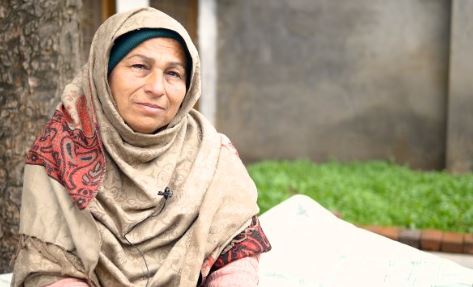
My mother was once a published writer.
This realization unsettled me—not because my mother is incapable of brilliance, but because growing up, I had never been told this version of her story. I had known her only as the woman who wakes before Fajr, whose days are all about cooked meals, and unfinished chores. The woman whose phone rings endlessly with relatives asking, neighbors needing, children calling. The woman who seems to exist entirely for others.
Somewhere between marriage, motherhood, and survival, she stopped writing. And like countless women in Pakistan, she did so quietly—without announcement, without protest, without acknowledgment. In our society, women are not asked what they give up. They are praised for giving it up. A woman who lets go of her ambitions is called selfless. A woman who puts her dreams aside is called responsible. A woman who erases herself is called a good mother.
I was still reading her work when she entered the room. “koi Uniform dhony wala hai?” she asked casually, arms already full of clothes, dupatta slipping from her shoulder.
I looked up and saw her properly. Sweat lined her forehead. Loose strands of hair clung to her face. Her hands—rough from years of washing and scrubbing—were filled with laundry she was probably about to wash. There was exhaustion in her eyes, not dramatic or loud, just deeply settled.
“Nhi,” I said softly. “Dhuly huy hain” She nodded and walked away, already moving towards the next responsibility. I watched her walk away, the diary still open on my lap, and felt an ache settle deep in my chest. Time had been unkind to her—not cruel, just relentless. It had taken the sharpness of her words and replaced it with silence. It had traded ink for detergent, ideas for obligations. The woman who once waited to see her name in print now measured her day in loads of laundry. The writer whose words once reached strangers now rarely had time to sit with her own thoughts.
This is not just my mother’s story.
It is the story of countless Pakistani women whose ambitions were postponed indefinitely. Women who were curious, creative, capable—but learned that survival required silence. We often call motherhood sacred—and it is. But why does sanctity require self-erasure? Why do we accept a system where a woman’s sacrifices are romanticized, but her losses remain unnamed?
The diary in my hands was proof that my mother did not lack ambition. She lacked permission.
Permission to choose herself.
Permission to continue.
Permission to exist beyond responsibility.
As a society, we rarely ask mothers what they miss. We assume fulfillment replaces desire. We assume love compensates for loss. But does it?
That night, long after she had gone to sleep, I lay awake thinking—not about what she gave us, but about what she gave up. I wondered if she thinks about it when the house finally quiets down and everyone else is asleep.
Does she remember the girl she used to be? the girl who once saw a future filled with words, with possibility, with her name printed somewhere beyond these walls? The girl who believed her thoughts mattered? Does she think of the dreams she carried before life became only duty?
And in those quiet moments, when no one is asking anything of her, does she miss that girl?
Does remembering her still hurt—or has she learned to forget her so well that the absence no longer aches?
By Aneesa Mehmood
“I am a student based in Islamabad with an interest in writing about social issues, particularly women’s experiences and societal challenges.”
Email: [email protected]
Phone: 03135011002