By Ansar Mahmood Bhatti
President of Azerbaijan Ilham Aliyev has signed an order declaring 2026 as the “Year of Urban Planning and Architecture” in Azerbaijan. The initiative is aimed at safeguarding the country’s centuries-old traditions of urban planning and architectural heritage, while simultaneously encouraging the development and wider application of modern, innovative approaches in the sector. The decision reflects Azerbaijan’s commitment to addressing contemporary urban challenges, ensuring sustainable development, and harmonizing historical legacy with forward-looking architectural and planning practices.
Azerbaijan’s urbanisation journey is not only reshaping its own cities but also extending its influence abroad, reflecting the country’s growing role as a partner in sustainable development. Since independence in 1991, Azerbaijan has transformed from a largely rural society into a majority urban one, with the urban population rising from 45 percent in 1993 to nearly 58 percent in 2025. This transformation has been guided by a deliberate strategy that integrates smart city technologies, sustainable planning, and inclusive governance.
The domestic model is anchored in resilience and digital connectivity. Azerbaijan inherited a Soviet legacy of industrial hubs and large housing blocks, but in the three decades since independence, it has crafted policies that emphasize sustainability, inclusivity, and modern infrastructure.
The Karabakh region, devastated by conflict, has become the flagship of this transformation. Aghali, rebuilt as the country’s first smart village, now boasts renewable energy grids, digital governance platforms, and eco-friendly agriculture. Shusha, the cultural capital, is being redeveloped as a “15-minute city” with electric public transport, underground waste collection, and heritage-led planning. These projects demonstrate how Azerbaijan is embedding sustainability into reconstruction, turning post-conflict recovery into an opportunity for innovation.
Yet Azerbaijan’s urbanisation vision does not stop at its borders. The country has begun to share its expertise and financial support with other nations, including Pakistan. In Islamabad, Azerbaijan has contributed to upgrading and beautifying key areas, particularly those frequented by tourists.
This cooperation has enhanced the capital’s aesthetic appeal and infrastructure, strengthening its position as a modern, welcoming city. The initiative underscores the close ties between Pakistan and Azerbaijan, reflecting not only diplomatic goodwill but also a shared belief in the transformative power of urbanisation. By investing in Islamabad’s uplift, Azerbaijan demonstrates that its urbanisation strategy is not merely a domestic priority but a cornerstone of its international outreach.
This collaboration highlights two important dimensions of Azerbaijan’s approach. First, it shows that urbanisation is central to its national identity and foreign policy. For Azerbaijan, building modern, sustainable cities is not just about domestic development but about projecting soft power and fostering partnerships. Second, it illustrates how urbanisation can serve as a bridge between nations.
By supporting Islamabad’s beautification, Azerbaijan strengthens cultural and economic ties with Pakistan, creating a model of cooperation that blends urban development with diplomacy.
At home, Azerbaijan continues to host the National Urban Forum (NUFA), most recently NUFA3 in 2025, where experts discussed energy-efficient cities, green planning, and digital municipal management.
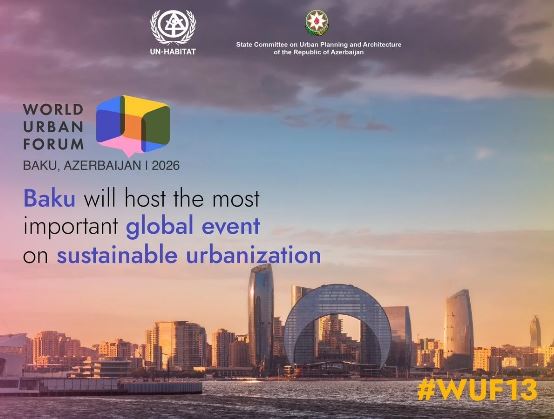
Azerbaijan builds on COP29 legacy by hosting the 2026 World Urban Forum. At the 3rd session of the Executive Board of the UN-Habitat Program held in Kenya, it was announced that the 13th World Urban Forum (WUF13) will be held in Baku in 2026.
This forum will highlight the country’s commitment to tackling challenges such as traffic congestion, ecological sustainability, and housing shortages. Abroad, its support for Islamabad shows that Azerbaijan is willing to export its urbanisation expertise, helping partner nations modernize their cities while reinforcing bilateral relations.
Comparisons with regional neighbors further underscore Azerbaijan’s uniqueness. While most of the countries grapple with the complexities of mature, overcrowded urban systems, Azerbaijan is building modern cities almost from scratch, embedding sustainability and smart technologies from the outset. Its shorter independent history explains the modest urbanisation figures, but also provides the opportunity to leapfrog older models. By extending this vision to Pakistan, Azerbaijan demonstrates that its urbanisation model is not only nationally transformative but also internationally relevant.
In essence, Azerbaijan’s urbanisation strategy is about more than expanding cities. It is about creating resilient, green, and digitally connected urban spaces that serve as engines of national development and symbols of post-conflict recovery.
The Karabakh reconstruction stands as a flagship example, while Islamabad’s beautification reflects the country’s growing role as a partner in global urban uplift. Together, these efforts show that for Azerbaijan, urbanisation is both a domestic imperative and a diplomatic instrument, shaping cities at home and abroad while strengthening bonds with allies like Pakistan.
The writer is a senior journalist who has visited Azerbaijan on multiple occasions. This article is based on his personal experiences and firsthand interactions.