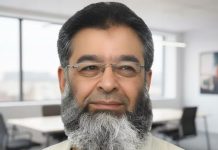

Muhammad Asif
In every era of human history, the struggle for free expression has been tied to the struggle for dignity, identity, and power, yet perhaps at no point has this struggle been as complex and quietly dangerous as it is today. The modern world, adorned with the language of rights, democracy, and digital empowerment, ironically finds itself witnessing an unprecedented war on free speech one that is subtle, multilayered, and often disguised as protection, national interest, social harmony, or public morality. This war does not always involve jails, guns, or dictators; instead, it unfolds through cancel culture, digital manipulation, selective outrage, online mobs, sophisticated surveillance systems, and legal loopholes that redefine dissent as disloyalty. In such an environment, silence becomes safer than speaking, conformity becomes easier than questioning, and survival becomes more important than truth. At the heart of this global shift lies a troubling realization: in many societies, people are not silenced by force, but by fear. Fear of losing jobs, fear of being misquoted, fear of misinterpretation, fear of digital character assassination, fear of legal repercussions, and even fear of social isolation. Where once oppressive regimes required physical force to silence their people, today societies produce silence voluntarily, shaped by invisible pressures and internalized censorship.
Technology once believed to be the greatest liberator of speech has paradoxically become a powerful tool for suppression. Social media platforms that promised democracy of voices have instead become battlefields of manipulation where algorithms amplify hatred, governments monitor dissent, corporations gather private data, and mobs enforce ideological purity. In many cases, a single post can cost someone their reputation, livelihood, or safety. When public opinion weaponizes outrage, free speech becomes a privilege of the brave and a danger for the ordinary.
Democracies, too, are not immune. Laws framed to curb “misinformation,” “hate speech,” or “security threats” are increasingly used to target activists, journalists, and critics. The line between legitimate regulation and political censorship has blurred dangerously. Governments often claim to protect citizens from harmful content while subtly filtering anything that exposes corruption, misgovernance, or abuse of power. As the digital public square becomes more regulated than the physical one, speaking freely is no longer a right exercised without calculation; it is a risk measured carefully.
Beyond governments and media platforms, society itself has become a silent enforcer. Social polarization has created echo chambers where dissent is treated as betrayal. People increasingly surround themselves with like-minded voices, and any deviation from group opinion invites hostility. The fear of being misunderstood or attacked has pushed many thoughtful individuals into silence not because they lack opinions, but because they no longer see the value or safety in expressing them. Intellectual humility has been replaced by ideological absolutism; dialogue has been replaced by digital shouting matches. As a result, even well-intentioned debates collapse under the weight of aggression, sarcasm, and intolerance. When every disagreement is interpreted as a personal attack or political offense, honest conversation dies.
The danger of this silent world is profound. When people stop speaking, societies stop thinking. Innovation, justice, and reform all depend on the ability to question, criticize, and imagine alternatives. Silence allows falsehood to flourish, corruption to deepen, and oppression to normalize itself. History shows that no great progress scientific, political, or moral has ever emerged from societies where people were afraid to speak. The suppression of free speech ultimately leads to intellectual stagnation and dysfunctional governance. A society that fears words eventually fears truth, and a society that fears truth becomes easy to manipulate.
Yet, despite the bleakness, the war on free speech is not irreversible. Courage remains the strongest antidote. Around the world, journalists risk their lives to report truth; activists challenge unjust laws; writers and thinkers use metaphors, satire, and art to say what cannot be said directly; ordinary citizens raise their voices despite threats and pressure. The resilience of human conscience is greater than any system of censorship. But courage alone cannot bear the burden. Societies must relearn the value of listening, debating, and disagreeing respectfully. Governments must recognize that suppressing speech, even under noble pretexts, ultimately weakens nations by depriving them of critical thought. Educational systems must teach students not what to think, but how to think. Media platforms must prioritize transparency and fairness over algorithmic manipulation and profit. Above all, people must reclaim the forgotten truth that freedom of speech is not merely the right to speak it is also the responsibility to protect the right of others to speak, even when we disagree with them.
The war on free speech will not end with a single law, revolution, or technological invention. It will end when societies realize that silence is not safety but surrender. It will end when people understand that speaking the truth may be risky, but abandoning truth is fatal. In the end, the cost of silence is far greater than the cost of speech. The moment we choose silence because it feels safer is the moment we begin losing not only our voice but also our humanity.
Muhammad Asif