Prof Dr Shujaul Mulk Khan
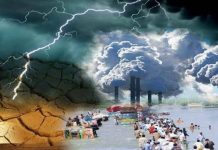
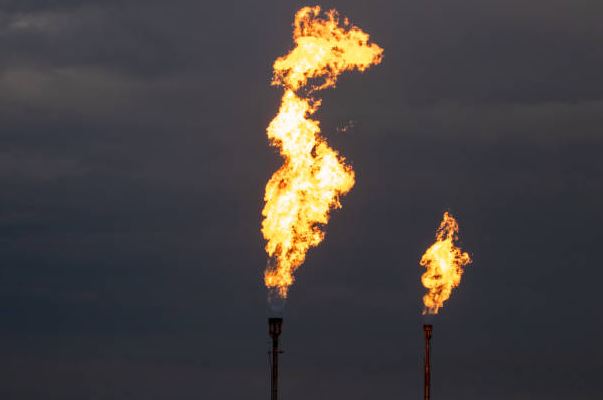
It’s a scene that obsess the imagination: endless rivers of black smoke twisting into the sky, flames consuming everything in their path, and families fleeing villages as if the world itself were on fire. From the deserts of the Middle East to the oil-rich plains of Africa, burning oil fields have become a tragic pattern of our times – a stark warning that the pursuit of power and profit is costing us our planet, our health, and our future.
The devastation is immediate and undeniable. Areas near burning oil fields are choked with toxic smoke, their skies darkened by thick clouds of soot. Children cough, eyes watering, as the acrid air makes it hard to breathe. Farmers watch helplessly as their crops wither under layers of pollution; their livelihoods destroyed in an instant. Rivers turn black, poisoned with oil and chemicals, while animals flee or die, unable to escape the flames. The Kuwaiti oil fires of 1991 were once the world’s most notorious example, but today, similar tragedies are unfolding quietly, away from headlines, leaving scars that may never heal.
Yet these fires are more than environmental disasters – they are the human cost of global politics and energy greed. Oil has long been a symbol of power. Nations that control it wield influence over economies, markets, and militaries. This power often comes at a deadly price. During conflicts, oil fields are burned deliberately – strategically destroyed to deny resources to enemies, to gain leverage in negotiations, or simply as a tool of war. But in these calculated acts, civilians pay the highest price. Families lose their homes, schools, and hospitals. Children grow up with lifelong respiratory illnesses, and communities are forced to abandon the only land they have ever known.
The consequences do not stop at borders. The smoke from these fires drifts across continents, bringing disaster to places far removed from the conflict zones. Burning oil fields release massive amounts of carbon dioxide, methane, and black carbon into the atmosphere, accelerating global warming. Scientists warn that each barrel of oil burned in conflict-driven fires contributes directly to the rising global temperatures that are already destabilizing weather systems around the world. Droughts intensify in East Africa, heatwaves scorch Europe and South Asia, and hurricanes grow stronger in the Atlantic. The flames that devastate a single region are, in effect, threatening the entire planet.
The long-term impacts of these fires on global warming are profound. Climate change is not a distant threat; it is unfolding here and now. Rising temperatures melt glaciers and polar ice caps, raising sea levels and threatening coastal cities from New York to Mumbai. Low-lying islands are already at risk of disappearing, and millions of people could become climate refugees in the coming decades. Ocean currents are disrupted, altering rainfall patterns and making storms more frequent and severe. Wildfires rage in regions that were once temperate, while deserts expand, rendering fertile land barren. Every flame that consumes an oil field contributes to a chain reaction that stretches far beyond the immediate crisis, threatening the stability of ecosystems, economies, and human societies globally.
The human cost cannot be overstated. Communities living near oil fields face chronic health risks from exposure to toxic smoke and contaminated water. Children are particularly vulnerable, suffering from asthma, developmental delays, and other long-term health problems. Beyond physical health, these communities often experience economic and social disruption. Farms and fisheries—the traditional lifelines of local populations—are destroyed, forcing families to migrate in search of safety and livelihood. This displacement fuels further instability, creating a cascade of humanitarian crises that are often overlooked in discussions of global energy security.
Consider the story of a mother in northern Iraq, her home reduced to ashes by an oil fire set during a skirmish. She holds her child tightly, struggling to breathe as soot and smoke fills the air. This is not a singular narrative; it is repeated thousands of times wherever oil fields are caught in the crossfire of human ambition. Behind every plume of smoke are real lives, real families, and real futures at stake.
The fires themselves are also a warning about humanity’s collective choices. For decades, global energy policy has prioritized short-term economic and political objectives over long-term sustainability. Fossil fuels remain the primary energy source for transportation, industry, and electricity generation worldwide. Even as renewable energy technologies have matured, the global economy remains tethered to oil, creating a strategic imperative for nations to control these resources at almost any cost. This reliance drives conflicts and entrenches destructive practices, such as environmental sabotage during war and reckless extraction methods in peacetime. The legacy of these choices is clear: rising global temperatures, collapsing ecosystems, and an uncertain future for the next generations.
Addressing the crisis of burning oil fields requires a multi-pronged approach. First, the international community must strengthen mechanisms to protect critical energy infrastructure during conflicts and enforce accountability for deliberate environmental destruction. Second, nations must accelerate the transition to renewable energy. Solar, wind, geothermal, and green hydrogen technologies are no longer experimental; they are viable, scalable alternatives that reduce the world’s strategic dependence on oil while mitigating environmental damage. Third, energy policy must integrate climate considerations into every decision, from production and consumption to conflict prevention and reconstruction. Only by aligning geopolitical strategy with sustainability can nations prevent the recurrence of catastrophic oil fires and the global damage they bring.
Public awareness and activism also play a critical role. The images of burning oil fields, often circulated through media and social platforms, are powerful symbols that can drive global demand for change. Citizens, environmental organizations, and civil society groups must hold governments and corporations accountable for energy practices that threaten both the climate and human life. Collective pressure has historically driven technological innovation, legislative reform, and international agreements—proof that global awareness can translate into tangible action.
The long-term global consequences extend beyond immediate human suffering. Burning oil fields amplify climate change, which, in turn, triggers a cascade of crises: rising seas swallow coastal cities, extreme heatwaves endanger lives and food systems, storms grow more powerful, and water scarcity intensifies conflicts over diminishing resources. Entire economies could collapse under the weight of climate-related disasters, from flooding of major ports to the loss of agricultural productivity. For many countries in the Global South, the impact is particularly severe, as limited resources constrain their ability to adapt to a rapidly changing climate. In this sense, burning oil fields are not merely a local catastrophe – they are a forewarning of a global emergency that demands immediate, collective action.
And yet, despite the urgency, the world continues down the same path. Oil remains central to modern life – from the fuel in our cars to the energy that powers industries and homes. This dependence gives oil-producing regions immense strategic importance, often turning them into battlegrounds where human lives and the environment are treated as expendable. The result is a cycle of conflict, destruction, and displacement: fires ignite, families flee, ecosystems collapse, and world powers move on, leaving devastation behind.
Ultimately, the flames are both literal and metaphorical. They are consuming lives today and warning of infernos that may engulf the planet tomorrow if we fail to act. Every plume of smoke is a cry for humanity, for foresight, for a chance to choose life over greed. They remind us that the choices of world powers are not abstract political maneuvers – they are moral decisions that will shape the health, safety, and survival of generations to come.
We can no longer afford complacency. Protecting our future requires leadership that values foresight over short-term gain, sustainability over dominance, and humanity over profit. Nations must commit to reducing dependence on oil, investing in renewable energy, and safeguarding both people and ecosystems from the destructive consequences of conflict. Citizens, too, must demand change, because each individual action – whether supporting clean energy, advocating for climate policies, or raising awareness – can contribute to altering this trajectory.
The burning oil fields are more than news stories – they are a mirror reflecting the unsustainable, human cost of our energy choices. If the world continues to treat oil as a weapon or a tool of dominance rather than a resource to manage responsibly, these fires are only the beginning. Our future is at stake. Every moment of inaction allows the smoke to spread further, the flames to climb higher, and the damage to grow deeper.
The time to act is now. The flames that consume oil fields today are burning our air, our health, and our planet. They are a call to rethink energy, prioritize life over power, and ensure that the mistakes of today do not consume the world of tomorrow. If we fail, it will not be history that judges us – it will be our children, our grandchildren, and the planet that sustains them.
The story of burning oil fields is ultimately the story of us all. It is about how we treat the planet, how we value human life, and whether we choose to rise above short-term gains to secure a future worth living. These fires are a wake-up call, and ignoring them is no longer an option. The world powers that hold the keys to oil reserves also hold the power to change the trajectory of the planet. The question is simple: will they act responsibly, or will they let the flames consume our future?