Ambassador Dan Stoenescu expressed his sincere appreciation to the Institute of the Romanian Language, the Romanian Cultural Institute, and the Ministry of Foreign Affairs of Romania for their continued support and commitment in bringing this important project to fruition
Mahnoor Ansar
ISLAMABAD: The Embassy of Romania in Pakistan, with the support of the Institute of the Romanian Language and in collaboration with the National University of Modern Languages (NUML), has inaugurated the first-ever academic presence of Romanian Studies in Pakistan. This landmark initiative opens a new academic and cultural gateway between South Asia and Central and Eastern Europe.
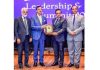
The inauguration ceremony took place on Tuesday, 23 December 2025, at NUML Islamabad, in the presence of the Ambassador of Romania, Dr. Dan Stoenescu, NUML Rector Maj. Gen. Shahid Mahmood Kayani, the Dean of the Faculty of Languages, Professor Dr. Jamil Asghar Jami, the Director General Brigadier Muhammad Rafiq Khan, Dr. Huma Hayat Khan, Head of National and International Linkages Office, members of the university faculty, representatives of the Romanian diaspora, and members of the diplomatic corps.
The event marks the historic introduction of Romanian language, literature, and cultural studies into Pakistan’s leading multilingual academic environment. By becoming the first university in the country to offer Romanian language courses, NUML reaffirms its role as a space where languages do not merely coexist, but actively engage in dialogue, responding to a growing global interest in cultural depth, intellectual diversity, and the humanities.
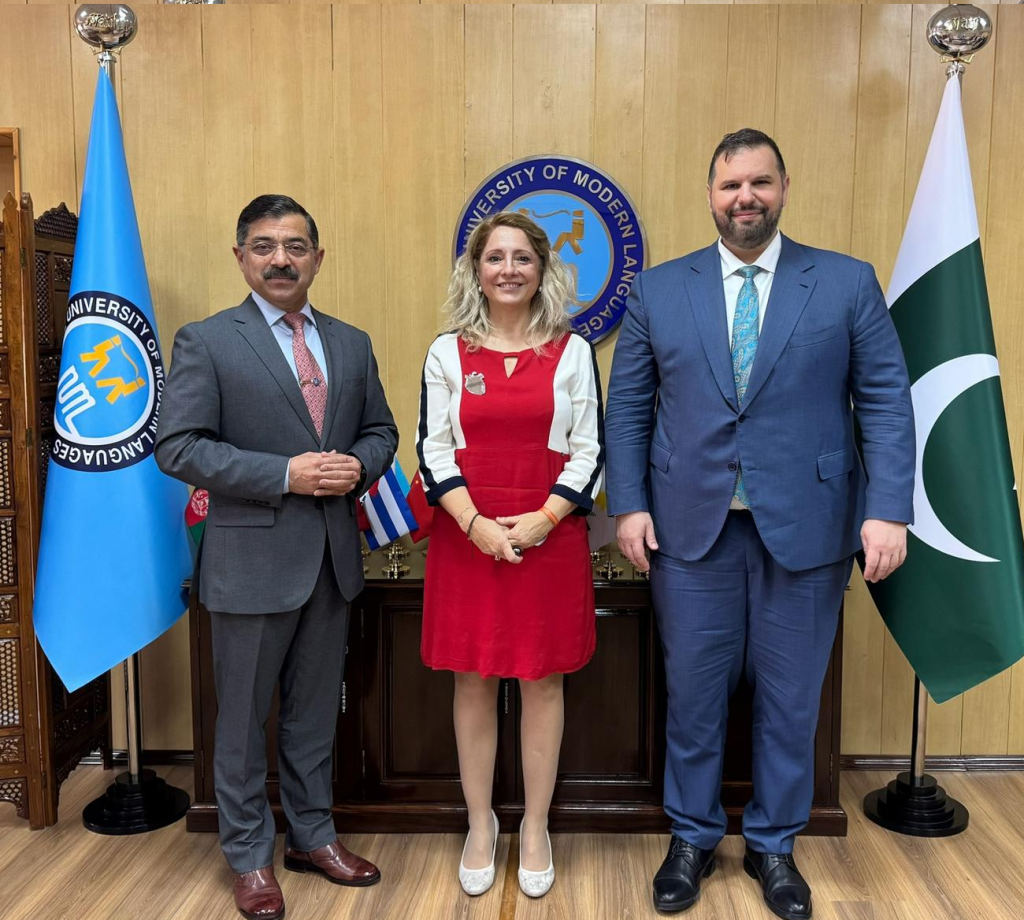
Developed in partnership with the Institute of the Romanian Language and supported by the Embassy of Romania in Pakistan, the Romanian Studies program goes beyond language instruction. It creates an interdisciplinary academic space integrating linguistic training, literature, translation, history, and cultural studies, positioning Romania within broader European and South Asian intellectual dialogues. Students are invited not only to learn Romanian, but also to explore a cultural landscape shaped by historical crossroads, memory, creativity, and resilience.
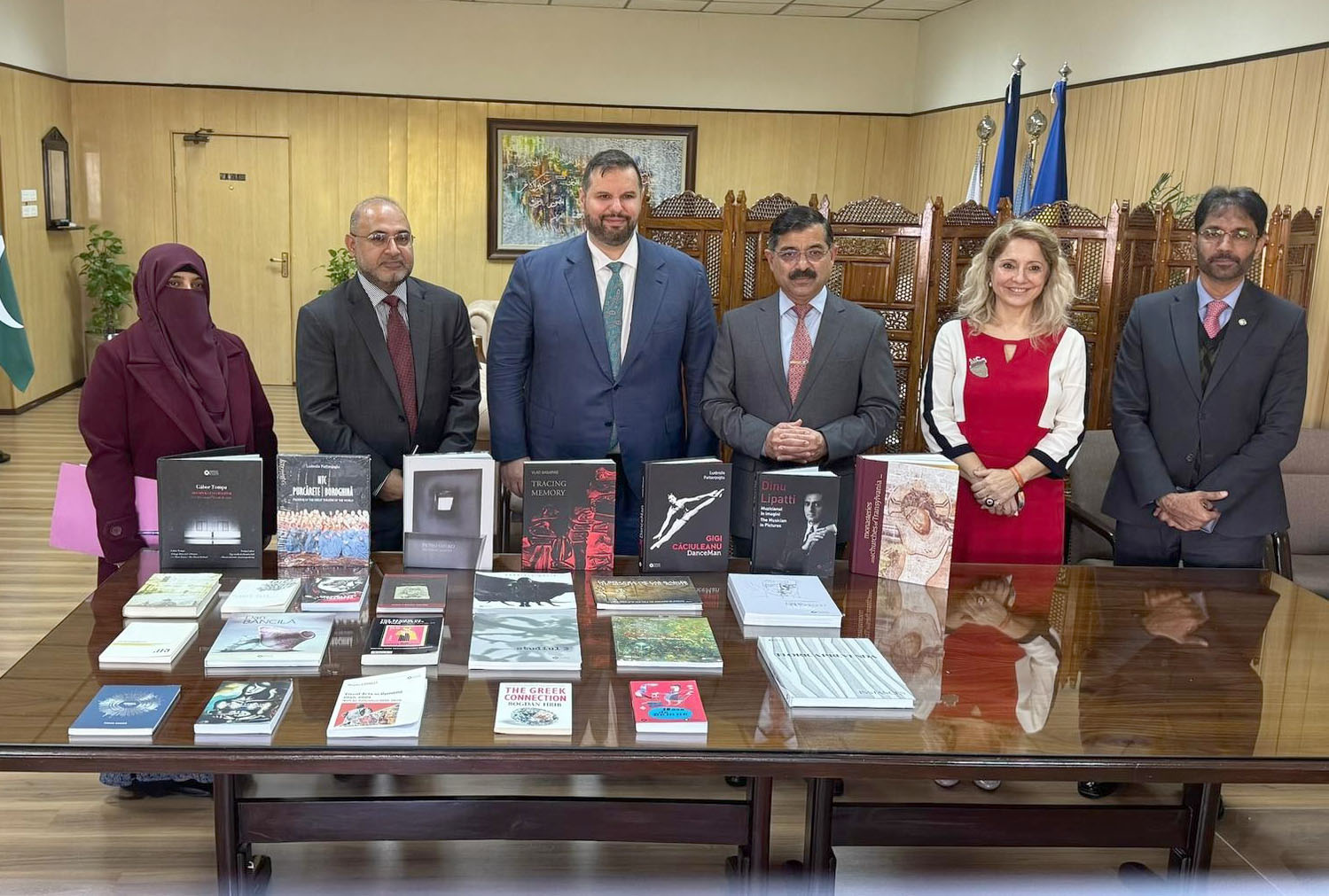
As part of the inauguration, the Embassy of Romania donated a collection of books to NUML, comprising volumes in Romanian and English on Romanian culture, history, civilization, art, and literature. The donation was made with the support of the Romanian Cultural Institute and the Ministry of Foreign Affairs of Romania, further strengthening the academic foundations of Romanian Studies at NUML.
Quoting the renowned Romanian linguist Eugen Coșeriu, who described plurilingualism as a form of freedom, the initiative reflects a shared commitment to promoting linguistic diversity and intercultural understanding.
The Romanian Studies program will be coordinated by Dr. Oana Ursache, Doctor of Philology, specializing in comparative literature, culturology, and Hispanic, Oriental, Pre-Columbian, and Arabic literatures. She brings extensive international academic experience, having previously taught at Ștefan cel Mare University of Suceava, the University of Alicante, the University of Granada, and Arizona State University. In 2021, she also served as Secretary of State at the Department for Romanians Abroad. Following significant academic experience in Spain and the United States, Dr. Ursache has chosen NUML Islamabad to establish a new Center of Romanian Studies, further enhancing the university’s academic profile.
The introduction of Romanian language courses—offered for the first time in Pakistan—is expected to strengthen bilateral relations and foster deeper cultural and academic understanding between Romania and Pakistan. With Pakistan’s population approaching a quarter of a billion people, the initiative represents a unique opportunity to expand academic cooperation and advance cultural diplomacy.
Ambassador Dan Stoenescu expressed his sincere appreciation to the Institute of the Romanian Language, the Romanian Cultural Institute, and the Ministry of Foreign Affairs of Romania for their continued support and commitment in bringing this important project to fruition.