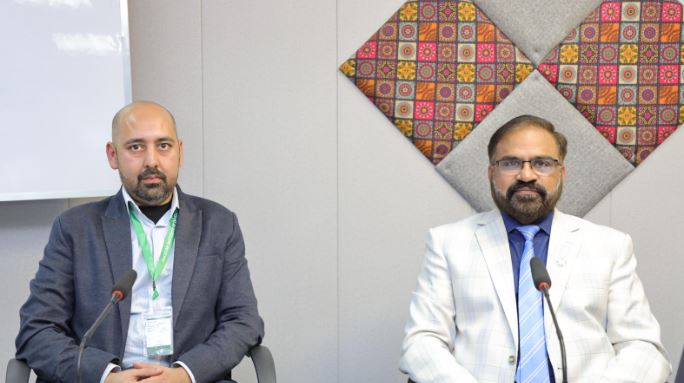
ISLAMABAD, DEC 31: /DNA/ – The Pakistan Institute of Development Economics (PIDE) organized a policy seminar on Pakistan’s Fisheries and Aquaculture Policy 2025–2035, moderated by Dr. Muhammad Faisal, Research Fellow at PIDE, bringing together policymakers, researchers, and sector experts to deliberate on a long-term framework for green growth, food security, export development, and sustainable livelihoods.
The seminar underscored the strategic importance of fisheries and aquaculture within Pakistan’s agricultural economy, noting that despite its significant contribution to employment and nutrition, the sector has remained underdeveloped due to governance gaps, fragmented legislation, weak value chains, outdated financing mechanisms, and limited integration of climate risks into policy planning.
The keynote address was delivered by Dr. Kanwar Muhammad Javed Iqbal, Senior Policy Specialist at the Food and Agriculture Organization (FAO), who highlighted that the policy represents one of Pakistan’s most comprehensive and participatory reform efforts in recent years. Developed through a bottom-up consultative process involving provinces, federal institutions, international experts, and technical working groups, the policy seeks to establish coherence across federal and provincial mandates.
Mr. Iqbal emphasized that responsible resource use and sound governance form the foundation of the policy, aligning Pakistan’s fisheries management with international standards, including FAO’s Code of Conduct for Responsible Fisheries. He stressed the urgent need to address data deficiencies, overfishing, illegal and unreported fishing practices, and inadequate infrastructure that have constrained the sector’s sustainability and export competitiveness.
The seminar highlighted the policy’s strong focus on revitalizing aquaculture as a key driver of alternative livelihoods and export growth, particularly in response to declining marine fish stocks. Successful pilot initiatives in freshwater and marine aquaculture were cited as evidence of the sector’s commercial viability when supported by modern infrastructure, research, and regulatory clarity.
Participants were also briefed on major institutional reforms proposed in the policy, including the declaration of fisheries and aquaculture as an industry, tax and duty exemptions to encourage investment, the establishment of an Apex Council for coordination, the introduction of integrated e-governance systems, and strengthened monitoring, control, and surveillance mechanisms to curb illegal fishing.
The session concluded with reflections on implementation challenges and the way forward. It was noted that the draft policy has been validated through a Technical Working Group and is currently in the final stages of review for submission to the Federal Cabinet for approval. The seminar reaffirmed PIDE’s commitment to evidence-based policy dialogue and institutional reform aimed at promoting sustainable development, economic resilience, and food security in Pakistan.