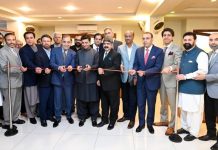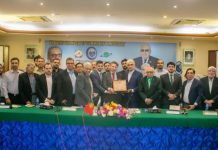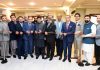
ISLAMABAD, JAN 2 /DNA/ – Federal Minister for National Food Security and Research, Rana Tanveer Hussain, on Friday inaugurated multiple state-of-the-art research facilities at the National Agricultural Research Centre (NARC), Islamabad. The newly inaugurated facilities include the National Wheat Speed Breeding Facility, Pulses Speed Breeding Facility, and an Intelligent & IoT-based Smart Greenhouse.
These modern facilities aim to significantly reduce the time required for crop variety development from 10 years to nearly 5 years. By providing controlled environments and advanced technologies, the speed breeding facilities will enable researchers to harvest 5–6 generations per year and rapidly develop new crop lines with desirable traits such as high yield, disease resistance, and climate resilience.
The Intelligent Smart Greenhouse is equipped with advanced technologies including artificial intelligence (AI), IoT-based monitoring systems, speed breeding modules, genome and risk assessment tools, vertical gardening, and high-throughput phenotyping. These features will support crop improvement, efficient resource use, and sustainable agricultural practices.
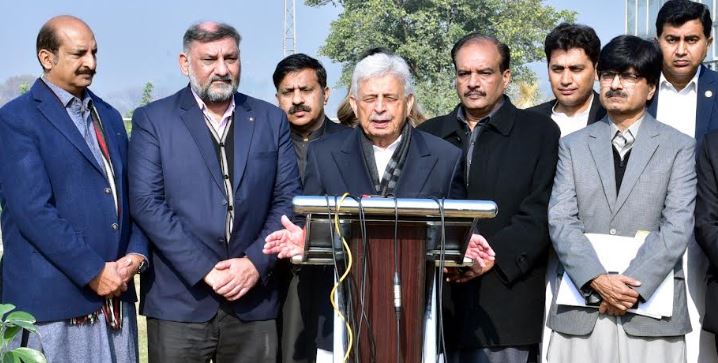
Speaking to the media after the inauguration, Federal Minister Rana Tanveer Hussain said that research is the core mandate of the Ministry of National Food Security and Research. He emphasized that agriculture is a priority sector for the government, and continuous efforts are being made to bring national research institutions at par with international standards.
He stated that the Pakistan Agricultural Research Council (PARC) is a key stakeholder in the agriculture sector, with a mandate to enhance crop productivity while addressing the challenges posed by climate change. Under the Prime Minister’s Green Pakistan Initiative, the government is introducing reforms to strengthen agricultural research and innovation.
The Minister further highlighted that experts from the Chinese Academy of Agricultural Sciences (CAAS) and the Ministry of Agriculture and Rural Affairs, China, have visited Pakistan to support agricultural reforms. In addition, Pakistani agricultural graduates have been sent to China to gain exposure to modern agricultural technologies.
Mr. Rana Tanveer Hussain noted that while agricultural research is a long-term process, the introduction of speed breeding and intelligent smart greenhouses will bring a major transformation in the seed development sector. He added that the government is also working on improving the seed certification system and developing climate-resilient, high-yielding oilseed and pulse crops to reduce the country’s import bill. The Minister reiterated that Ministry’s objective is to achieve self-sufficiency in key commodities and eventually move towards exports. We also aim to reduce production costs and ensure maximum benefits for small-scale farmers.
Chairman PARC, Dr. Syed Murtaza Hassan Andrabi reaffirmed the Council’s commitment to the Prime Minister’s vision of a Green Pakistan. He said that the introduction of speed breeding and smart greenhouse technologies will prove to be a game changer for crop variety development in Pakistan. He further said that the adoption of advanced breeding and digital technologies will allow our scientists to respond more effectively to the challenges of climate change. He added that PARC is focusing on developing high-yielding, climate-smart crop varieties and strengthening collaboration with national and international research partners.
He further stated that these facilities will not only enhance the capacity of researchers but will also contribute to sustainable agriculture, food security, and economic growth. PARC remains dedicated to providing scientific solutions that support farmers, improve productivity, and ensure a resilient agricultural future for Pakistan.