Pakistan reiterates that civil nuclear cooperation must be governed by a non-discriminatory, criteria-based approach applicable equally to all states that are not parties to the Nuclear Non-Proliferation Treaty (NPT)
DNA
ISLAMABAD: Pakistan has noted with serious concern the conclusion of a long-term uranium supply agreement between India and Canada, valued at approximately CAD 2.6 billion, along with announced cooperation in small modular reactors (SMRs) and advanced nuclear reactor technologies.
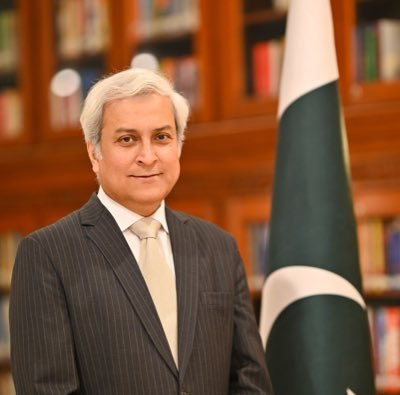
The Spokesman of Ministry of Foreign Affairs Tahir Andrabi said on Wednesday that the agreement, signed between Canada’s Cameco Corporation and India’s Department of Atomic Energy, provides for the supply of nearly 22 million pounds of uranium ore concentrate from 2027 to 2035.This arrangement represents yet another country-specific exception in the field of civil nuclear cooperation.
It is particularly ironic given that India’s 1974 nuclear test was conducted using plutonium produced in a reactor supplied by Canada for peaceful purposes, which directly led to the establishment of the Nuclear Suppliers Group (NSG) and selective global export controls.
He said, India had neither placed all its civilian nuclear facilities under International Atomic Energy Agency (IAEA) safeguards nor undertaken any binding commitment to do so under this arrangement. Several facilities remain outside international inspection, and it remains unclear what concrete non-proliferation assurances accompany this agreement. The strategic consequences are equally troubling: assured external uranium supplies effectively release India’s domestic reserves for military use, enabling the expansion of its nuclear arsenal, fissile material stockpiles, and deepening asymmetries in South Asia’s strategic balance.
In this context, the arrangement also undermines Canada’s commitment to the international non-proliferation regime and its corresponding obligations under that framework.
‘Pakistan reiterates that civil nuclear cooperation must be governed by a non-discriminatory, criteria-based approach applicable equally to all states that are not parties to the Nuclear Non-Proliferation Treaty (NPT). Selective exceptions diminish the credibility of the global non-proliferation framework and risk further destabilizing regional and global peace and security’.
Tahir added, Pakistan viewed this development as detrimental to strategic stability in South Asia and calls on the international community to uphold uniform non-proliferation standards without favoritism,” stated Mr. Tahir Andrabi, Spokesperson of the Ministry of Foreign Affairs. “Such preferential arrangements erode the principles of fairness and equity that underpin global nuclear order.”