Ansar Mahmood Bhatti
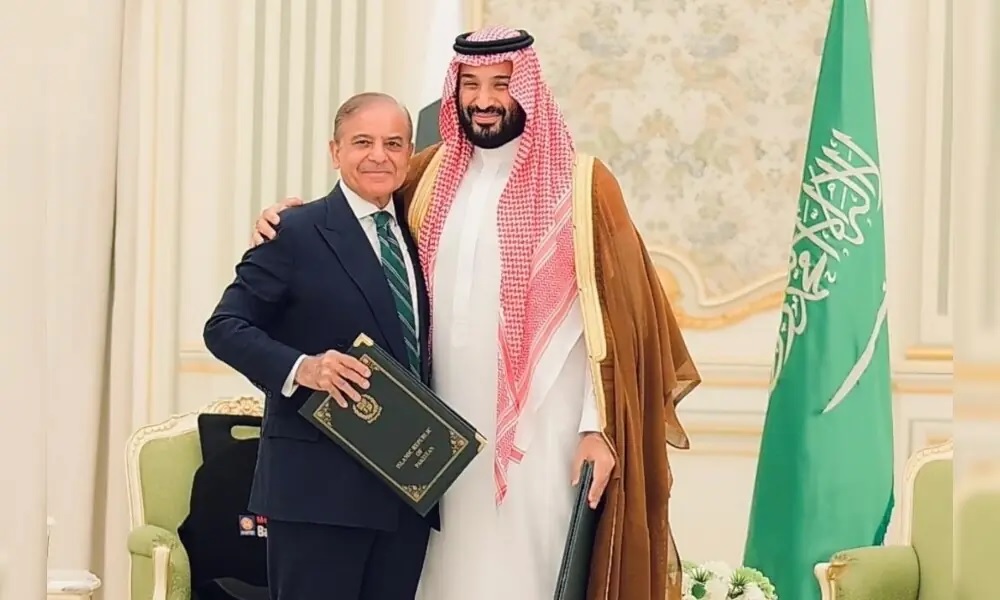
Islamabad, March 12, 2026 – Prime Minister Shehbaz Sharif has departed for a short, few-hour trip to Saudi Arabia, where discussions are expected to focus on bolstering bilateral ties and addressing the escalating security challenges posed by ongoing Iranian threats to the Kingdom.
The visit comes at a critical juncture for Pakistan, which finds itself navigating complex alliances in the Middle East. Saudi Arabia, perceiving persistent dangers from Iran—including recent drone and missile strikes on its oil facilities and infrastructure—has invoked elements of the Strategic Mutual Defence Agreement signed with Pakistan in September 2025.
That pact treats aggression against one nation as an attack on both, formalizing long-standing defense cooperation. Just last week, Pakistan’s Chief of Army Staff and Chief of Defence Forces, Field Marshal Syed Asim Munir, visited Riyadh and met with Saudi Defence Minister Prince Khalid bin Salman. The talks centered on joint measures to counter Iranian attacks and implement the defence pact effectively. Notably, Field Marshal Munir did not secure an audience with Crown Prince Mohammed bin Salman during that trip, underscoring the urgency now placed on the prime minister’s engagement.
Sources indicate Saudi Arabia is pressing Pakistan to take a more meaningful stance in support of the Kingdom, urging Islamabad to align clearly rather than remain neutral. Riyadh seeks assurances that Pakistan will stand firmly on its side amid the broader conflict involving Iran, following US-Israeli strikes that have widened the regional crisis.
Pakistan, however, remains in a precarious position—caught between deep fraternal and economic ties with Saudi Arabia, and shared borders, trade, and diplomatic channels with Iran. Islamabad has repeatedly called for de-escalation, urging Iran to halt attacks on Saudi installations to avoid forcing Pakistan into compliance with its defence obligations.
Despite such appeals, Iranian strikes have continued, heightening pressure on Islamabad. Prime Minister Sharif’s whirlwind visit aims to reaffirm Pakistan’s unwavering support for Saudi Arabia’s security while advocating for diplomatic solutions to end the conflict swiftly. Pakistan desires a quick resolution to the Iran-related ordeal, as prolonged instability exacerbates its own economic and security challenges.
This high-stakes diplomacy highlights testing times for Pakistan, balancing alliances in a volatile region where neutrality grows increasingly difficult. The outcome of discussions could shape Islamabad’s role in the unfolding Middle East crisis.