By Malik Faisal Munir
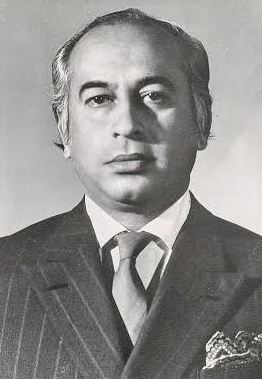
It has been 47 years since the tragic martyrdom of Zulfikar Ali Bhutto, yet individuals who carve their names into history through their character and struggle never truly fade away. Bhutto was alive yesterday, is alive today, and will remain alive in the hearts of the people. His martyrdom reminds us that the struggle for democracy never goes in vain. By sacrificing his life, he achieved immortality, and even today his followers remain committed to his ideology. Bhutto was not just a person, but a vision, a philosophy, and a revolution.
In 1967, he founded the Pakistan Peoples Party, introducing the powerful slogan of “Roti, Kapra aur Makan” (bread, clothing, and shelter), marking the beginning of true public-oriented politics in Pakistan. In the 1970 general elections, the party emerged as a dominant force in West Pakistan. One of his historic achievements was the Simla Agreement, which led to the honorable release of prisoners of war. His most enduring contribution remains the Constitution of Pakistan 1973, which established a strong foundation for federalism in the country.
Bhutto also played a vital role in uniting Islamic nations on a common platform and laid the foundation of Pakistan’s nuclear program, strengthening the country’s defense. As Pakistan’s first popularly elected Prime Minister, he was recognized globally as a charismatic leader. His politics revolved around social democracy, equality, and justice. He was, and will always remain, the “Quaid-e-Awam” (Leader of the People).
Through his visionary foreign policy, Bhutto improved Pakistan’s global relations and established diplomatic strength. His agreement with India through the Simla Accord laid the groundwork for lasting peace and resulted in the recovery of thousands of square miles of land and prisoners of war. Domestically, he introduced key reforms for the underprivileged, including land reforms in 1972, expansion of educational and healthcare facilities, workers’ welfare funds, labor courts, housing support, and old-age pensions.
His tenure as Prime Minister spanned from December 20, 1971, to July 4, 1977. On April 4, 1979, he was executed in Rawalpindi Jail. Despite immense opposition, his ideology could not be extinguished. Even after 47 years, Bhutto remains a central figure in Pakistan’s political narrative, living on in the hearts of the people and the workers of his party. After him, his daughter Benazir Bhutto carried forward his political vision, and today Bilawal Bhutto Zardari continues striving to fulfill his grandfather’s mission. The leadership of Asif Ali Zardari and the emergence of Aseefa Bhutto Zardari further reflect the enduring legacy of Bhutto.
History bears witness that even after nearly half a century, Bhutto’s popularity has not diminished. Democracy in Pakistan has been nourished by his sacrifice. The annual commemoration of his martyrdom is observed with deep respect across Pakistan and around the world. The story of democracy in Pakistan begins with Bhutto and continues through his legacy. Zulfikar Ali Bhutto was not just a leader of Pakistan, but of the entire Muslim world, a name that remains alive in history. His ideology empowered the common people, awakened the oppressed, and advocated for their rights. That is why his name continues to shine brightly in the pages of history. Bhutto was alive yesterday, is alive today, and will remain alive forever.