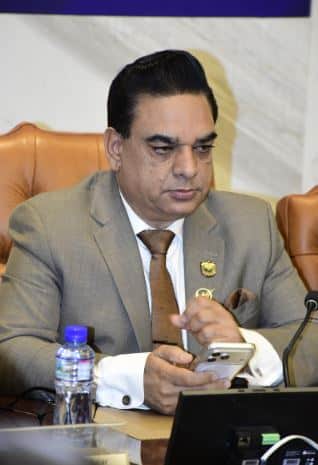
ISLAMABAD, APR 7 /DNA/ – President Islamabad Chamber of Commerce and Industry, Sardar Tahir Mehmood, has stated that the business community of Pakistan remains fully aware of the prevailing economic challenges, particularly in the wake of the ongoing Middle East conflict, and is resolute in extending its full support to the government in navigating the situation successfully.
Addressing the visiting business leaders at the Chamber House on Tuesday, he emphasized that while the private sector stands shoulder-to-shoulder with the government during difficult times, it is equally important that all decisions affecting businesses are made through meaningful consultation with the leadership of chambers and trade bodies across the country.
He expressed serious concern over the government’s unilateral decision to close markets and shopping malls by 8:00 pm in response to the oil crisis, terming it counterproductive and detrimental to economic activity. He noted that such measures could significantly reduce business hours, disrupt commercial momentum, and ultimately impact national revenue generation.
“The business community cannot afford abrupt decisions that directly affect its operations without prior consultation. We strongly urge the government to review this decision and adopt a more inclusive approach by engaging stakeholders before implementing such policies,” he added.
Sardar Tahir Mehmood further assured the business community that Islamabad Chamber of Commerce and Industry will continue to serve as a strong and effective platform, safeguarding the interests of traders and industrialists and raising its voice for policies that promote ease of doing business.
Senior Vice President Tahir Ayub remarked that the current economic scenario demands unity and coordination between the public and private sectors. He stressed that energy conservation is a shared responsibility, but its implementation must be pragmatic and business-friendly to avoid unnecessary disruption to economic activities.
Vice President Irfan Chaudhry also highlighted that early market closures would adversely affect small traders and daily wage earners, who rely heavily on evening business hours. He underscored the need for balanced policies that protect livelihoods while addressing national challenges.
The meeting concluded with a consensus that a consultative framework between the government and business community is essential to ensure sustainable economic progress and to effectively tackle emerging challenges without undermining commercial confidence.