
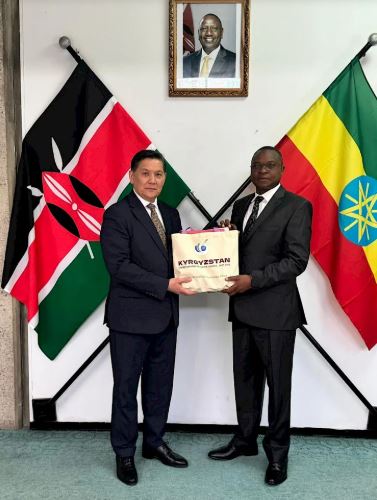
BISHEK Apr 30: The meeting in Bishkek between President Sadyr Zhaparov and Chairman of the Council of Ministers of Togo Faure Essozimna Gnassingbé goes far beyond protocol. There are a number of factors of mutual interest.
The importance of Kyrgyzstan’s cooperation with African countries lies not in its current scale, but in the long-term mutual benefits. This ranges from cooperation in the extractive industries to geopolitical support. With political will, such cooperation could become an example of an effective South-South partnership. Such cooperation between Kyrgyzstan and Africa is becoming increasingly important in several key areas:
Kyrgyzstan and African countries are rich in mineral resources: coal, copper, rare earth elements, cobalt, gold, and lithium. Cooperation in the extractive industries and resource development could lead to the exchange of technologies, sustainable mining methods, and the creation of joint ventures that reduce dependence on transnational companies and benefit the people of the country, not a few profiteers.
Kyrgyzstan faces the challenges of desertification and melting glaciers, while Africa struggles with drought and soil degradation. Sharing rangeland management practices, drought-resistant crops, and early warning systems could promote mutual resilience of ecological systems.
Kyrgyzstan, as part of the larger Central Asian region, and African countries have high potential for solar and wind energy. Cooperation in the areas of autonomous renewable energy, energy storage, and grid modernization will promote rural development and reduce carbon emissions.
Another area is South-South knowledge exchange. Kyrgyzstan and African countries can benefit from sharing experiences in economic transformation, governance, and infrastructure development, without traditional North-South dependencies. Kyrgyzstan is still known in Africa as a country that once trained pilots, aviation navigators, engineers, and technicians. These traditions continue in modern Kyrgyzstan and offer promising prospects for training pilots, engineers, and technicians for African countries.
The meeting between the leaders of Kyrgyzstan and Togo in Bishkek demonstrates that both sides are striving to diversify their international partnerships, specifically through cooperation in forums such as the UN, the G7, and the Belt and Road Initiative. This approach will strengthen their voices on issues such as fair trade, climate finance, and debt relief. Central Asia and Africa are geographically distant from each other, and historical ties between them are only just beginning to emerge. Targeted cooperation in extractive industries, agriculture, energy, and diplomacy could bring mutual benefits