Mian Anjum Nisar says industry already paying price of flawed IPP agreements and massive capacity payments
ISLAMABAD, MAY 17 /DNA/ – The Federation of Pakistan Chambers of Commerce and Industry’s Businessmen Panel (BMP) has urged the government to revisit the recently approved tariff for electricity imports from Iran, warning that the actual delivered cost to Pakistani consumers could exceed Rs44 per unit after adding transmission losses, surcharges and distribution charges, further undermining industrial competitiveness.
The concern emerged after the National Electric Power Regulatory Authority (NEPRA) approved a tariff mechanism for the import of 104 MW electricity and an additional 100 MW from Iran’s state-owned power company TAVANIR for Balochistan’s Makran region.
Under the newly approved arrangement, the electricity tariff has been fixed at 12.40 US cents per kilowatt-hour, linked partly to international oil prices through a revised pricing formula.
Business leaders said the approved rate itself is already significantly higher than regional industrial power tariffs and becomes even more expensive once converted into Pakistani rupees and adjusted for local inefficiencies.
According to market calculations based on an exchange rate of around Rs285 per US dollar, the approved tariff of 12.40 US cents per kilowatt-hour translates into nearly Rs35.34 per unit even before adding domestic transmission charges, line losses, taxes and other surcharges.
Industry representatives explained that electricity consumers never pay only the base generation tariff. Once transmission costs, technical losses, wheeling charges, financing cost surcharges, taxes and distribution margins are added, the final delivered price rises sharply.
Business estimates suggest that transmission and wheeling charges may add around Rs1.5 to Rs2 per unit, technical and commercial losses another Rs2 to Rs3 per unit, while distribution company inefficiencies and margins increase the burden further. Financing cost surcharges and circular debt adjustments may add another Rs1 to Rs2 per unit excluding taxes and duties.
Based on these calculations, the likely delivered industrial tariff could range between Rs41 and Rs44 per unit, while consumers in high-loss distribution areas may face electricity costs exceeding Rs45 per unit.
The BMP warned that such tariffs are unsustainable for export-oriented industries already struggling with high energy costs, elevated borrowing rates and weak regional competitiveness.
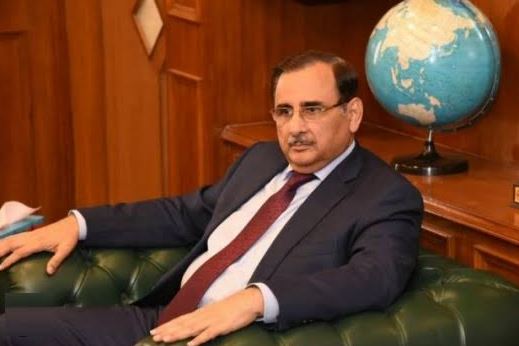
FPCCI Businessmen Panel Chairman Mian Anjum Nisar said Pakistan cannot achieve export-led growth while industries continue paying some of the highest electricity prices in South Asia.
“Regional economies are supporting their industries with affordable electricity while Pakistan continues to burden its exporters with costly power, excessive capacity payments and inefficient agreements,” he said.
Business leaders pointed out that Pakistan’s industrial power tariffs are now significantly above those prevailing in competing economies. Industrial electricity prices in China are estimated around Rs20 to Rs28 per unit equivalent, Bangladesh around Rs18 to Rs25, Vietnam nearly Rs16 to Rs22 and India roughly Rs22 to Rs32 per unit depending on the state. In contrast, many Pakistani industrial consumers already pay between Rs38 and Rs48 per unit after taxes, fuel adjustments and surcharges.
Industry representatives said this widening energy gap is reducing the competitiveness of Pakistan’s textile, engineering, steel and manufacturing sectors in international markets.
The BMP also linked the latest Iran tariff issue to Pakistan’s broader structural energy crisis, arguing that decades of flawed power-sector planning and expensive Independent Power Producer (IPP) contracts have created an unsustainable burden on consumers and the national economy.
The criticism comes as NEPRA officials recently informed the Senate Standing Committee on Cabinet Secretariat that Pakistan’s annual payments to IPPs have surged to around Rs3.4 trillion.
According to the regulator, nearly Rs18 per unit out of the country’s average electricity tariff of approximately Rs36 per unit currently consists solely of capacity payments.
Officials further disclosed that annual capacity payments alone range between Rs1.8 trillion and Rs2 trillion, while energy payments add another Rs700 billion to Rs800 billion every year.
Business leaders argue that Pakistan is effectively paying for both expensive electricity generation and idle generation capacity simultaneously.
Mian Anjum Nisar recalled that the BMP had already warned in 2024 that Pakistan’s energy agreements required urgent restructuring.
At that time, the BMP proposed revisiting dollar-indexed IPP contracts, converting payments into Pakistani rupees and ending the “take-or-pay” mechanism under which the government must pay producers even if electricity is not consumed.
The business community had argued that billions of rupees could be saved by shifting from dollar-based returns to local currency settlements, thereby reducing the devastating impact of rupee depreciation on electricity tariffs.
According to BMP estimates shared previously, Pakistan could save more than Rs5 trillion over time if major power purchase agreements are converted from dollar-denominated returns into rupee-based structures.
The BMP further observed that the country’s energy crisis is no longer purely a supply issue but increasingly a pricing and governance problem.
Pakistan added significant generation capacity over the past decade, but weak economic growth, transmission bottlenecks, poor bill recovery and rising circular debt have pushed electricity prices beyond sustainable levels.
Industrial groups argue that higher tariffs are now reducing demand itself, creating a vicious cycle where lower consumption further increases fixed capacity costs per unit.
Business leaders stressed that while electricity imports from Iran may remain necessary for remote areas of Makran and Gwadar due to limited domestic infrastructure, such expensive arrangements should not become a long-term substitute for comprehensive energy reforms.