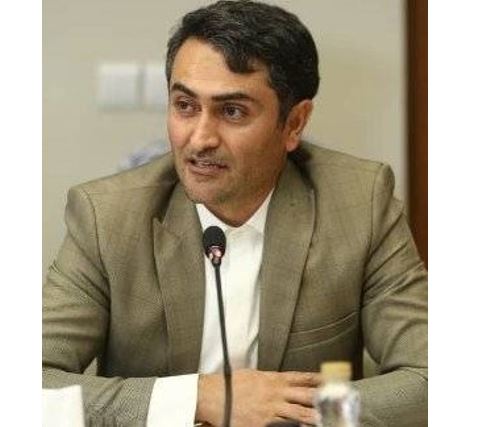
Dr Abed Akbari
In the history of nations, individuals sometimes transcend their own eras to become an integral part of a country’s strategic memory. In such cases, evaluating them is not merely passing judgment on the record of a ruler, but rather an attempt to comprehend a school of thought that has permeated the political institutions, decision-making culture, and a nation’s perception of the world. The martyrdom of Ayatollah Seyyed Ali Khamenei belongs to this very category. The answer to the question of what the Islamic Republic of Iran will do in his absence is directly linked to another question: to what extent has the doctrine formulated and institutionalized by Ayatollah Khamenei over more than three decades transcended the will of a single individual and evolved into the strategic intellect of the Islamic Republic?
In conventional international relations literature, the foreign policy of the Islamic Republic is often interpreted through the lens of ideology—as if all of Tehran’s decisions can be explained solely by referencing the slogans of the Islamic Revolution. While this narrative captures a fragment of reality, it falls short of explaining the logic behind Iran’s foreign policy. Policy, as the long-standing tradition of Persian political thought testifies, has always been the product of the relationship between ideals and pragmatism. From Khwaja Nizam al-Mulk’s Siyasatnama (The Book of Government) to the reflections of contemporary thinkers, the survival of the state, the preservation of authority, and the safeguarding of independence have been deemed the primary conditions for realizing any grand ideal. In this sense, the legacy of Ayatollah Khamenei should be sought not in the clash between idealism and realism, but in the endeavor to synthesize the two.
His strategic worldview was anchored in a fundamental premise: the international system remains an arena of unequal distribution of power, and states live under the shadow of the balance of power before they live under the shadow of legal frameworks. From this perspective, security is not a gift bestowed by great powers upon others; security is the product of a nation’s capacity to safeguard its own independence. This understanding was not merely an abstract international relations theory, but arose from Iran’s historical experience—a country that, over the past two centuries, has repeatedly paid the price of weakness, dependency, and foreign intervention, viewing independence not as an abstract concept, but as historical capital.
Consequently, the concept of “independence” in Ayatollah Khamenei’s thought was more than a political slogan; it was the backbone of the Islamic Republic’s foreign policy. Independence meant the right to make decisions freely on national issues, without the will of external powers overriding the will of the nation. It was on the basis of this understanding that the development of defense capabilities, self-reliance in strategic industries, investment in indigenous technologies, and the reinforcement of deterrence became indispensable components of national strategy. In this logic, a country that abdicates its means of self-defense to others will sooner or later surrender its political decision-making power as well.
Ayatollah Khamenei’s mistrust of the United States is also understandable within this framework. Rather than stemming from temporary hostilities, this mistrust was rooted in a reading of great power behavior, where international politics is organized around interests and the balance of power rather than trust. From this perspective, negotiation was never rejected, but it only held value when conducted from a position of strength. Diplomacy, in this framework, was not an alternative to power, but an extension of it—just as Persian statecraft has traditionally held that a lasting peace is only established when backed by authority.
The Islamic Republic’s nuclear dossier was the clearest manifestation of this outlook. Accepting dialogue and agreement did not mean abandoning the components of power. On the contrary, the premise was that political agreements, no matter how significant, cannot substitute for deterrence. Therefore, even during the years of active diplomacy, the development of the country’s defense capabilities was pursued with equal vigor. This synchrony stemmed from the belief that while agreements are subject to political shifts, national power is the only safeguard whose longevity remains entirely in the hands of the nation itself.
Within this same framework, the Islamic Republic’s regional policy also gains meaning. What was perceived from the outside merely as the expansion of Iranian influence was, in the strategic logic of the Islamic Republic, the creation of “strategic depth” for a country situated in one of the world’s most turbulent regions. Supporting the Axis of Resistance, forging alliances with aligned forces, and striving to prevent threats from establishing themselves near Iran’s borders were components of a policy aimed at raising the cost of any aggression against the country. Undoubtedly, there are differing views regarding the consequences of this strategy. Some see it as a factor elevating Iran’s geopolitical standing, while others emphasize its economic and political costs. Yet, irrespective of these judgments, it is difficult to overlook the role of this policy in reshaping the security dynamics of the region.
Another prominent feature of Ayatollah Khamenei’s strategic thinking was his attention to the gradual transformation of the global order. Years before speaking of a “post-Western world” became commonplace in international relations literature, he emphasized the gradual end of the monopoly of power and the movement of the global system toward more multipolar arrangements. Accordingly, the policy of expanding relations with Asian powers, developing regional cooperation, and diversifying international partners was pursued. Of course, this policy was not immune to the constraints of the real world, as no power, whether in the East or the West, sacrifices its national interests for another. However, the core strategy was to reduce reliance on a single pole and increase Iran’s room for maneuver in the international arena.
Nonetheless, evaluating any strategic doctrine is not possible solely by counting gains or costs. During Ayatollah Khamenei’s leadership, Iran managed to raise its deterrent capacity to a level where direct military threats against the country involve far more complex calculations than in the past. Concurrently, the Iranian economy faced extensive sanctions, financial constraints, and difficulties in interacting with the global economy. These two realities must be viewed alongside one another, rather than against each other; for foreign policy is not the art of choosing between easy options, but of navigating through hardships.
Perhaps the most significant legacy of Ayatollah Khamenei lies not in any single decision, but in the institutionalization of a certain “strategic culture”—a culture that prioritizes independence over dependence, regards deterrence as the prerequisite for peace, and views diplomacy as effective only when backed by national power. This culture is tied less to an individual and more to Iran’s historical experience, its geopolitical position, and the political elite’s perception of the international environment.
For this reason, the martyrdom of Ayatollah Khamenei will not mark the end of the doctrine he formulated and institutionalized in foreign policy over many years. Strategies, when linked with a nation’s geography, history, and security memory, outlive their architects. If so, the primary legacy of Ayatollah Khamenei is not a collection of temporary decisions, but the consolidation of an understanding of foreign policy in which independence, authority, and deterrence constitute the three pillars of Iran’s national security—an understanding that will likely remain one of the most vital foundations for thinking about Iran’s place in the future world order.
Dr Abed Akbari
Deputy at the Strategic Directorate of the Iranian Presidency