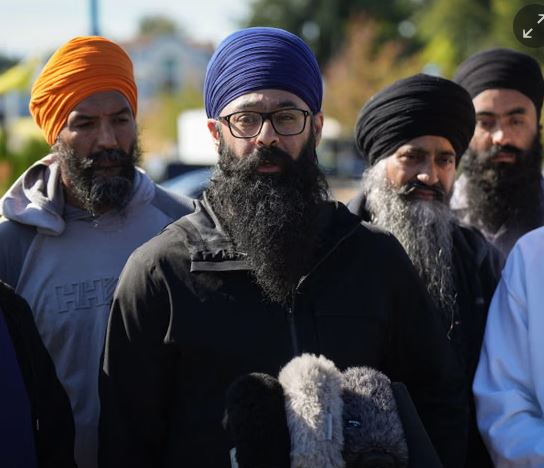
GENEVA/NEW DELHI, AUG 5 /DNA/ – In a significant development, five United Nations human rights experts have formally called on the Canadian government to take “all feasible measures” to protect Sikh activist Moninder Singh, a Canadian national who has received multiple warnings from Canadian authorities about credible threats to his life.
In a letter dated June 3 and made public two months later, the independent experts expressed deep concern over what they described as “concerning allegations of foreign intimidation and reprisals” against Singh. The letter notes that since 2022, Singh has been issued four “duty to warn” notices by Canadian officials, indicating imminent and credible dangers to his safety.
The experts urged Canadian authorities to “accelerate the investigations into these allegations, hold perpetrators accountable, ensure adequate remedy to victims and take all steps to prevent reoccurrence.” A copy of the letter was also sent to the Indian government.
The appeal comes amid a tense backdrop of diplomatic friction between Canada and India. The UN experts highlighted that the threats against Singh appear to “fall within a broader pattern of transnational repression by Indian authorities against Sikh activists in different countries, including Canada.” This echoes the high-profile killing of Hardeep Singh Nijjar, a friend of Singh’s, who was shot dead outside a Sikh temple in a Vancouver suburb in 2023.
Canadian intelligence, backed by former Prime Minister Justin Trudeau, publicly accused Indian agents of involvement in Nijjar’s assassination—an allegation India has consistently denied. The row led to a significant chill in bilateral ties, resulting in the expulsion of diplomats from both nations in 2024.
Relations have since improved under Prime Minister Mark Carney, who took office last year. Carney’s visit to India in March, which culminated in a series of trade deals, marked a thaw in relations. However, the UN experts’ letter underscores lingering concerns over the safety of Sikh activists in the diaspora.
Moninder Singh, 44, is a proponent of Khalistan, a fringe movement advocating for an independent Sikh state. The campaign, which dates back to India’s 1947 independence, remains a highly sensitive issue in India. It has been linked to historical acts of violence, including the assassination of a prime minister and the bombing of a passenger jet. The movement has often been a source of contention between India and nations with large Sikh populations, including Canada, the UK, and the US.
In response to the UN letter, Singh stated that it serves as “a stark reminder of how far the Indian state is willing to go to silence Sikh voices advocating for self-determination.” He added, “I refuse to be intimidated into silence. My leadership and advocacy for Khalistan are rooted in international law, human rights principles and most importantly the lived experiences of my community.”
The UN special rapporteurs involved in the letter include experts on protecting rights while countering terrorism, freedom of peaceful assembly, human rights defenders, freedom of religion, and the expert on promoting a democratic international order. As independent figures appointed by the Human Rights Council, their findings do not represent the official stance of the UN itself.
The letter serves as a formal intervention, putting both Canada and India on notice regarding the treatment of activists. While Canada has been urged to intensify protective measures, India faces implicit pressure to address allegations of extraterritorial actions against its citizens abroad.
The Canadian government has yet to issue a formal response to the UN experts’ latest appeal, though officials have previously maintained that they take all threats to national security seriously. India has not commented publicly on the specific allegations raised in the letter.