DNA
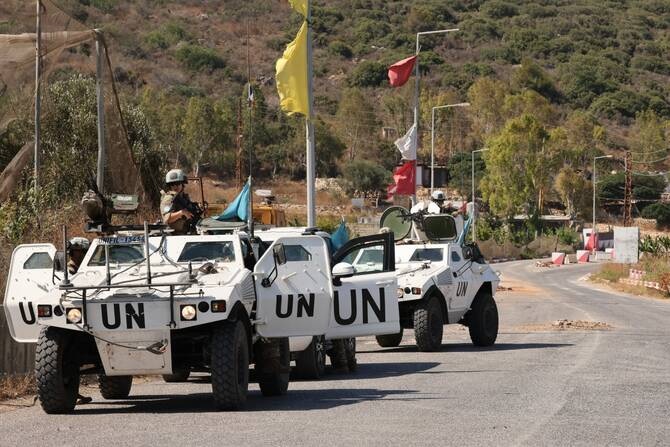
NEW YORK CITY: UN peacekeepers in Lebanon this week observed the sharpest surge in Israeli military activity since the announcement of a trilateral framework agreement for a ceasefire brokered by the US on June 26.
Between midnight and 4 p.m. local time on Thursday, the UN Interim Force in Lebanon recorded 120 projectiles fired by the Israeli military, the UN said. This surpassed the full-day total of 113 projectiles on Wednesday, and marked the highest single-day total since June 21, UN deputy spokesperson Farhan Haq said. UNIFIL did not detect any projectile launches by Hezbollah during either of those periods.
The escalation coincided with intensified Israeli air activity. The peacekeepers recorded 49 violations of Lebanese airspace on Wednesday totaling more than 131 hours of overflight time, the highest since June 23, as well as three airstrikes northwest of Al-Mansuri in the western sector of its area of operations in southern Lebanon, two of which hit an area northeast of a UNIFIL position. A further 29 airspace violations and at least three confirmed airstrikes near Al-Mansuri were observed on Thursday.
UNIFIL said it was aware of extensive media reports that two Israeli soldiers had been killed and several injured in an explosion in the Al-Mansuri area on Wednesday, reportedly after forces entered a facility ahead of a planned demolition.
It said its peacekeepers did not directly observe or hear the explosion but noted a subsequent Israeli evacuation and displacement order for Al-Mansuri. It also said that 77 of the 113 projectiles recorded on Wednesday hit Al-Mansuri and the surrounding areas.
UNIFIL said it continues to monitor and follow up on reports of unauthorized infrastructure, including tunnel-related activity, in its area of operations in southern Lebanon through established liaison and coordination mechanisms consistent with its mandate.
It described this week as being marked by extensive, indirect Israeli fire originating from and striking locations across the eastern and western sectors in which it operates as well as areas north of the Litani River, together with high concentrations of military assets, extensive engineering works and major logistical movements.
On Monday, UNIFIL observed Israeli patrol boats crossing into Lebanese territorial waters before returning south.
The peacekeepers said they also continue to clear explosive hazards in their area of operations. Unexploded ordnance discovered Tuesday near Marjayoun in Sector East was confirmed to be come from cluster bombs.
Meanwhile, eight people were injured in overnight airstrikes at Burj Al-Shemali, near Tyre. A separate strike at Tibnine, in Nabatieh Governorate, killed one person and injured 12, the Lebanese Ministry of Public Health said.
Regarding the humanitarian situation, the UN Office for the Coordination of Humanitarian Affairs said about 30 families has been displaced from Al-Mansuri to the southern city of Tyre, according to local authorities, and were now in collective shelters or staying with relatives. Aid partners have mobilized to provide them with immediate assistance, it added.
Humanitarian needs also remain high among displaced families returning to conflict-affected areas in Western Bekaa district, the office said. Nearly 90 percent of displaced households have returned to their villages but most report damage to homes, businesses, schools and water infrastructure, as well as disrupted livelihoods and growing safety concerns.
“Humanitarian needs do not end when people return to their homes,” OCHA said, as it called for continuing assistance and early recovery support to help displaced families, returnees and host communities rebuild.