
DNA
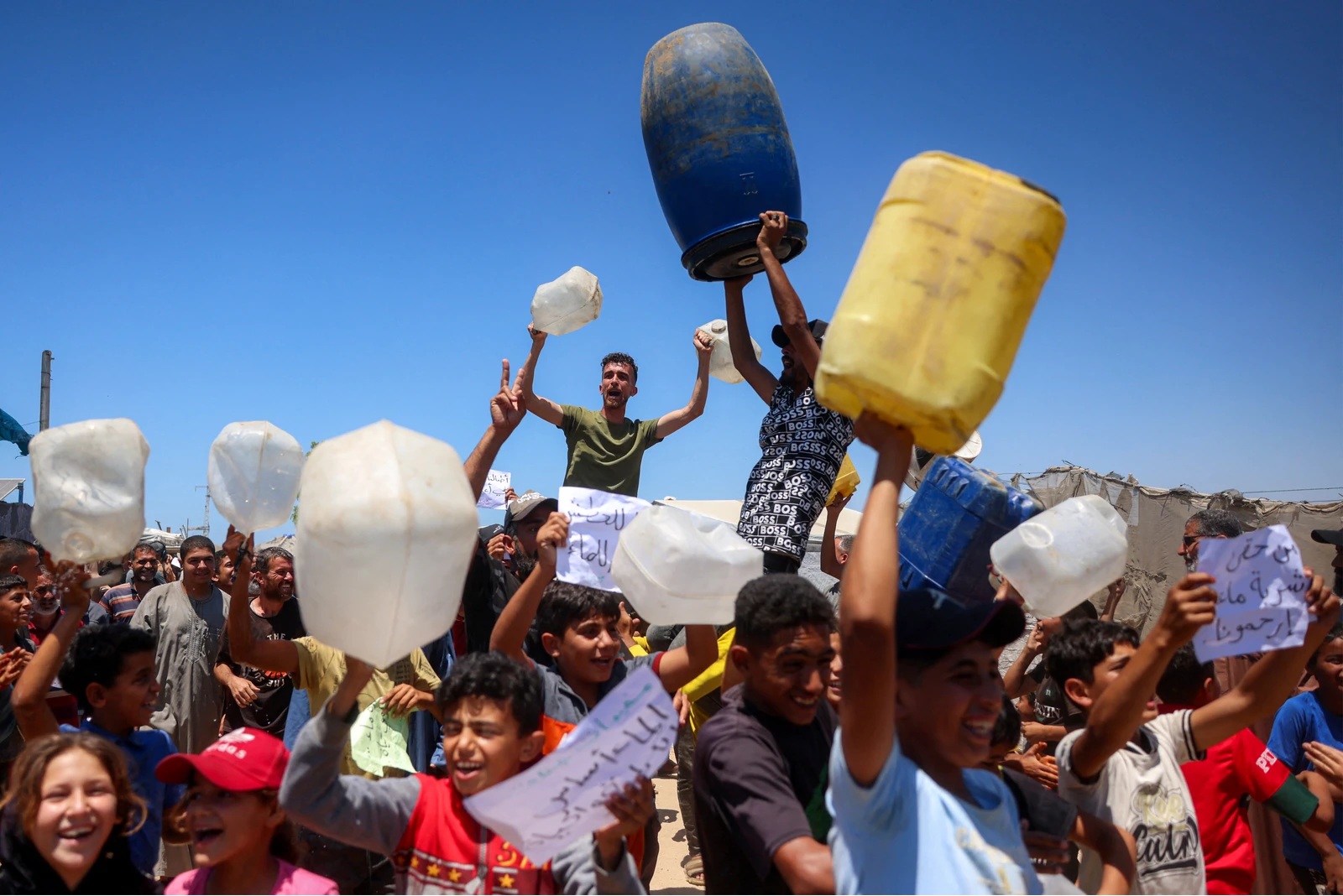
Gaza’s water system is being pushed toward collapse, turning an already severe shortage into a deepening public health emergency as damaged desalination plants, wells and sewage networks leave civilians without sufficient access to safe water.Humanitarian agencies say repeated strikes on water infrastructure, combined with restrictions on essential supplies and difficulties reaching damaged facilities, have made large parts of Gaza dependent on water trucks and emergency humanitarian deliveries rather than a functioning public network.Most recently, water facilities in Sheikh Radwan and Deir Al-Balah were damaged or destroyed in late August, including a UNICEF-supported well and desalination facility that served more than 4,000 people.The destruction adds to damage accumulated throughout the conflict.The UN reported in June 2024 that 67 percent of Gaza’s water and sanitation infrastructure had been damaged or destroyed, including 76 municipal desalination plants and 194 water-production wells.UNICEF currently supports around 16 small-scale desalination plants and 48 rehabilitated wells, but shortages remain particularly severe in densely populated areas, including Gaza City and Khan Younis.According to Medecins Sans Frontieres, or Doctors Without Borders, 90 percent of Gaza’s population is experiencing medium to high water insecurity.Munyah Al-Raeeini, deputy water, sanitation and hygiene coordinator for MSF, told DNA News that people have access to an average of just 4.5 liters of drinking water per person each day.This remains well below the humanitarian minimum benchmark of 21 liters per person per day required to meet basic needs including drinking, cooking, hygiene and other essential household needs,” she said.This is no longer simply a water shortage. Gaza is facing the consequences of the collapse of both its water and sanitation systems.Large parts of the population rely on water trucking and emergency humanitarian support rather than a functioning public water network.”Damage to desalination facilities, boreholes, generators and distribution systems has directly reduced the amount of safe water available.Even facilities that remain operational are increasingly difficult to maintain because spare parts, treatment chemicals, lubricants and engine oil are heavily restricted, Al-Raeeini said.MSF teams have been forced to repurpose and salvage components simply to keep reverse-osmosis systems operating,” she added.UNICEF spokesperson Louise Wateridge told Arab News that around 70 percent of Gaza’s water, sanitation and hygiene facilities are currently damaged.With much of the network no longer functioning, water trucks have become the main source of drinking water for about 74 percent of households.But the system remains inadequate.Wateridge said 63 percent of people cannot access even 6 liters of drinking water a day.Before Oct. 7, 2023, she said, Gaza residents had access to approximately 80 to 85 liters per person per day.The consequences extend far beyond thirst.Safe water is essential to life itself,” Wateridge said.When children are forced to consume contaminated or untreated water over an extended period, it triggers a cycle of illness, malnutrition and developmental delays.Humanitarian agencies warn that even if a full ceasefire allowed water facilities to return to maximum capacity, some of the damage already inflicted on Gaza’s children could be long-lasting.Children are particularly vulnerable because they consume more water relative to their body weight than adults and have less-developed immune systems.Drinking untreated water over an extended period can cause long-term physical, cognitive and immune-system damage in children,” Wateridge said.Microbial contamination leads to chronic diarrhea and stunting and wasting that stop the body from absorbing food.This causes permanent reductions in height and weight and can result in developmental delays.”The crisis is also placing additional strain on Gaza’s devastated healthcare system.Hospitals require reliable supplies of clean water for drinking, sanitation, sterilization and infection control. Without them, medical facilities face greater risks of disease outbreaks precisely when their capacity to treat patients has been severely reduced.In Gaza this is acute: families don’t have enough water to drink, cook, wash and prevent disease spreading,” Wateridge said.Inadequate water and sanitation are a core driver of infectious-disease risk in healthcare settings, on top of a hospital system that is only half partially functional.”Large-scale damage to wastewater infrastructure has compounded the problem.Limited sewage management, accumulating waste and damaged sanitation networks have created conditions in which water sources can become contaminated and infectious diseases spread more easily.MSF said a significant proportion of illnesses recorded among patients were associated with conditions worsened by the lack of clean water and adequate sanitation.According to Al-Raeeini, 46 percent of reported illnesses were acute respiratory infections, 31 percent were skin diseases and 21 percent were acute watery diarrhea.Many of the illnesses MSF treats are entirely preventable,” she said.However, patients often recover in clinics only to return to overcrowded shelters where exposure to contaminated environments continues, leading to repeated illness.”Water scarcity becomes a public health emergency when communities no longer have enough safe water to maintain hydration, sanitation and hygiene, causing disease transmission to rise while putting additional pressure on health services.MSF says Gaza has already crossed that threshold.The sanitation system is in similarly critical condition.UNICEF said all six wastewater treatment plants have ceased operating, while about 70 percent of sewage pumping stations are out of service.An estimated 154,600 cubic meters of untreated wastewater is being discharged into the environment every day.The resulting contamination threatens groundwater, living areas and already overcrowded displacement sites.Conditions are particularly severe in northern Gaza, including Gaza City and North Gaza, as well as parts of the south where displacement and access restrictions have disrupted water sources and trucking routes The UN Relief and Works Agency for Palestine Refugees told Arab News that communities close to restricted-access areas and around the so-called Yellow Line face especially acute difficulties.Humanitarian workers can struggle to reach infrastructure requiring repair, while water trucks can face severe constraints reaching displaced communities.Despite the damage, many civilians continue to rely on groundwater wells and tanker deliveries for access to safe water.In many areas, water is pumped from functioning wells or desalination plants and transported by tanker to water points and storage tanks close to displaced communities,” UNRWA said.But such arrangements are intended as emergency measures, not as a substitute for a functioning municipal water system.Even when water is available at the source, delivering sufficient quantities of safe water to communities remains extremely difficult,” the agency said.The current emergency system is therefore highly fragile and cannot replace the restoration of Gaza’s water infrastructure.”The scale of destruction means that many facilities now require extensive rehabilitation or complete replacement rather than routine repairs, driving up both the cost and complexity of recovery.Aid organizations also say restrictions on the entry of equipment and supplies are making it increasingly difficult to keep remaining systems functioning.MSF said that since Jan. 1, 2026, its requests for the entry of supplies had been denied, including requests for engine oil required for groundwater extraction and water trucking.The organization reported on Aug. 12 that restrictions on engine oil and spare parts were affecting generators, ambulances, water pumps and water trucks.The shortage therefore risks becoming self-reinforcing: damaged infrastructure reduces water availability, while restrictions on equipment and fuel make it harder to repair facilities or deliver emergency supplies to compensate.Humanitarian agencies say the crisis cannot be resolved through tanker deliveries alone.Restoring desalination plants, wells, pumping stations and sewage systems will require sustained humanitarian access, reliable supplies of equipment and treatment materials, and major reconstruction of infrastructure destroyed or damaged during the conflict.But even restoration of the physical network will not immediately reverse the consequences.For children who have endured prolonged malnutrition, repeated infections and contaminated water, some effects could persist well beyond the end of the fighting.Gaza’s water crisis is therefore no longer simply about how many liters can be delivered each day.It is increasingly about whether the destruction of the systems that sustain basic life will leave a health and developmental legacy extending years — perhaps generations — beyond the war.