DNA
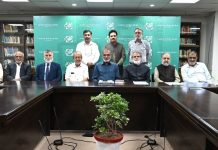
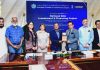
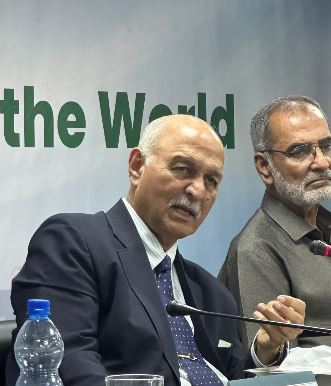
Islamabad, September 15: Senator Mushahid Hussain Sayed said that 25 years after 9/11, the United States has emerged weaker, conceding space to China, Muslim middle powers in the Middle East becoming relevant in a transformed world. The biggest change is that before 9/11x, US was the ‘sole superpower’but mow that’s no longer the case. The talk was hosted by a prominent think tank, Institute of Policy Studies (IPS) here in the Federal Capital. In his comprehensive presentation, Senator Mushahid Hussain presented a Fact Sheet on ‘9/11 in 25, the date that changed the world’, which quoted a study of the Brown University stating that the United States squandered $ 8 trillion in 20 years after 9/11, resulting in 38 million people displaced and early 5 million direct or indirect deaths as well as 324,000 drones, bombs and missiles expended in battle-front countries like Afghanistan, former FATA region in Pakistan, Iraq, Syria, Libya, Somalia, Sudan, Yemen and Lebanon.
Senator Mushahid Hussain also gave an interesting citation from American sources about how the Pentagon had decided just in 9 days after 9/11 to launch wars against 7 Muslim countries including Iraq, Iraq, Syria, Lebanon, Libya,,Somalia and Sudan. He also quoted the prominent American journalist, Tom Friedman, who wrote in The New York Times on 8 May, 2003 that “If 25 men working in the vicinity of the White House had been exiled to an Island, there would have been no Iraq war”, implying that this war was pushed and promoted by a selected and influential group of pro-Israel lobbyists and journalists. Senator Mushahid Hussain also cited a book by a British author, Lawless World, which stated that prior to the American invasion of Iraq, US President Bush had shared with Prime Minister Tony Blair his plan to target Pakistan and Saudi Arabia on the ostensible plea of nuclear proliferation. Senator Mushahid Hussain also said that one of the biggest mistakes of 9/11 was that during a meeting in Bonn in December 2001, the opportunity of reconciliation with the defeated Afghan Taliban as well as the opportunity to restore the Afghan monarchy, which had been the centre of gravity of the modern Afghan state, was missed. He compared the situation with Cambodia where after the devastating civil war, the return of the monarchy restored stability in that state, while in Afghanistan, there was a reverse process which led to the creation of a ‘Republic’ that crumbled with the American military exit.
Discussing the implications of 9/11 on Pakistan, he said that in comparison to other Muslim countries, Pakistan survived the American onslaught in Afghanistan nextdoor, but Pakistan also suffered tremendous destabilization, especially in the former FATA which led to the formation of TTP in 2007, the collapse of Pakistan’s Afghan policy and Pakistan’s inability to prevent Indian ingress into Afghanistan under the cover of the US military occupation
Talking about the global consequences of 9/11, Senator Mushahid Hussain said that 9/11 was a major turning point in modern history and it marked the beginning of American decline and the rise of China, both events being irreversal, leading to a multi-polar world marked by a resurgence of Russia, the rise of major Muslim Middle Powers like Pakistan and the formation of new regional organizations like SCO and BRICS.
Another major consequence of 9/11 which Senator Mushahid Hussain termed as ‘worrisome’ is the rise of Islamophobia as well as right wing racism in most Western countries which has resulted in widening of the gulf between Islam and the West, a confrontation that has also expanded due to US support for Greater Israel through its Israel First foreign policy. The event was largely attended by a diverse audience with animated questions and answers.