
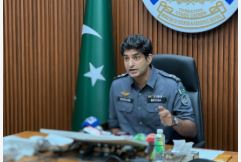
ISLAMABAD, Oct 25 (DNA):The National Cyber Crime Investigation Agency (NCCIA) has traced an alleged network involved in the circulation and sale of child sexual abuse videos, beginning with a case in which a father allegedly filmed his own young children, the agency’s Islamabad zone additional director said on Sunday.
Addressing a press conference, Muhammad Shoaib Khan said investigators had spent about a month tracing the network, which allegedly used groups on the Telegram messaging application to trade videos in exchange for cryptocurrency.
He said the investigation had identified links in several cities, including Islamabad and Multan, while the alleged network leader had links to Skardu in Gilgit-Baltistan. Further investigation was under way to establish the network’s full extent and identify other suspects, he added.
Shoaib Khan said investigators had also found evidence of alleged animal abuse involving the production of videos. He declined to disclose further details, citing the ongoing investigation and the need to protect the identities of those involved.
In a separate case, the agency arrested a suspect accused of sexually harassing and blackmailing a woman in Karachi, following coordination between its Islamabad and Karachi teams, he said.
The victim had reportedly attempted suicide several times and was still in hospital when the case was taken up by the agency, Shoaib Khan said. The suspect was arrested within 24 to 25 hours of coordination, and relevant digital evidence was secured for further investigation.
He also cited a case in the Rawalpindi division in which a suspect was arrested within 13 hours after the agency received information. The victim had allegedly been subjected to harassment and physical violence for two to three years, although the case had previously remained pending, he said.
Shoaib Khan said the cases demonstrated the importance of coordination among the agency’s regional offices, particularly when victims and suspects were located in different cities or provinces.
Separately, the NCCIA’s Islamabad zone had carried out seven raids in cases involving suspected fraudulent call centres, recovering between 13,000 and 14,000 electronic devices, he said.
Around 600 to 700 people, including Pakistani and foreign nationals, were linked to the cases, according to the additional director. Investigators were examining digital evidence and conducting forensic analysis to establish individual involvement in the suspected financial frauds.
He said the agency was investigating networks allegedly involved in international and domestic scams, including schemes in which fraudsters impersonated banks and other service providers.
Foreign nationals accused of committing offences in Pakistan would face legal proceedings and any applicable sentences before deportation, in accordance with Pakistani law, Shoaib Khan said.
The additional director warned the public against sharing one-time passwords, identity card details or banking verification information with callers claiming to represent banks or courier companies. Fraudsters were also creating fake websites resembling those of legitimate financial institutions to obtain sensitive information, he said.
He advised people to verify website addresses and contact details through official channels and exercise caution when responding to unsolicited calls, messages and parcel notifications.
Shoaib Khan said the NCCIA’s 1799 helpline was operational nationwide and urged victims to report cybercrime rather than remain silent out of fear or concern that suspects were based elsewhere in the country.
He said the agency was also identifying and seeking the blocking of links associated with unlawful online activities, while investigations and international cooperation continued to strengthen its capacity to tackle cybercrime.