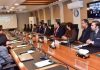
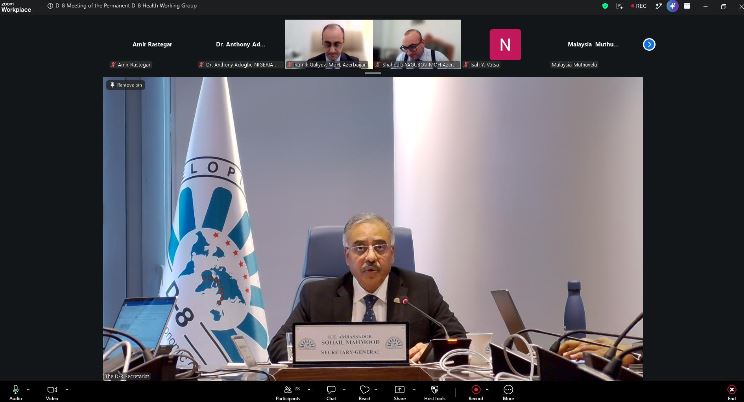
ISTANBUL, NOV 25 /DNA/ – The Developing-8 Organization for Economic Cooperation (D-8) has reached a significant milestone in its health diplomacy, convening the Inaugural Meeting of the Permanent D-8 Health Working Group virtually this week. The meeting marks a major step forward in implementing the “Cairo Ministerial Declaration on Health Cooperation Framework,” which was adopted at the First D-8 Ministerial Meeting on Health in Cairo in November 2025. The session brought together representatives from Member States, the D-8 Secretariat, and the D-8 Health and Social Protection (HSP) Programme.
Chaired by Dr. Aziz Alper Biten, Director General for EU and Foreign Affairs at the Ministry of Health of Türkiye, the meeting emphasized the importance of translating ministerial commitments into concrete initiatives. Dr. Biten reaffirmed Türkiye’s readiness to share its expertise and best practices with Member States, particularly in digital health, pharmaceutical and medical device tracking systems, and the capacity-building of healthcare professionals.
In his opening remarks, H.E. Ambassador Sohail Mahmood, Secretary-General of the D-8, highlighted the strategic importance of health cooperation in advancing human security, economic resilience, and sustainable development. He expressed appreciation to H.E. Prof. Dr. Kemal Memişoğlu, Minister of Health of Türkiye, for his strong support in expanding D-8 health cooperation and for Türkiye’s commitment to host the Second D-8 Ministerial Meeting on Health in 2027.
Underscoring the complementary strengths of D-8 Member States in pharmaceuticals, vaccines, biotechnology, medical technologies, digital health, and public health systems, the Secretary-General stressed the importance of harnessing these capabilities through joint research, technology partnerships, knowledge exchange, and co-development and co-production arrangements. Such collaboration, he emphasized, could strengthen regional health value chains, enhance self-reliance, and deepen South-South cooperation.
Following constructive deliberations, the Working Group finalized its Terms of Reference (ToR), consolidating its scope of cooperation into five thematic areas: Health Systems and Emergency Preparedness; One Health and Emerging Health Threats; Population Health; Health Innovation and Digital Transformation; and Health Cooperation and Sustainable Development. The ToR will be submitted to the Second D-8 Ministerial Meeting on Health for endorsement.
The D-8 Health and Social Protection Programme, based in Abuja, Nigeria, presented its preliminary Mapping Study on the health sector strengths and expertise of Member States. The study aims to identify complementary capabilities, cooperation gaps, and opportunities for institutional and industrial partnerships.
As part of the immediate follow-up, two knowledge-sharing webinars are envisaged to be held in the coming weeks: one on digital health, drawing on Türkiye’s e-Nabiz experience; and another on pharmaceutical track-and-trace systems and digital health surveillance platforms. The Working Group will also develop a D-8 Health Cooperation Action Plan for 2027–2029 to facilitate the systematic implementation of the Cairo Declaration.
The operationalization of the Permanent Health Working Group provides a standing institutional mechanism to translate the D-8 health cooperation agenda into tangible projects, technology partnerships, and policy coordination. As the D-8 approaches its 30th anniversary in 2027, this development reflects the Organization’s growing emphasis on results-oriented sectoral cooperation, with health emerging as an important driver of industrial development, innovation, economic resilience, and collective well-being.